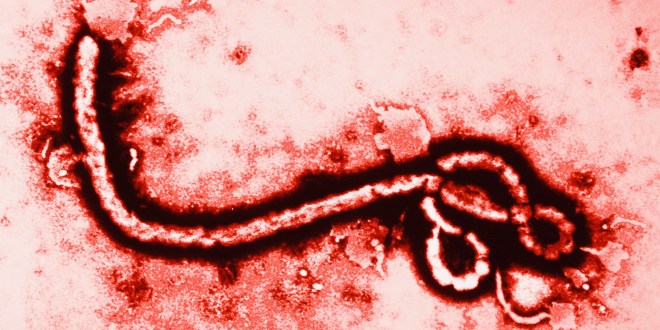
So a few months ago the country was enthralled with the idea of a few patients, infected with the Ebola virus, coming to the United States. Up until this point, we had been safe from Ebola due to the fact that bats can’t fly over the Atlantic. Some people were completely indifferent, while others had seen Outbreak one too many times. Most were a healthy mix, somewhere in between, but what bothered me the most was both the lack of education and the poor information that was spreading more virulently than the virus could ever hope to.
First, I want to stress that I am a nurse, not a virologist, and hopefully throughout my post you will see that I am not pretending to be one. I have a Bachelor’s in Nursing and am currently a graduate student. I have worked extensively with Infectious Disease Specialists. I have been exposed to almost every infectious disease known to the modern world. I have taken courses in Biology, Microbiology, Anatomy, Physiology, Pathophysiology, Advanced Pathophysiology, Pharmacology, and an assortment of others. However, I am not and will not pretend to be an expert, just an experienced professional. When it comes to an epidemic of any sort, my first focus is on the patient, protecting and healing them, my second focus is on protecting the community. I don’t care about which strain does what, or what we can do with in lab. As a nurse, I concern myself with the current patient and future possible patients. I feel the first thing we should examine is Ebola itself. It is foreign to the US, both literally and figuratively. What it does to people and how it harmonizes with nature are both things that most westerners have little concept of. It is a virus, not a bacteria. This means that it is not its own organism. It is actually much smaller and basic than you can imagine. It is nothing more than a few pieces of DNA/RNA and some proteins. No cell wall, no cytoplasm, no metabolic functions. This is both their advantage and their downfall. Viruses require a host. For this example I will use the HIV virus. HIV gets into the human body and invades the host’s white blood cells, T4 cells to be exact but I won’t get that involved. The proteins help get the virus into the cell and those few small sequences of DNA/RNA write themselves into the host DNA/RNA. Now instead of the white blood cell attacking invaders, it is nothing more than an HIV factory. All of its metabolic functions are redirected at producing more of the virus, which pours out of the white blood cell like a sieve until eventually the host cell dies. This is why HIV infected patients have poor immune systems. The virus re-writes the DNA of the host cells. This is not something we can stop. New viruses are pouring out of the white blood cells at a rate of millions a day. We cannot filter them out. We cannot “kill” a little chunk of DNA and we don’t know enough about the human genome to correct the DNA sequences. This is why a lot of viral infections like HIV, Herpes, and Hepatitis are life long infections. HIV invades the white blood cells, Herpes invade the nerve roots, and Hepatitis invades the liver.
Now that we have a better grasp of viruses, we will focus on Ebola a bit more. In tropical Africa, Ebola naturally lives in bats. It is nice to the bats and doesn’t cause them many issues. It is rumored that there are many viruses humans carry our entire lives and have no idea because they show zero symptoms. Therefore, they have never been studied. If this sounds crazy, just remember that it was in recent years the we discovered there was a virus behind cervical cancer. A virus that men can carry and spread without ever knowing they have it. Where the problem arises is that in tropical Africa, people like to eat bats. Sometimes they get infected with Ebola and it spreads. This process is called Zoonosis and can be true of bacteria or viruses. Racoons carry Rabies, Armadillos carry Leprosy, Birds carry the Flu, Bats carry Ebola.
When I said Westerners don’t really understand Ebola, the primary aspect that I am talking about is the patient. We don’t ever see what Ebola does. Our media is too censored, we hear how many died, and see people in haz-mat suits. Speaking of suits, we’ve all seen the pictures. Rubber gloves are adequate for AIDS and hepatitis, a simple mask (N95) stops Tuberculosis, but this requires space suits, just keep that in mind when you think its no big deal. So here is what happens when you catch Ebola, I figure you’re getting bored with reading right about now, so I’ll spice it up. First the virus gets into your system, I’ll elaborate on that later. Then, it hangs out for a few days, even up to 21, growing, multiplying at a rate of millions a day, and guess what, you’re infectious. Now at this point it would pretty much require a straight blood to blood interaction so the only real threat here is for IV drug users who share needles. Just like with the flu or hand foot and mouth disease, you can be spreading it to others before you show a symptom*(apparently not many see the *, so please read the elaboration at the bottom). Remember, nurse mind set, protect the community. At first it’s not bad, little nausea, some sweating, diarrhea, much like a stomach bug. But then the virus really starts to build up in your liver and adrenal glands, after it has saturated your blood cells, the lining of your vessel, your skin, and bones. Hepatocellular necrosis occurs, which is fancy term for your liver starts to decompose.Your liver is what regulates blood clotting. This causes your blood either clot up and turn to jelly in your veins, stay liquid and bleed profusely, or a combo of both. The adrenal glands then do the same, causing your blood pressure to drop. This requires lots of IV fluids to keep your circulating volume up. At the same time inflammatory cytokines are released which causes vascular leakage. Cells don’t do a good job of holding things together so it all becomes a bloody goop. Anywhere in your body that blood vessels are shallow, like your nose, ears, gums, throat, GI tract, urethra, vagina, rectum, all start oozing fluids and bleeding because the tissues that normally keep it contained are disintegrating. So now you bleed from every orifice, including your eyeballs. Every time someone or something touches you, your tissue gets damaged which further the cycle, so a shot in the arm can turn into a massive blood blister. Those who survive are left with massive scarring. Since the adrenals cannot keep your blood pressure up, and you are losing blood and fluids, we have to put IV fluids in to keep you out of hypovolemic shock. This in turn reduces your blood concentration, lowering your oxygen carrying capacity, which causes your heart to race. So you lay in bed, oozing fluids from everywhere, all while feeling like you just ran a marathon, with bloody diarrhea, oh and did I mention pain? Lots and lots of pain, but you can’t have any pain medicine because your liver and kidneys have failed. This why it pains me when I see this outbreak ONLY has a 50% death rate, when in Africa it is up to 90%…ONLY 50%. That is literally worse than cancer, and people are blowing it off. Imagine if cancer was infectious, and you lived in a country with zero cancer, and someone thought it would be a good idea to fly a few people in. I think there would be a different attitude.
The biggest part of the discussion is how Ebola is spread. I will say two things on the topic, no, it is not airborne, and yes, basic hygiene plays a HUGE factor. But while on the topic of whether it is or is not airborne, the definition of an airborne contagion is one that can freely float in the air, survive lengths of time, and infect someone else. VERY few things fit in this category, most have been eradicated, Small Pox, Tuberculosis, Measles. Things that are also NOT airborne, are the flu and the cold. For the flu, you have to come into direct contact with the patients body fluids. How then, do you explain why people catch it and have no idea how. Well for one, people can spread it before they show symptoms, just like Ebola, and one other HUGE factor…droplets….let that word really sink in. The virus may not be airborne, but the droplets are. I’m going to digress for a second and get back to HIV and Hepatitis, while I let droplets dwell in your mind. Everyone knows that HIV and Hepatitis are spread by blood contact, and sexual fluids, I don’t mean a drop of blood on the skin, or even a mucous membrane, it has to get INSIDE of you. This is why only gloves are required. HIV and Hepatitis are not found in urine, stool (Some forms of hepatitis are, but you have to eat the stool to get infected) saliva, sweat, tears, or mucous. This is where some viruses are different. The flu gets into your mucous and other secretions, Ebola tends to stay in the blood, but remember, every one of your bodily fluids are full of blood now. So a person with the flu sneezes, and now millions of little droplets (remember those guys?) shoot out of their nose at nearly mach 1, all across the room, same for a cough, all it takes is a little microscopic droplet to land in your eye, nose, mouth, or the unlikely scenario of an open wound, and you’ve now been infected, because you came in CONTACT with their bodily fluids. I see the word contact thrown around a lot, but most people think of mass amounts of contact with blood, but what they don’t realize is that contact also includes microscopic mucous and saliva droplets, each one chock full of Ebola. Bacteria can survive for long periods of time without a host because they are their own organism. They can feed on just about anything and be happy. Viruses lifespan without a host is much shorter. Their goal is to infect, replicate, and spread, if they cant replicate, they die. Measles only lives 2 hours. But Ebola, depending on what data you look at, can survive for several days.
So with all this information, lets have some role play, so that you can see exactly what this means, to a nurse, in the real world. Imagine it as a cheesy PSA or lifetime movie. You go to see your doctor because its that time of year, you need some blood drawn and refills of your blood pressure med. You sit patiently in the waiting room, thumbing a magazine while your 2-year-old plays with her toys. Like all two year olds, she touches everything, and everything goes in her mouth, toys, pens, her own fingers. She is a 22 lb drool factory and you love her to pieces. You see the doctor, get your goodies, and go home. A week later your angel starts vomiting blood and within 3 days she dies because her heart raced so fast it finally gave up while trying to maintain a blood pressure. Her eyes are blood red and demonic, her skin falls off in sheets. What you don’t know is that 3 days before your visit, someone thought they had the flu. It is October you see and they sneezed while thumbing through that very same magazine you thumbed through. The same thumb you grabbed her pacifier out of your purse with in the waiting room. The people caring for Ebola patients wear space suits, and burn the bodies, yet it still spreads. Here in America, we have much better protocols, and much better hygiene. So if it spreads, it will be contained much better. Still, it spreads prior to symptoms and survives will outside the body, just like the flu. Despite vaccines and good hand washing, thousands still get the flu every year. But while the flu kills 1-2% of its victims, Ebola kills 50% on a good day, and spreads the same way. So please, do not write it off as hype. It is a real thing and it is here.
The case in Dallas has been confirmed. The patient had contact with five children and adolescents prior to admission. Those five kids attend four of the largest schools in Dallas. One sneeze and we could already have thousands of people, who don’t know it yet, infected.
Thank you for reading. Please feel free to comment.
Symptoms* I have had a lot of comments in regards to this. I picked my words carefully, but I never imagined getting thousands of views an hour, or my article getting picked apart, but I will try to elaborate now. I said spread, the virus, I did not say you were contagious. What I meant by this, was the summation of two concepts. To fully explain everything I could write a book, but this is meant to be short and sweet. The first concept is that of a fomite. We have established that the virus can survive for an unspecified amount of time outside the host, and we have established that sneezing/coughing is a perfectly logical method of transmission. So if patient A is infectious/contagious, they sneeze on patient B, but then patient B goes home and picks up their sisters 1 6 month old, who rubs his face, and licks all over your shoulder, he could very well have just orally consumed large quantities of the virus, therefore become patient C. Patient B never got sick, the virus never entered their system, yet they are responsible for spreading the virus to someone else. This is why the 5 exposed kids are so important, there may only be a 2% chance or whatever that they’ll get sick, but if they went to school, and each rubbed up against 500 kids in the hallways, you now have 2500 exposed kids, 50 of which will statistically become infected, 25 of which will probably die. No I do not have a source for the 2%, that is just an EXAMPLE number used to represent the relatively low likelihood of contracting the virus if exposed, granted the R0 factor of R2 is correct. Remember, heal the patient, PROTECT the community. The second concept of this is defining “symptom”. Lets assume it means anything other than your baseline condition. That means the first signs of being contagious, are also the more mild symptoms, sneezy, achy, nausea, flu-like symptoms. So who is going to wake up, feel a little under the weather, and think, crap, I have Ebola, better get quarantined, no, THAT’S how you start fear mongering and mass panic. Again, flu season is upon us, the initial stages of Ebola are like the flu, and its human nature to be in denial, so many people, if infected, would hope its just the flu and wait it out, they are not showing symptoms indicative of Ebola, but they ARE symptomatic of something, and therefore, by the CDC definition, would be contagious. Its also normal procedure for people to be symptomatic BEFORE seeking medical care, so technically, everyone will be contagious, BEFORE knowing they have Ebola. But like I said before, I omitted this lengthy explanation because I didn’t feel it was necessary for the point of the article.
ADDENDUM: Sadly, I feel the need to point out that the title of this blog is “Ebola, A Nurse’s Perspective”, not “A Nurse’s Guide to Surviving the Apocalypse”, or “How to Become an Ebola Expert in 15 minutes”. It could just as well be “Hamburgers, A Chef’s Perspective” and no one would be hounding me over grammar, a misplaced comma, or wanting citations as to why I say it should be on the grill 5 minutes per side of 7 minutes per side. The point is those things are irrelevant to the goal of the article, this is MY perspective (a particular attitude toward or way of regarding something; a point of view.) I don’t have to prove anything, the point of my article is to take what the uneducated (in a medical sense) journalists say, what the talking heads on TV say, and then let you know what the people say who are on the front lines. That’s like discrediting your grandads account of what happened when he stormed Normandy beach, because its not what your history teacher told you. Have I experienced Ebola first hand? Nope, have I experienced a WHOLE lot of other things that the majority of the population has not? You bet your ass I have, and I felt the need to take the time to hopefully help other people out a little. So please keep that in mind, I’m not perfect, but my experiences are my experiences, and I wanted to share them with you, to let you inside the head of a nurse for a minute.


To Christy
This is about something serious, can you appreciate the fact that this blogger is looking out for the good of the masses and you are interrupting it. If you knew too much, what did you warn the masses against. Keep your stinking knowledge to your pocket and bury your face in your own shit. Even if you were right, I won’t as much as read the first line.
LikeLiked by 1 person
Thank you for this perspective it has made it so much easier to understand. I’ve been in Liberia several times, I’m speechless and stunned.
LikeLike
I am an RN who works in a field of nursing that deals with a more public health focus not a hospital environment. I have been watching this Ebola dilemma way before it became national news. I read all the information on the CDC website to include the general public info along with information for healthcare workers and the manual on recommendations for African hospitals written when the outbreak of Ebola occurred during the 90’s. To me, it seems the “general public” info is short, sweet and to “SOME of” the point. For example, it does mention one can become infected if they come in close contact with an infected person’s blood or bodily fluids then in parentheses it list contaminated needles, which to me makes the layman person think “oh good, I won’t get it because why would I even come near a used needle? “But yet when I read the recommendations for infection control in the manual written for African hospitals, it goes into extensive description of bodily fluids that include saliva, semen, urine, sweat. It also has, to me, an alarming answer to how long ebolavirus can survive in an indoor environment. One study, I repeat, one study in a controlled environment that would be favorable to the virus, it remained active for SIX days! And in the only one study, during the 90’s outbreak, in “real world conditions” 33 samples taken from areas that were not visibly soiled with blood, “virus was not detected by either nucleic acid amplification or culture in any of 33 samples collected” (again I question, where in the room were these samples taken? Did they happen to swab an area where, for sake of argument, the patient had coughed and the droplets landed on the bedrail? Or was it just the door knob on the other side of the room?) The information then goes on to conclude “Based upon these data and what is known regarding the environmental infection control of other enveloped RNA viruses, the expectation is with consistent daily cleaning and disinfection practices in U.S. hospitals that the persistence of Ebola virus in the patient care environment would be short – with 24 hours considered a cautious upper limit.” This doesn’t soothe my growing concerns about this deadly disease. I would love for an infectious control expert to tell me that the example I’m about to present can in no way be an actual potential for the spread of this disease… So my example is this and I will refer to your example of the mach one sneeze…an infected patient who has been in Liberia who just recently came to the US, who has just started to “feel bad” not exactly “classic signs of symptoms” but has muscle aches, temperature of 100.1, is walking around the pharmacy looking for some otc pain med, sneezes without even covering their nose or perhaps they did but then places their wet snotty hand on the counter. I come in a few minutes later, having not witnessed this pet peeve of mine, just happen to place my hand on the exact same spot, without realizing the sputum is now on my hand. at that moment, my eye itches and unconsciously I rub my eye with that contaminated hand of mine… can any infectious control expert tell me in all honestly that I have zero risk of just infecting myself with Ebola? If this disease is so low risk of spreading then why does any one who knowingly has close contact with an infected person is either placed in quarantine or must wear a hazmat suit to protect themselves? If this patient is admitted to the hospital, they are placed on VHF (viral hemorrhagic fever) isolation precaution, that’s some serious isolation!… I’m sorry but this just does not line up with what the news reporters or the head of the health departments that hold press conferences seem to be portraying to the public as a very low risk of spreading the disease. It’s also quite interesting that, as the news reported regarding this deputy who presented to a carenow clinic, was one of the deputies who accompanied the Dallas county health and human services director, Zachary Thompson and another dchhs official into the apartment, where the affected man had been staying, to serve the family with a quarantine order…these officials were not wearing any protective gear…. But the whole apartment, afterwards, was totally decontaminated by people in full hazmat suits…. I hope what is being told to john q public is true, factual, and not an attempt to prevent a panic… good hand hygiene, cough etiquette, not touching highly trafficked items like door knobs, elevator buttons using my hands rather instead using my elbow which cannot physically touch my face are just some of the practices I try to follow just for prudence sake. Btw did I mention I’m an RN who lives in Dallas?
LikeLiked by 2 people
One study that is frequently cited, which may be your 33 sample one, was conducted in a working ebola clinic, and the samples were taken from surfaces regularly cleaned with bleach….far from ideal conditions… like I’ve said before…there’s no real data that’s both credible AND relavent
LikeLike
Thank you! I was beginning to wonder if I was the only nurse with these concerns. Excellent read.
LikeLiked by 1 person
Thank you so much for taking the time to educate us on something we collectively know very little.
LikeLiked by 1 person
There have been a number of individuals taken, to hospitals, because they exhibited symptoms similar to Ebola. However, they were released soon after. Since symptoms are similar to the flu, isn’t it irresponsible for these individuals to be released, into the community, without testing? It’s my understanding it takes 48 hours for test results to come back. If that is the case… I just can’t imagine why the CDC, hospitals, etcetera would take a chance!
LikeLike
That was part of the point I was trying to make
LikeLike
I read that Ebola responds to the ELISA test, which isn’t specific, but if they test positive on it, it means they do have A virus, we just don’t know which one
LikeLiked by 1 person
Ask the cop in Frisco, who wasn’t in contact with the Dallas Ebola victim, whether it’s airborne or not. I really cannot believe you can say it’s not airborne. They’ve known for years it’s airborne. And it doesn’t come from a bat. You rely WAY too much on the false information you are getting from the CDC.
LikeLike
The Ebola virus is simply too heavy. It doesn’t have wings. If the cop was in his apartment as I keep hearing he was, he could have contacted multiple surfaces
LikeLike
The cop that tested negative and was test home? That cop?
LikeLike
What a great read!! Thank you for explaining, in layman’s terms!
LikeLike
Thank you. All semantics aside, it can be caused to fly through the air into eyes etc. Just because it isn’t dangerous to breath the air when patient isn’t around means little. God, I pray we are protected from this one.
LikeLike
I, too, am an RN and have been in ICU and ER for 16 years. I have seen and experienced too much to know that the crock of crap that we are being fed by the CDC and the media is not totally true. I have also taken graduate level microbiology, pathophysiology, and immunology, and we are seeing some potentially serious and difficult times coming our way. Good going Dustin for getting the nurses talking!
LikeLiked by 1 person
That’s what we do 🙂
LikeLike
I wanted to share this link to an interesting article, that seems to back up what Nurse Dustin has written about. Thank you again for writing this, we definitely don’t want to put our “heads in the sand” about this issue.
http://blog.godreports.com/2014/10/ebola-may-spread-by-coughing-or-sneezing-scientists-say/
LikeLike
Thank you 🙂
LikeLike
I am a professional in a different career field, but I knew what you were doing and why, when you wrote this (it was obvious to me). These stupid-silly-govt-loving-do-gooders will get us all killed, somehow. I salute you for a well-written article. For all you CDC-blind-trusters-and-lovers, bitch at me in 6-8 weeks. Then your comments might actually ‘matter’. The only critique I’ll stab is, I think most Americans are dumb as rocks and are terribly out of shape (and therefore our immune systems aren’t so … uhm… robust). “We” consume way too many carbs, sugars and fats and way too few proteins, vitamins and minerals, AND, we don’t get any exercise. It was kinda fun while it lasted, though.
LikeLiked by 1 person
Appreciate the education. I actually learned quite a bit.
LikeLike
Good, that was my goal. Not fear, education.
LikeLiked by 1 person
I am SO glad you put the info out there. I’m a retired nurse, worked mostly ICU and have been fascinated with ‘germs’ my whole life. Over the nearly 40 years since Ebola reared its ugly head, I’ve read everything I can find on it. I’m currently reading Dr. William Close’s “Ebola” for the 4th time. It is about the first outbreak in 1976. So I was, frankly, horrified to learn it made its way here. The CDC is taking this FAR too lightly. CDC, airlines, hospitals, etc. We should be more prepared. The one thing no one mentions much, but you did touch on, is the human factor. Even when people know in their hearts they have been exposed, denial sets in. This has not only happened with lay-persons, but with doctors and scientists. Hopefully we will make it through this crisis. But people need to be more aware.
LikeLiked by 1 person
The problem is that the media is putting forth proxies for the CDC that are telling people that it would require a direct “sneeze in the face” for Ebola to spread. As long as the media puts forth the talking heads like LaPook, the real information can only be spread through social media. It is getting sad and pathetic.
http://www.cbsnews.com/videos/scott-pelley-and-dr-jon-lapook-host-ebola-q-a/
LikeLike
Great article. Thanks for sharing your perspective.
LikeLiked by 1 person
Thank you for the information as I have serious concerns about this. My entire family will be visiting extended family in PA in December of this year. We are traveling with an airline and as a grandmother I am concerned about my grandchildren boarding a plane at this time, my grandson sucks his thumb so this makes me more concerned. Is there any suggestions you can give me before hand that I might do to be more prepared. I have bought vitamins with immune and vit c and started them on it already and thinking of making them where gloves on the plane to keep hands out of their mouth and wipes to wipe down where they will sit. Please let know if I can do anything else.
LikeLike
The only problem with gloves is that if they touch a surface, the out their gloved hand in the mouth, then it made no difference. I just suggest being careful and practicing safe hygiene
LikeLike
Thank you for your perspective. It does help those of us not in the medical field. Keep writing and ignore the negative comments.
LikeLiked by 1 person
Thank you for your perspective. I am a respiratory therapist and am being told. “No big worries”.
My personal opinion. Be vigilant. Be afraid of lies. At the end of the day this thing is killing 50 out of a 100 infected. That’s men, women and children.
LikeLike
Great information provided here, Thank you very much for sharing it with us.
LikeLike
Reblogged this on welcome to my world and commented:
Well, yeah. It is here… damn.
LikeLike
Thank you for sharing this information!
LikeLike
I thought your summation was very thorough. You put it into laments terms very well. Well enough that my teen understood it. Thank you.
LikeLike
That’s what I hoped to do, thank you for reading
LikeLike
Thank You for educating me.
LikeLike
You may not be a so called expert but in my book you are. Thank you for the real story and shame for our so called leaders.
LikeLike
Thank you, I appreciate it
LikeLike
Question. This was not clear to me from your article. How many Ebola patients have you worked with?
LikeLike
None, there’s only been 1 confirmed in the states, and I’m not at that hospital
LikeLike
Thank you for this article. I tend to be one of those who WANTS to believe we are all being told the truth about how it spreads but find myself in utter shock when I see these “officials” not erring on the side of caution for the sake of the rest of us. To enter an apartment without protective gear just to avoid mass hysteria, and to prove to the public that we can’t contract this without actually making physical contact with an infected person’s bodily fluid, is a huge roll of the dice. This is just one of the many debacles our city has made regarding ebola here in Dallas. I believe it was Dr. Lakey, although I could be wrong, that said he is so confident in the fact that ebola cannot spread before symptoms rear their ugly head, that he actually shook one of the family member’s hands. Unbelievable. I wish these self-serving, arrogant politicians, including the non-relevant “Reverend” Jesse Jackson, could have been locked up in that apartment with the family members. I bet their confidence in how it spreads would have taken on a new dimension. How about our lovely Mayor who actually called Duncan, “one of our citizens”? Nope. He is not one of our citizens. He is a Liberian who lied on a document and brought a deadly disease with the potential to infect many into our city and country. But thanks Mayor for trying to make yourself look like a nice, caring guy. Anyone with a brain can see you are ignorant and self-serving. Again, thank you for this article and for your honest take on this awful disease. It’s scary but refreshing to get the truth. Wishing good health and safety to all!
LikeLike
Thanks for the info on what it does to the liver, blood pressure, heart rate and more. This is a real scary disease. I can’t imagine bloody diarrhea or bleeding from my eyeballs!
LikeLike
This is such an amazing article. I am in schooling to be a nurse myself, and it inspires me to see you have such a passion for it. Thank you for your thoughts.
LikeLike
Thanks for the info. This is something we should all be very concerned about. I read everything I can about this Ebola. I only hope all the articles I’m reading are correct. One article that I read, stated that this virus can remain on the body for 6 weeks after the person has passed away. Exposing all who have come into contact with the person after death also to this virus. Another article I just read yesterday, said that the US had sent a crate full of supplies such as gloves, masks, etc. to help with the control of spreading of this virus in Liberia the beginning of August and that this crate is still sitting, unopened due to their governments lack of urgency to process this crate. And I still can’t understand why the US is bringing these sick people back to the US to treat. Did these people not know the risks when they went to Africa to work? This is my main reason I choose not to visit countries like this because of these deadly viruses and diseases. I just wish people would take this more seriously. You don’t have to go into panic mode, but be concerned and aware. Thanks again for the info.
LikeLike
Having read Richard Preston’s “The Hot Zone” for my summer vacation reading pleasure (!) I’ve been consumed by reading up on the pestilence that is Ebola. I am simply horrified that the CDC and government are flat out lying to the populace about this horrendous and exquisitely contagious disease. When watching a program on PBS’ Nova last evening, it showed the virologist who developed ZMapp in his lab, and the preparations he takes before entering his LEVEL 4 biohazard lab… Hazmat suit with gloves taped so there are no open seams; then negative pressure heavy duty space suit with filtered air supply and thick nitrile gloves; and finally a third layer of gloves… But people in an airplane or the crush of humanity in customs are AOK with no worries. God help us. Preston’s description of the effects of both Marburg and Ebola on the body are worse than any Hollywood scriptwriter could
LikeLike
Thank you. I was having trouble trying to explain to my daughter how horrible this disease is and how it is spread.
LikeLike
I am a nurse in the Dallas area also…I would like to extend my appreciation to you as well. Education is a major aspect of our profession which I personally think is often forgotten. I also had limited knowledge Ebola so again I thank you for educating me.
LikeLike
As a doctorally-prepared nurse, I have a very difficult time with your credibility when you use words such as “ass” in your post. Exceedlingly unprofessional and not at all worthy of the dignity befitting the title of nurse. If you want to be respected for your experience, be respectful. Every nurse has the same educational background (i.e., classes) that you note above. What then sets you apart? You have given no “proof” of your “vast” experience. This is no better than the “talking heads” you criticize.
LikeLike
Well I must admit, you’re the first graduate/PhD level nurse who has disapproved, but that’s OK. You should be well aware that this article has zero credibility as it is little more than a diary post…it is my personal blog you know. This is not peer reviews nor published, it is level 6 work at best. If anyone tried to use my post as anything requiring credibility, I would call them crazy. The problem many people have with nurses such as yourself is the pretentious attitude and the habit of speaking down to them. If you will look through the comments you will see how many people appreciate that I can speak to them on their level, in a way they can understand. To me, that trumps any amount of dignity or credibility. Most nurses in my area are ADN prepared, were only 2% MSN level. I’ve elaborated multiple times on my experiences, but that’s not the purpose of this article. My addendum, which you obviously read elaborates on that, I didn’t force anyone to read this, the internet got ahold of it, and spread it to 166 countries and half a million views in less than a week. The purpose of this was to be a nurses perspective on a virus that is not well understood.
LikeLiked by 1 person
“As a doctorally-prepared nurse” LOL Pretentious much? Boy, you sure showed him, didn’t you?
LikeLiked by 1 person
Very informative article…Thanks. I am also an RN; public health nurse. Just wanted to let you know…Tuberculosis and Polio have not been eradicated. TB is very much alive and I have treated many patients with it. http://www.who.int/mediacentre/factsheets/fs104/en/
Polio has been eradicated in the US but is still a problem in the middle east. And could very easily be reintruduced due to the new fad of people choosing not to immunize their children. http://www.who.int/features/qa/07/en/
Smallpox was officially declared eradicated in 1979.
Also just fyi… Hep C lives on surfaces 16hrs to 4 days. http://www.cdc.gov/hepatitis/C/cFAQ.htm
It is actually unclear how long HIV lives outside the body, but risk of transmission is extreamly low once it has left the host. http://www.aidsmap.com/Survival-outside-the-body/page/1321278/
The CDC and World Health Organization websites are great resorces for health professionals as well as the public.
LikeLike
Thank you for your article and attempt to raise our AWARENESS. I’m sorry you are being so criticized when I think you made it clear you’re not claiming to be an expert but just trying to boil down some basic points of Biology.
To dissenters: maybe she did get stuff wrong & good for you that you are seeking deeper & further research, THAT WAS THE POINT OF HER WRITING THIS IN THE FIRST PLACE!
Now go watch Contagion & read The Hot Zone, then re-read this article & be glad that people in our medical community are striving to get us as citizens being exposed to something we are not accustomed to dealing with in the US to realize that we cannot just stick our heads in the sand over this outbreak!
LikeLike
He* 🙂
LikeLike
Thank you for taking the time the time to share your thoughts and perspective. I found this to be very interesting and informative. Much appreciated!
LikeLike
Reblogged this on Wheres my xanax…?? and commented:
This is TRULY Scary…~!!
LikeLike
Very nicely written! Thank you for a great article to point friends too. 🙂
LikeLike
I found your blog to be well written and informative. I enjoyed the way you presented your information. I have been a cardiac ICU RN for just a year now and one thing I love about my job is the constant need for education. I, like many of the commenters, worry the facts about this disease are not presented accurately, with regard to transmission. I believe a disease with such devastating effects can really only be curtailed by knowledge and careful interaction with our community and environment. High five for putting this knowledge out there. Hopefully enough people will make the effort to become informed and this can be nipped in the bud. Finally, kuddos to you for standing up to the snarky remaks fro the PhD. I am all for civil debates and constructive criticism but that comment was merely an attack, and one that offered nothing useful to the readers. Keep up the good work 🙂
LikeLike
Yes I’ve noticed that most of the criticism is directed at me personally, and not so much at my information. The fact of the matter is, there is no data out there that consistent, credible, AND relevant. So there really is no right and wrong about a lot of these issues. CNN seems to like a study that was done one a sample size of 1 patient in the 1995 outbreak. I’ve done enough research to know that is not going to be credible, and FAR from relevant, 20 years ago in a different side of Africa…
LikeLike
thank you Nurse Dustin and shame on those who care to criticize you but don’t care to inform others
LikeLike
Thank you so much for this article. I have to admit that even though I have been reading a lot about Ebola in the past few weeks, this is the first I have read about it being contagious before symptoms are even shown… That being said, how can I (as a normal member of the public) keep myself safe from this virus? I live in Tulsa, OK which is fairly close to Dallas and also have a trip planned first of November, which will mean 2 layovers in DFW. That honestly worries me, so I’d like some specific things that can be done to keep myself and my family safe from Ebola.
LikeLike
In regards to that, I said you can spread it, not that you’re contagious. See the * towards the bottom for clarification
LikeLike
My my husband and I are both health care providers. He is a vascular surgeon and I am an O.R. nurse with 17 years, your article is well written and extremely informative. We like you are shaking our heads at the events that are taking place at this moment. I hope that the CDC can get their program together and figure out what strategy needs to be implemented. Thank you for the information.
LikeLike
This was an interesting and thought provoking blog post. I have wanted to find more out about Ebola, but never took the time (I’m currently studying accounting). Thank you, and thank you for putting it in nondoctor/nurse terms -made for a much easier read and understanding!
LikeLike
Thank you for the article. It is an easy, layman level warning of the dangers. It caused me to look up something that read a few days ago from the Canadian Public Health Agency that stated “When dried in tissue culture media onto glass and stored at 4 °C, Zaire ebolavirus survived for over 50 days” . The truth is that we don’t know how long this virus will survive outside a host, but evidence shows that in its ideal condition it could be weeks.
http://www.phac-aspc.gc.ca/lab-bio/res/psds-ftss/ebola-eng.php#footnote61
LikeLike
Yeah it varies by study and conditions, a smooth surface like glass is much different than a porous one, and that’s much different than clothing or furniture, temp and humidity play a factor, etc….but most studies seen to center around 2-7 days under ambient conditions
LikeLike
The more porous the more the virus is protected from UV radiation. Ditto with dried blood, vomit, etc. The study was very limited and the determination was yes, up to 50 days, certainly not hours and minutes. There are very few studies on the topic.
LikeLike
I have been harassing Dr. LaPook on his FB page to tell the truth about Ebola on surfaces. They did an article today that mentions some of those studies.
http://www.cbsnews.com/news/ebola-lab-samples-yield-questions-as-well-as-answers/
LikeLike
Thank you for educating me! Great article ignore the negative replies!
LikeLike
This is no more than fear mongering. Have you looked at the scientific studied over the last 5 decades that proved this as well as other hemmoragic viruses as non airborne? These viruses deplete the vitamin c stores causing diarhea which further depletes the vitamin c. There is s vitamin c protocol that can help treat this and allieviate symptoms. This is all a ploy for money and a bs vaccination.
LikeLike
Money and a vaccination? Are you sure you read the right article? And I stated specifically that it is not airborne, its droplet borne, there is a different. I really don’t understand how anything you’ve said relates to my article.
LikeLike
Thank you for your article. While I agree we should not hinder aid to & from Africa, we have to think “First do no harm” to ourselves as well! Don’t tell me that I may be risking my life, and that of my family because you think that restrictions would hurt someone else (someone you can treat inside of a quarantine outside of the US) It isn’t too much to ask to be quarantined for 21 days prior to entering the United States when leaving an infected area if it means risking life. In this case, it is! The virus hasn’t been here for that long (to our knowledge) so we don’t know who all may have it. I could go on & on, Ill spare you.
LikeLike
Thank you for writing this article. I appreciate the information you provided, and enjoyed reading about your perspective. As a pre-nursing student, this showed me true characteristics of an EXCELLENT nurse. Thank you.
LikeLiked by 1 person