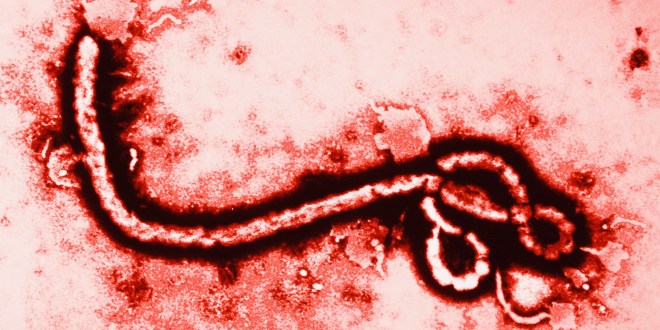
So a few months ago the country was enthralled with the idea of a few patients, infected with the Ebola virus, coming to the United States. Up until this point, we had been safe from Ebola due to the fact that bats can’t fly over the Atlantic. Some people were completely indifferent, while others had seen Outbreak one too many times. Most were a healthy mix, somewhere in between, but what bothered me the most was both the lack of education and the poor information that was spreading more virulently than the virus could ever hope to.
First, I want to stress that I am a nurse, not a virologist, and hopefully throughout my post you will see that I am not pretending to be one. I have a Bachelor’s in Nursing and am currently a graduate student. I have worked extensively with Infectious Disease Specialists. I have been exposed to almost every infectious disease known to the modern world. I have taken courses in Biology, Microbiology, Anatomy, Physiology, Pathophysiology, Advanced Pathophysiology, Pharmacology, and an assortment of others. However, I am not and will not pretend to be an expert, just an experienced professional. When it comes to an epidemic of any sort, my first focus is on the patient, protecting and healing them, my second focus is on protecting the community. I don’t care about which strain does what, or what we can do with in lab. As a nurse, I concern myself with the current patient and future possible patients. I feel the first thing we should examine is Ebola itself. It is foreign to the US, both literally and figuratively. What it does to people and how it harmonizes with nature are both things that most westerners have little concept of. It is a virus, not a bacteria. This means that it is not its own organism. It is actually much smaller and basic than you can imagine. It is nothing more than a few pieces of DNA/RNA and some proteins. No cell wall, no cytoplasm, no metabolic functions. This is both their advantage and their downfall. Viruses require a host. For this example I will use the HIV virus. HIV gets into the human body and invades the host’s white blood cells, T4 cells to be exact but I won’t get that involved. The proteins help get the virus into the cell and those few small sequences of DNA/RNA write themselves into the host DNA/RNA. Now instead of the white blood cell attacking invaders, it is nothing more than an HIV factory. All of its metabolic functions are redirected at producing more of the virus, which pours out of the white blood cell like a sieve until eventually the host cell dies. This is why HIV infected patients have poor immune systems. The virus re-writes the DNA of the host cells. This is not something we can stop. New viruses are pouring out of the white blood cells at a rate of millions a day. We cannot filter them out. We cannot “kill” a little chunk of DNA and we don’t know enough about the human genome to correct the DNA sequences. This is why a lot of viral infections like HIV, Herpes, and Hepatitis are life long infections. HIV invades the white blood cells, Herpes invade the nerve roots, and Hepatitis invades the liver.
Now that we have a better grasp of viruses, we will focus on Ebola a bit more. In tropical Africa, Ebola naturally lives in bats. It is nice to the bats and doesn’t cause them many issues. It is rumored that there are many viruses humans carry our entire lives and have no idea because they show zero symptoms. Therefore, they have never been studied. If this sounds crazy, just remember that it was in recent years the we discovered there was a virus behind cervical cancer. A virus that men can carry and spread without ever knowing they have it. Where the problem arises is that in tropical Africa, people like to eat bats. Sometimes they get infected with Ebola and it spreads. This process is called Zoonosis and can be true of bacteria or viruses. Racoons carry Rabies, Armadillos carry Leprosy, Birds carry the Flu, Bats carry Ebola.
When I said Westerners don’t really understand Ebola, the primary aspect that I am talking about is the patient. We don’t ever see what Ebola does. Our media is too censored, we hear how many died, and see people in haz-mat suits. Speaking of suits, we’ve all seen the pictures. Rubber gloves are adequate for AIDS and hepatitis, a simple mask (N95) stops Tuberculosis, but this requires space suits, just keep that in mind when you think its no big deal. So here is what happens when you catch Ebola, I figure you’re getting bored with reading right about now, so I’ll spice it up. First the virus gets into your system, I’ll elaborate on that later. Then, it hangs out for a few days, even up to 21, growing, multiplying at a rate of millions a day, and guess what, you’re infectious. Now at this point it would pretty much require a straight blood to blood interaction so the only real threat here is for IV drug users who share needles. Just like with the flu or hand foot and mouth disease, you can be spreading it to others before you show a symptom*(apparently not many see the *, so please read the elaboration at the bottom). Remember, nurse mind set, protect the community. At first it’s not bad, little nausea, some sweating, diarrhea, much like a stomach bug. But then the virus really starts to build up in your liver and adrenal glands, after it has saturated your blood cells, the lining of your vessel, your skin, and bones. Hepatocellular necrosis occurs, which is fancy term for your liver starts to decompose.Your liver is what regulates blood clotting. This causes your blood either clot up and turn to jelly in your veins, stay liquid and bleed profusely, or a combo of both. The adrenal glands then do the same, causing your blood pressure to drop. This requires lots of IV fluids to keep your circulating volume up. At the same time inflammatory cytokines are released which causes vascular leakage. Cells don’t do a good job of holding things together so it all becomes a bloody goop. Anywhere in your body that blood vessels are shallow, like your nose, ears, gums, throat, GI tract, urethra, vagina, rectum, all start oozing fluids and bleeding because the tissues that normally keep it contained are disintegrating. So now you bleed from every orifice, including your eyeballs. Every time someone or something touches you, your tissue gets damaged which further the cycle, so a shot in the arm can turn into a massive blood blister. Those who survive are left with massive scarring. Since the adrenals cannot keep your blood pressure up, and you are losing blood and fluids, we have to put IV fluids in to keep you out of hypovolemic shock. This in turn reduces your blood concentration, lowering your oxygen carrying capacity, which causes your heart to race. So you lay in bed, oozing fluids from everywhere, all while feeling like you just ran a marathon, with bloody diarrhea, oh and did I mention pain? Lots and lots of pain, but you can’t have any pain medicine because your liver and kidneys have failed. This why it pains me when I see this outbreak ONLY has a 50% death rate, when in Africa it is up to 90%…ONLY 50%. That is literally worse than cancer, and people are blowing it off. Imagine if cancer was infectious, and you lived in a country with zero cancer, and someone thought it would be a good idea to fly a few people in. I think there would be a different attitude.
The biggest part of the discussion is how Ebola is spread. I will say two things on the topic, no, it is not airborne, and yes, basic hygiene plays a HUGE factor. But while on the topic of whether it is or is not airborne, the definition of an airborne contagion is one that can freely float in the air, survive lengths of time, and infect someone else. VERY few things fit in this category, most have been eradicated, Small Pox, Tuberculosis, Measles. Things that are also NOT airborne, are the flu and the cold. For the flu, you have to come into direct contact with the patients body fluids. How then, do you explain why people catch it and have no idea how. Well for one, people can spread it before they show symptoms, just like Ebola, and one other HUGE factor…droplets….let that word really sink in. The virus may not be airborne, but the droplets are. I’m going to digress for a second and get back to HIV and Hepatitis, while I let droplets dwell in your mind. Everyone knows that HIV and Hepatitis are spread by blood contact, and sexual fluids, I don’t mean a drop of blood on the skin, or even a mucous membrane, it has to get INSIDE of you. This is why only gloves are required. HIV and Hepatitis are not found in urine, stool (Some forms of hepatitis are, but you have to eat the stool to get infected) saliva, sweat, tears, or mucous. This is where some viruses are different. The flu gets into your mucous and other secretions, Ebola tends to stay in the blood, but remember, every one of your bodily fluids are full of blood now. So a person with the flu sneezes, and now millions of little droplets (remember those guys?) shoot out of their nose at nearly mach 1, all across the room, same for a cough, all it takes is a little microscopic droplet to land in your eye, nose, mouth, or the unlikely scenario of an open wound, and you’ve now been infected, because you came in CONTACT with their bodily fluids. I see the word contact thrown around a lot, but most people think of mass amounts of contact with blood, but what they don’t realize is that contact also includes microscopic mucous and saliva droplets, each one chock full of Ebola. Bacteria can survive for long periods of time without a host because they are their own organism. They can feed on just about anything and be happy. Viruses lifespan without a host is much shorter. Their goal is to infect, replicate, and spread, if they cant replicate, they die. Measles only lives 2 hours. But Ebola, depending on what data you look at, can survive for several days.
So with all this information, lets have some role play, so that you can see exactly what this means, to a nurse, in the real world. Imagine it as a cheesy PSA or lifetime movie. You go to see your doctor because its that time of year, you need some blood drawn and refills of your blood pressure med. You sit patiently in the waiting room, thumbing a magazine while your 2-year-old plays with her toys. Like all two year olds, she touches everything, and everything goes in her mouth, toys, pens, her own fingers. She is a 22 lb drool factory and you love her to pieces. You see the doctor, get your goodies, and go home. A week later your angel starts vomiting blood and within 3 days she dies because her heart raced so fast it finally gave up while trying to maintain a blood pressure. Her eyes are blood red and demonic, her skin falls off in sheets. What you don’t know is that 3 days before your visit, someone thought they had the flu. It is October you see and they sneezed while thumbing through that very same magazine you thumbed through. The same thumb you grabbed her pacifier out of your purse with in the waiting room. The people caring for Ebola patients wear space suits, and burn the bodies, yet it still spreads. Here in America, we have much better protocols, and much better hygiene. So if it spreads, it will be contained much better. Still, it spreads prior to symptoms and survives will outside the body, just like the flu. Despite vaccines and good hand washing, thousands still get the flu every year. But while the flu kills 1-2% of its victims, Ebola kills 50% on a good day, and spreads the same way. So please, do not write it off as hype. It is a real thing and it is here.
The case in Dallas has been confirmed. The patient had contact with five children and adolescents prior to admission. Those five kids attend four of the largest schools in Dallas. One sneeze and we could already have thousands of people, who don’t know it yet, infected.
Thank you for reading. Please feel free to comment.
Symptoms* I have had a lot of comments in regards to this. I picked my words carefully, but I never imagined getting thousands of views an hour, or my article getting picked apart, but I will try to elaborate now. I said spread, the virus, I did not say you were contagious. What I meant by this, was the summation of two concepts. To fully explain everything I could write a book, but this is meant to be short and sweet. The first concept is that of a fomite. We have established that the virus can survive for an unspecified amount of time outside the host, and we have established that sneezing/coughing is a perfectly logical method of transmission. So if patient A is infectious/contagious, they sneeze on patient B, but then patient B goes home and picks up their sisters 1 6 month old, who rubs his face, and licks all over your shoulder, he could very well have just orally consumed large quantities of the virus, therefore become patient C. Patient B never got sick, the virus never entered their system, yet they are responsible for spreading the virus to someone else. This is why the 5 exposed kids are so important, there may only be a 2% chance or whatever that they’ll get sick, but if they went to school, and each rubbed up against 500 kids in the hallways, you now have 2500 exposed kids, 50 of which will statistically become infected, 25 of which will probably die. No I do not have a source for the 2%, that is just an EXAMPLE number used to represent the relatively low likelihood of contracting the virus if exposed, granted the R0 factor of R2 is correct. Remember, heal the patient, PROTECT the community. The second concept of this is defining “symptom”. Lets assume it means anything other than your baseline condition. That means the first signs of being contagious, are also the more mild symptoms, sneezy, achy, nausea, flu-like symptoms. So who is going to wake up, feel a little under the weather, and think, crap, I have Ebola, better get quarantined, no, THAT’S how you start fear mongering and mass panic. Again, flu season is upon us, the initial stages of Ebola are like the flu, and its human nature to be in denial, so many people, if infected, would hope its just the flu and wait it out, they are not showing symptoms indicative of Ebola, but they ARE symptomatic of something, and therefore, by the CDC definition, would be contagious. Its also normal procedure for people to be symptomatic BEFORE seeking medical care, so technically, everyone will be contagious, BEFORE knowing they have Ebola. But like I said before, I omitted this lengthy explanation because I didn’t feel it was necessary for the point of the article.
ADDENDUM: Sadly, I feel the need to point out that the title of this blog is “Ebola, A Nurse’s Perspective”, not “A Nurse’s Guide to Surviving the Apocalypse”, or “How to Become an Ebola Expert in 15 minutes”. It could just as well be “Hamburgers, A Chef’s Perspective” and no one would be hounding me over grammar, a misplaced comma, or wanting citations as to why I say it should be on the grill 5 minutes per side of 7 minutes per side. The point is those things are irrelevant to the goal of the article, this is MY perspective (a particular attitude toward or way of regarding something; a point of view.) I don’t have to prove anything, the point of my article is to take what the uneducated (in a medical sense) journalists say, what the talking heads on TV say, and then let you know what the people say who are on the front lines. That’s like discrediting your grandads account of what happened when he stormed Normandy beach, because its not what your history teacher told you. Have I experienced Ebola first hand? Nope, have I experienced a WHOLE lot of other things that the majority of the population has not? You bet your ass I have, and I felt the need to take the time to hopefully help other people out a little. So please keep that in mind, I’m not perfect, but my experiences are my experiences, and I wanted to share them with you, to let you inside the head of a nurse for a minute.
 dtolar
I really enjoyed this article and appreciate your insight. I was falling asleep as I was lying down when I started reading but jumped up to continue. The comments posted provided some entertainment and kept me reading. I stay away from the news and would rather rely on real people who are professionals in the field to share information. Not to say it’s not important to do research but I’m a social worker and I promise you I could give you some real factual information about government systems and how they play out much better than the jokes at DSS and DHHS. So thank you for your tenacity and passion.
LikeLiked by 1 person
Thanks for taking the time (and apparently the flack) for writing a very interesting piece that was also very informative. I believe you gave everyone enough advance notice that this was not an attempt at winning the Nobel Prize for Science, but hey, there are still some people that apparently don’t realize that Dr.Seuss was the finest medical writer of all time -IMHO- Thanks again.
LikeLiked by 2 people
Excellent I am a Nurse also. Thank you. RIght now I am looking at other jobs lol
LikeLiked by 2 people
Thanks so much for your opinion, I appreciate the time you took to write this. As a cna for 10 years , I have a slightly different concern. There’s no dispute that the secretions from a patient very sick with Ebola are highly contagious. I don’t believe there is a plan in place to deal with the safe disposal of linens, wipes, and numerous bags of garbage containing vomit, etc. Even the transportation of these items would require special legislation because they’re technically considered hazardous. The potential rate of employee infection from handling the above would grow with the number of infected patients. Maybe we can control the spread of Ebola, but can we handle the clean up?
LikeLiked by 3 people
Yeah that’s legitimate, because it comes out in sweat and saliva…not sure how that should be handled
LikeLike
Thanks for your insight. As an RN myself, I found this very helpful and you pointed out some very interesting points that I had have, but did not feel comfortable expressing. Thanks again for the article, and as far as the grammar Nazis are concerned, we are science majors for a reason, not English geeks.
LikeLiked by 2 people
As a caregiver for seniors, I was most interested in this article. THANK YOU for taking the time to inform this member of the (Houston area) community!
It is refreshing to hear truth from a clinical perspective and not as one seeking points for sensationalism or one that lacks appropriate precautionary instructions for fear of instating panic. I value your statements more than what I’m hearing on the news… again, thank you!
LikeLiked by 1 person
I too am a nurse. I taught Bloodborne Pathogens to police officers and firefighter EMTs/Paramedics for many years. I covered HIV, Hep A( even though it is food borne) Hep B, C and other subtypes of Hepatitis. I also covered several other Bloodborne pathogens including Ebola. I told them then, starting over 17 years ago, that if it ever was brought into the U.S. we would be in major trouble. It was strange to hear it being discussed on the news, when they first started talking about bringing our infected Americans back to the states for treatment. I told my husband that it was insane. I then told him it was just a matter of time before it is here, and here it is. Our rapid travel means entry into our country before symptoms are even present. It may not take off like wildfire, with these first few cases, but neither did HIV, and this is much, much worse than HIV. I’m sorry you had to take flak over what was an informative missive. I am retired and very thankful. I would not want to be on the frontline of treating this disease. Piece of advise for anyone reading these comments: take your own magazines, books, entertainment sources for your children with you, in a washable bag. Don’t take anything you cannot wipe down inside with you. Use hand sanitizer, when you cannot wash your hands. When you do wash your hands, open the door to get out with your elbow or a clean paper towel. Throw it away after you have opened the door. Before you get in the car, wipe everything down with sanitizing wipes, turn the bag inside out, put it into a plastic bag and as soon as you get home launder it. These steps may sound extreme, but it might just save you or a loved one.
LikeLiked by 3 people
Fantastic article! I think you did an excellent job and laid all the facts out there. As a nurse as well I find it extremely frustrating that some folks (non-medical) do not listen to the facts and instead spread chaos and miseducation learn about illness/prevention and disease. I also learned from your article, thank you for sharing!!!
LikeLiked by 1 person
Thank you for your insight- very informative! And as for people picking apart your information is ridiculous. It should give everyone an inside of how this “could” spread (& in my opinion would spread). lack of knowledge & the assumption that this is not a need to panic is unfair to all of us living in the states. Most are unaware of the possibility of spreading and although we may not be at threat, this article shows the process of which it could be. This virus should not be taken lightly. Very informative! Thankyou so much for your time and insight!
LikeLike
Thank you for your article. I found it very informative and very interesting. I am not in the medical field myself but was thrown into caring for my mother in law when she became bed ridden
After she almost died from contracting a infectious disease Acinetobacter she almost died spent 5 wks in ICU wich the last 2 wks bought me in teaching me how to care for her because no LTach or Rehab would touch her because of the infection she had the Infectious Disease Control people had a meeting informing me the precautions to take. She had a Trach, Peg Tube, Stage 4 bed sore on her back side softball size all the way to the tailbone, not to mention all her other health problems! They were having me dispose of everything in red bags. I constantly cleaned with clorox, sani cloths, and lysol! I over did it but I felt if I or someone else touched it, used it, or walked on it I cleaned it. I would mop before nurses or bath aides would come and after they left just to ensure no one brought anything in to her and hopefully no one left with anything! After 1 yr she had to go to the hospital still being quarntined she was tested (blood and urine) she tested negative and the physician and nurses was shocked to see her alive the Dr. Told me he didn’t expect her to have made it 3 wks because of how bad she was also had her bed sore healed on her back side, and she had gained 50 lbs that year! I cared for her for 4yrs with her passing this last May breaking my heart I might add! She never tested positive again but after the first year they said we didn’t have to dispose of her bodily fluids in red bags anymore but I didn’t feel comfortable about that so we kept purchasing them as well as the sani cloths and cleaned the same as if she were still contagious just as a precaution! For everyone’s saftey! I
Had only 2wks training before taking her home as I said yet sadly people/ nurses would half way do things with her care and cleanliness it saddens me so many go into a field and care so little about the patients! I thank you for your time, caring attitude, and your professional opinion witch you didn’t have to share with us but you did! That shows alot about the wonderful professional that you are! May God Bless you many times over for choosing the under appreciated yet very rewarding job of saving lives! Thanks again!
LikeLiked by 1 person
You should send this to Obama so he cant stop being so naive and test every person coming into the US from an international flight until this is under control.
I loved the article and have become so much more informed, yet it scares the crap out of me knowing my 5 year old is in public school!!
LikeLike
Very good job! I am an RN also in grad school. I think you did a wonderful job, I even learned some things I had not known or thought of!
LikeLike
I am also a nurse, RN, and I totally appreciated the information as well as the intent behind your article. When new things come up regarding health, it never ceases to amaze me the ignorance of people and just good common sense. I remember my grandfather saying when I was young….nobody died of cancer when I was a kid. Yes, they did….they just didn’t know about cancer then and people were dropping like flies over “stomach problems etc”. Thank you for you “perspective” and I couldn’t agree more. People need to really THINK. I have grandchildren in the Dallas area and it scares me to death because you just never know if/when/ or how you or your child may come into contact with it.
LikeLike
Very good article. I am a nurse too and found it to be well written and very informative.
LikeLiked by 1 person
Great advice. Regular people don’t think about things like an ailment that “sheds” and therefore infects people, like measles. Ebola is smart, when it knows the host is almost dead it multiplies even faster so as to find a new host. I’ve been thinking about the people who wear all the gear, full biohazard suit, and still get Ebola. I don’t think “we” know everything there is to know about how it migrates from person to person. Even the common cold is not totally understood. The cold virus wants to infect as many as possible so it will subside so you will feel better and go somewhere like work and get around people, the virus then starts you sneezing and coughing because it can infect more people now. Four hours after a sick person enters an office nearly every item and surface has contaminate on it. So, letting people come here with Ebola is a stupid idea. Letting children who were in contact with the Ebola patient go back to school is frightening. Thank you for your article about Ebola, it is not done with us I’m afraid.
LikeLike
Thank you so much for your article- the media is all hype and very hard to believe. this does answer a lot of questions for me.
LikeLike
This was very well written- you conveyed your message and to me you seen very educated and experienced. As a pharmacist, I learned some things I didn’t know about Ebola bc we weren’t taught it in pharmacy school bc it wasn’t here at that time so obviously we weren’t treating it.
LikeLike
I think another very important point is this. The medical staff that contracted the virus where knowledgeable, trained, and took every precaution and yet they still got infected. What I worry about is this; it’s not what we know, it’s what we think we know.
LikeLiked by 1 person
I was reading previous comments and it just really frustrated me that some people are giving you do much slack about your article! It’s crazy, you did a wonderful job and clearly stated your goal was to inform and state your perspective! You should not have to justify your own perspective. I, for one , think you did an awesome job, and am a RN as well. It angers me that some negative comments are made by people that have never been at the bedside! Keep it up, I thoroughly enjoyed your article and do not let people that have never been at the bedside ,witnessed a dying patient holding their hand, and being left to care for the loved ones left behind get you down! They will never understand.
LikeLike
Oh I know, I feel sorry for those people
LikeLike
Reblogged this on choose happiness and commented:
just in case you really wanted to know about Ebola, here’s a great post.
yikes!
this is a reblog from dtolar, who is a registered nurse in infectious diseases.
LikeLike
They are saying the camera man in Nebraska never had direct contact with a patient while he was in Africa. He did help clean a vehicle that transported a victim and contracted it from that. A lesson for all of us ,Drs. , nurses, Paramedics, Firefighters and everyone in the medical field. We need to have better training and equipment to work with to deal with this and future problems. If the healthcare workers start getting this it will go downhill in a hurry.
LikeLike
Hi there,
I greatly appreciate your article, and really, you should just forget those people who picked it apart looking for a reason to criticize simply because they did not want to accept the realism that your article brought home to them. They shut it out instead and focused on your grammar.. One more reason we may be in trouble with this thing are the people who deny that it is even happening, or an issue worth thinking about. I have been accused of fear-mongering or trying to induce panic because I read an article on the msds website about Ebola and my mind automatically started setting up scenerios in which Ebola could spread with a quickness, and I shared those scenerios with my friends. Your suggested scene of an example of how it could spread is milder than mine.. if in a doctor’s office, you almost can expect to find a virus there.
But how about this: If just one postal worker got Ebola and went to work, how many letters or packages would be contaminated? And brought right into your home.. Where you heard that Ebola lives outside the host for 4 days, I heard 6.
Then there is this idea: Say that someone is feeling the first symptoms of Ebola and thinks they just have a touch of the flu. They don’t get enough sick days at work, so they have to go to work in spite of the fact that they don’t feel well (that situation is common with Amercian employees – I know LOTS of people who go to work when sick because they don’t get enough sick days to take the day off when they don’t feel well). While at work, the person’s symptoms get worse and they begin vomiting. Their co-workers don’t think “Ebola” either, and are even caring for her and holding her hair while she throws up. Vomit ALSO has a droplet rate in air, from what I have heard. Now, everyone who was in her area of her office, and most especially the people who were caring for her were exposed. Finally, they realize that she needs to go home and go to bed, so one co-worker offers to drive her home, and while helping her to the car, gets a little bit of vomit on her arm. The person who drove the lady home goes back to work, and later on, the work day is over, and everyone goes home, and makes dinner or hugs their kids, their husbands, wives, etc.. a few people visit with their neighbors, a few of them go out to eat, and let’s say that even 5 of those people have Ebola ON them, if not IN them and are spreading it around unknowingly. Meanwhile, the sick co-worker goes to the hospital around 2 or 3 in the morning. I really don’t know how long it takes, but that’s just an idea.
If I take your idea and implement it into my hypothesis scenerio, rather than the worker vomiting, she could merely be coughing or sneezing in a small cubicle area with lots of co-workers. She’s not even seeming as sick as I had first suggested. Just a cough..
The first scenerio I ever envisioned about Ebola (not yet mentioned) was right before the man in Dallas was diagnosed with Ebola. What I told my husband was that after reading the article I read, all it would take is one person with Ebola to vomit on a city bus and we would all be screwed. We may think that we Americans are so cleanliness-aware and sophisticated and that a little virus is nothing to worry about. But we really AREN’T all that advanced, it’s just arrogance talking. All you have to do is watch the people in traffic as you drive to work; the old man behind you who is picking his nose at a stop light, the woman with a cell phone in one hand and a burger in the other, and you just KNOW she never sanitized the phone, nor washed her hands before eating, so she’s eating everything she touched in the last 2 hours since she washed her hands last. People touch all KINDS of things and then forget to wash their hands; just a few examples are elevator buttons, door handles, counter and table tops in public places, community pens (the pen on the chain at the bank, or the plastic “pen” at the card reader at a checkout in a store), etc. I think it wouldn’t take much.
And your article confirms that for me. In fact, I found your article more comprehensive on exactly what Ebola does than even the msds on Ebola, or any other article I have read about it. Thank you for sharing, and for assuring us that what we worry about is valid, and that we are not simply paranoid people who by sharing our fears are trying to get people to panic, as we have been accused of. My scenerios were shared with my friends because I wanted them to THINK and be aware and maybe careful too. I am a realist and will not hide my head in the sand and say I trust our government, media, and medical industry to keep us safe, and not to lie to us. I have friends who say that, or say that our medical situation is so much better than Africa’s and we have nothing to worry about. Well, I am still worried! Thank you again! 🙂
LikeLike
I am not entirely sure at this point what we can really do to keep ourselves safe. Hand sanitizer is all well and good, but won’t stop everything, or every way of it getting into a person’s system. I have heard of people ordering online kits that have plastic suits, face masks, gloves, and all kinds of PPE in them. I am not so sure they are not doing the smart thing by doing so. But even WITH those things, if you got in your car with Ebola on your plastic suit, there it is in your car, now. Even if you take off your PPE after getting out of your car and burn or dispose of it in some way before you enter your house every day, your car is infected, so when you get back in your car to go out the next day in your fresh PPE, you are getting Ebola on your PPE before you have even left your neighborhood.. How long before you accidentally bring it into your home? Or one of your family members does? Because they went out and signed for a UPS package, using the pen attached to the clipboard or whatever, and it had had Ebola on it from the last person who signed, or worse yet, from someone who had signed for a package 3 days before. Even worse, the UPS guy coughed right towards your family member WHILE they were signing, and HE was the one who is infected but doesn’t know it. The family member brings the package inside, and has Ebola both on him/her and on the package he/she signed for. There it is, it is in your house. In spite of all that PPE you wear every day trying to prevent yourself from bringing it home. Seriously, Ebola creeps me out..
LikeLike
This is much how I believe I contracted MRSA when I was 7.5 months pregnant….from an INFECTED SURFACE, likely in a hospital environment. Thereafter, every one of my charts was marked with MRSA and yet I still had to remind countless nurses and doctors to put on gloves or wash their hands before and after touching me. And though I know you’re a nurse and I mean no disrespect, there are plenty of professionals who do not follow the necessary protocol to PREVENT and PROTECT their patients and it only takes one to make a mistake that will cost the rest of us our lives. So don’t write off this great threat because officials have stated that special procedures are in place to prevent the spread…that they are “containing it”. Special procedures are set in place to prevent the spread of MRSA yet I still got it and I still regularly dealt with medical professionals who did NOT follow protocol.
LikeLike
thank you for the informative post. I work in an elementary school in Colorado and this helps me to protect my self and all my kiddos.
LikeLike
I didn’t have time to read all the comments yet, but I do have a few questions that maybe you can help with. Or maybe there will be someone here with ideas/info. I live in rural East Texas, sounds safe enough, but I am actually less than two hours from Mr Duncan in Dallas. I read that Mr Duncan threw up in the parking lot on the way to the hospital the time he was put into isolation. The parking lot was to an apartment complex, where families live and families have pets. There are also several birds indigeneous to the region, many a carrion birds. I read where the city officials are not concerned with the vomit. Can dogs and cats catch Ebola? The devil is in the details! Could there be a Rover or Fluffy sleeping with Jr right now, with a headache, unable to say what hurts because pets don’t talk?!?!? Also someone told me that colloidal silver will kill Ebola. Has this been used as an experimental drug?
LikeLike
As far as we know it doesn’t, I’ve only see bats, pigs and apes…which are all a lot closer to us than you tgink
LikeLike
i have considered getting face masks for when i go to the grocery store , they are pretty cheap the schools around here are telling people to allow the kids to go to school whether they are sick or not, which IMO is crazy
.
LikeLike
In your article you wrote “Things that are also NOT airborne, are the flu and the cold.” There is an NPR article that says “Ebola isn’t spread through the air, like the measles or flu.” http://www.npr.org/blogs/health/2014/10/02/352983774/no-seriously-how-contagious-is-ebola So which is it? I don’t know the difference between droplets and spread through the air. It’s all the same to me and most people. We’re not doctors or nurses or scientists studying this. So when you or someone else implies that it is spread through the air via droplets in a sneeze and then NPR (or any other media outlet) says something else, then people are confused and angry. This is part of the reason people don’t trust. There’s too much misinformation out there. Who are we to believe?
LikeLiked by 1 person
The difference is that some pathogens are released directly into the air from the body, like tuberculosis, so all the person has to do is exhale a normal breathe, and a little critters come flying out. Or things like Chicken pox that float out of the sores. The Flu gets released into our bodily fluids like saliva and mucous, so when you sneeze, your body expels it in droplets. In the case of the flu, the virus itself is so tiny, that the smaller droplets, in the 1-10 micron range, evaporate very quickly, and the virus is small enough to freely float around in the air. Ebola also gets expelled this same way, but the virus is much larger and doesn’t float well, hence the reason the main concern with it isn’t inhalation, but rather contact with the wet, or even dried droplets when they land on a surface, hence the “contact with body fluids” statements. Also, the R0 values are all relative, The R0 of Chlamydia is only 0.7, but I would surely think long and hard about climbing into bed with someone. The thought of “Its not that contagious” surely wouldn’t cross my mind. And right now, the R0 of Ebola in the US is 0, I don’t see why its not a bad idea to keep it that way.
LikeLike
The difference is this… either the virus floats freely through the air – AIRBORNE, or it can be carried (forcefully) into the air momentarily with a cough or sneeze within the sputum spray or mist.
LikeLike
Reblogged this on Authors with Opinions and commented:
Complacency vs. Cold Reality or Because I Could Not Have Said It Better Myself
Why am I reblogging Ebola, A Nurse’s Perspective? Because, I could not have said it better myself.
The first time I heard the word Ebola and United States used in the same sentence, I was flabbergasted. Now we have Dallas County and Ebola used in the same sentence and there are not enough adjectives, emoticons or four letter words to convey what I think. Dallas County is my neighbor… so is Ebola.
The thing that really worries me with this virus is not so much the creature itself but the hosts. People are complacent. Too many think you can drown it in hand sanitizer or throw a pill at it and poof, like magic it will go away. If you think I am exaggerating, consider this, how many people in the US refuse to stay home when they have the flu? How many individuals with cold/allergy symptoms did you encounter today? Last week?
Think about buggies, handles, doorknobs, and the bottom of your shoes. Think ‘cold season, flu season’… just think.
There is a practical line between paranoia and complacency – take that route. Also take a few minutes to read Ebola, A Nurse’s Perspective.
LikeLike
First, i’d like to thank you for the great post–I would like to say I found some of the info above to be slightly inaccurate-HIV IS found in Saliva and tears-but not sweat.
“HIV has been found in saliva and tears in very low quantities from some AIDS patients. It is important to understand that finding a small amount of HIV in a body fluid does not necessarily mean that HIV can be transmitted by that body fluid. HIV has not been recovered from the sweat of HIV-infected persons” Just wanted to let you know that…
LikeLike
Interesting, never seen that before
LikeLike
Thank you for taking the the time to write this, and get it out there it is very informative!
LikeLike
Very well written and informative! I’m also an RN and this more straight forward and accurate (and scary) than anything else I’ve read! Well done…
LikeLike
Bravo! Great article.
LikeLike
I am also a nurse- I enjoyed the blog and think you hit right on target!
LikeLike
I have taken a lot of abuse lately in responding to other articles because, as a nurse, I think it is a really careless idea to be bringing people to this country who have been infected with this virus. People who don’t work in healthcare don’t have the slightest idea how dirty and dangerous hospitals are. Right now infected people are being cared for in super specialized units by specially trained personnel with special equipment. As more and more people become infected, these units will be unable to handle the numbers that will require this specialized care. So far, those brought to this country have been generally healthy. In time, those infected will be sicker, and have other underlying conditions, requiring the services of other departments in hospitals where the staff is not specially trained. Procedures in hospitals can be very messy and very bloody. And we haven’t even talked about the fact that viruses have a nasty habit of mutating. So now the Ebola virus is only contagious by direct contact. We don’t know at what point the virus might mutate to be contagious by being airborn.
LikeLike
I too am a RN with 26 yrs. ER exp..After reading your artic. there is nothing in it I can disagree with. The powers that be keep repeating “bld and body fluid” like a mantra. I think when the general public hear this they think of HIV, sex, transfusions and dirty needles not the flu. We could be in for a very long winter.
LikeLike
Great article and very informative. I have to ask though; if the few people (Caucasians) who have returned here for treatment and recovered actually had Ebola, how come they look so good after just a few weeks? No scars from broken blood vessels, no hungover look like most people have after being just under the weather, not to mention recovering from a deadly illness. That red-blonde haired missionary guy was at Congress testifying a few weeks after he returned; it doesn’t make any sense and my hackles are up about the possibilities…
LikeLike
I haven’t seen them so I can’t really answer, I know those two initial doctors in Atlanta received that experimental treatment, that may have something to do with it. And not all people suffer the severe hemorrhagic effects, those who do usually die
LikeLike
Great article! I have learned so much.. Very easy to understand for someone without a medical background.
LikeLike
Just imagine, ONE Wal-mart cashier going to work sick, like many do EVERY single day. This is a very fascinating read. I can tell you, we are SCREWED if it gets out here, if it’s as easily spread as coughs and sneezes. No one working a part-time job can take off long enough to recover fully from things like the flu – they are usually just given a day or two to get past the initial symptoms. Then it’s back to working, hacking and runny nose everywhere!
LikeLike
Kate grabowski, you, my dear, are a pompous windbag. The author was more than clear regarding her credentials and her perspective and her experience. What you have said here in NO way maoes a meaninful contribution to this topic in this setting. You add confusion and frustration only. Not useful information. Its jackwagons such as yourself who have everyone in this country scratching thier heads. You, and the talking head puppets who spew only what the gov’t thinks the general punlic should hear. The autho spoke plain english andnconveyed a wonderfully clear picture of what we are likely to face. You on the otherhand threw a bucket of mud in what was becoming clear water.
LikeLike
LYNN what is it that makes what I’m saying pompous? There is fact and then there is opinion, and I think it is our duty as trained medical professionals to point out factually inaccurate information (some of which is fear mongering) in widely circulating blogs. I find it very frustrating that a nurse somehow has more credentials than trained infectious disease epidemiologists at the CDC. I don’t write blogs about clinical care from an epidemiologists perspective. I also believe that people should appropriately cite materials that can be perceived as controversial.
LikeLike
But I’m not a nurse giving the perspective of an epidemiologist. Despite your efforts, when these people get sick, it is us taking care of them. The general public knows little to nothing about Ebola, I simply stated how it works. If you like to correct my “inaccuracies” with citeable data, feel free, so far no one has.
LikeLike
Dustin, in my previous comments I left several links one of which is an excellent blog that cites all the most current research and WHO, MSF findings etc… I don’t mean to be harsh and I’m really sorry if I came off as rude in previous comments. That said I do think appropriate distinction of airborne vs. droplet transmission is important (which you do explain very well in subsequent comments btw). I felt that the analogy to flu particularly blurred the lines. One commentator even wrote that makes the distinction between airborne and droplet transmission makes no difference to him, which it should because airborne infectious diseases have much greater potential for transmission (for instance its the difference between a whole plane getting sick vs. only those sitting next to a person). I also think its very important that people are assured that there is no evidence for asymptomatic transmission at this time. I really appreciated your perspective on the clinical care and concerns of health care workers (which I think is so critical). However, I’m worried when you have people on your blog saying they distrust CDC, NIH, and DHHS workers who have dedicated their lives to understanding how these disease spread and not because they wanted to make a lot of money.
LikeLike
WOW….this MUST circulate. Great job on this, very easy to understand for the lay person. I feel better educated. Thank you.
LikeLike
Could never understand people who hat quarantine. Never.
Horrifying read, but necessary. I thought your writing was perfect for the topic. How could anyone not appreciate your work, here, to help us be safer? I think some folks get jealous of someone who actually has something to say worth reading, and they try to discredit the writer, in retaliation.
So let me slip into a space suit right quick and give you a big hug. ❤ K
LikeLike
* hate quarantine. sorry.
LikeLike
Lol, thank you
LikeLike
🙂
LikeLike
Reblogged this on Home's Cool!.
LikeLike
Hello,
Thank you so much for explaining this to us. It seems the government tries to hide so much. I am scared for us all! This virus is very real and we should be prepared.
LikeLike
The “step daughter” of the Liberian man in Dallas said she went to Wal-Mart to buy a blanket because he was shivering. Is it not likely she left a lot of virus in that store, and wherever else she might have been? We have not heard that they are tracking down those potential contacts, probably because that would be all but impossible.
Hope I am overthinking this.
LikeLike
This is a fomite scenario I was referring ti…unlikely, but possible
LikeLike
Your outline is only one of several possible Ebola senarios, but it is factual and possible. We dare not underestimate Ebola. We must watch carefully and learn from what is now happening in West Africa. It appears that Ebola is in fact quite hard to transmit, nonetheless epidemics have occured. Hopefully we can develop a vacine. If not we are in for quite a fight and should prepare for it.
LikeLike
Very well written and very informative. Not meaning to interrogate you, but with you being medical and so many medical people commenting, anyone have suggestions for what to do if you have to travel? I have a 5 month old that I have to travel with up the east coast in November and I would love any advice on how to keep her safe.
LikeLike
Good hand hygiene makes a world of difference, but right now there isn’t any evidence of uncontained cases, so I wouldn’t worry too much
LikeLike
Thank you for sharing!
LikeLike
>>>>>>>>>>>>>>> EXCELLENT! <<<<<<<<<<<<<<<
LikeLike
Thank you for writing and sharing this article. I’m sorry you are getting so much backlash from others.
LikeLike
It comes with the territory, you can’t please everyone, thanks for the support
LikeLike