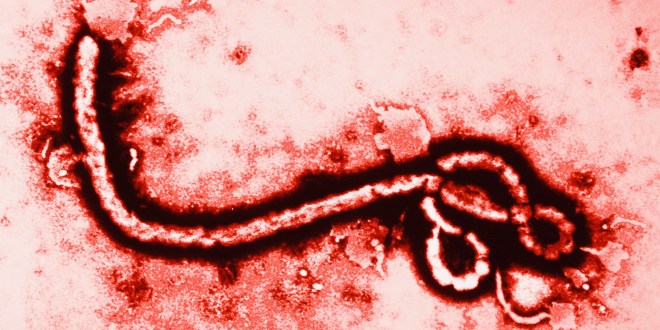
So a few months ago the country was enthralled with the idea of a few patients, infected with the Ebola virus, coming to the United States. Up until this point, we had been safe from Ebola due to the fact that bats can’t fly over the Atlantic. Some people were completely indifferent, while others had seen Outbreak one too many times. Most were a healthy mix, somewhere in between, but what bothered me the most was both the lack of education and the poor information that was spreading more virulently than the virus could ever hope to.
First, I want to stress that I am a nurse, not a virologist, and hopefully throughout my post you will see that I am not pretending to be one. I have a Bachelor’s in Nursing and am currently a graduate student. I have worked extensively with Infectious Disease Specialists. I have been exposed to almost every infectious disease known to the modern world. I have taken courses in Biology, Microbiology, Anatomy, Physiology, Pathophysiology, Advanced Pathophysiology, Pharmacology, and an assortment of others. However, I am not and will not pretend to be an expert, just an experienced professional. When it comes to an epidemic of any sort, my first focus is on the patient, protecting and healing them, my second focus is on protecting the community. I don’t care about which strain does what, or what we can do with in lab. As a nurse, I concern myself with the current patient and future possible patients. I feel the first thing we should examine is Ebola itself. It is foreign to the US, both literally and figuratively. What it does to people and how it harmonizes with nature are both things that most westerners have little concept of. It is a virus, not a bacteria. This means that it is not its own organism. It is actually much smaller and basic than you can imagine. It is nothing more than a few pieces of DNA/RNA and some proteins. No cell wall, no cytoplasm, no metabolic functions. This is both their advantage and their downfall. Viruses require a host. For this example I will use the HIV virus. HIV gets into the human body and invades the host’s white blood cells, T4 cells to be exact but I won’t get that involved. The proteins help get the virus into the cell and those few small sequences of DNA/RNA write themselves into the host DNA/RNA. Now instead of the white blood cell attacking invaders, it is nothing more than an HIV factory. All of its metabolic functions are redirected at producing more of the virus, which pours out of the white blood cell like a sieve until eventually the host cell dies. This is why HIV infected patients have poor immune systems. The virus re-writes the DNA of the host cells. This is not something we can stop. New viruses are pouring out of the white blood cells at a rate of millions a day. We cannot filter them out. We cannot “kill” a little chunk of DNA and we don’t know enough about the human genome to correct the DNA sequences. This is why a lot of viral infections like HIV, Herpes, and Hepatitis are life long infections. HIV invades the white blood cells, Herpes invade the nerve roots, and Hepatitis invades the liver.
Now that we have a better grasp of viruses, we will focus on Ebola a bit more. In tropical Africa, Ebola naturally lives in bats. It is nice to the bats and doesn’t cause them many issues. It is rumored that there are many viruses humans carry our entire lives and have no idea because they show zero symptoms. Therefore, they have never been studied. If this sounds crazy, just remember that it was in recent years the we discovered there was a virus behind cervical cancer. A virus that men can carry and spread without ever knowing they have it. Where the problem arises is that in tropical Africa, people like to eat bats. Sometimes they get infected with Ebola and it spreads. This process is called Zoonosis and can be true of bacteria or viruses. Racoons carry Rabies, Armadillos carry Leprosy, Birds carry the Flu, Bats carry Ebola.
When I said Westerners don’t really understand Ebola, the primary aspect that I am talking about is the patient. We don’t ever see what Ebola does. Our media is too censored, we hear how many died, and see people in haz-mat suits. Speaking of suits, we’ve all seen the pictures. Rubber gloves are adequate for AIDS and hepatitis, a simple mask (N95) stops Tuberculosis, but this requires space suits, just keep that in mind when you think its no big deal. So here is what happens when you catch Ebola, I figure you’re getting bored with reading right about now, so I’ll spice it up. First the virus gets into your system, I’ll elaborate on that later. Then, it hangs out for a few days, even up to 21, growing, multiplying at a rate of millions a day, and guess what, you’re infectious. Now at this point it would pretty much require a straight blood to blood interaction so the only real threat here is for IV drug users who share needles. Just like with the flu or hand foot and mouth disease, you can be spreading it to others before you show a symptom*(apparently not many see the *, so please read the elaboration at the bottom). Remember, nurse mind set, protect the community. At first it’s not bad, little nausea, some sweating, diarrhea, much like a stomach bug. But then the virus really starts to build up in your liver and adrenal glands, after it has saturated your blood cells, the lining of your vessel, your skin, and bones. Hepatocellular necrosis occurs, which is fancy term for your liver starts to decompose.Your liver is what regulates blood clotting. This causes your blood either clot up and turn to jelly in your veins, stay liquid and bleed profusely, or a combo of both. The adrenal glands then do the same, causing your blood pressure to drop. This requires lots of IV fluids to keep your circulating volume up. At the same time inflammatory cytokines are released which causes vascular leakage. Cells don’t do a good job of holding things together so it all becomes a bloody goop. Anywhere in your body that blood vessels are shallow, like your nose, ears, gums, throat, GI tract, urethra, vagina, rectum, all start oozing fluids and bleeding because the tissues that normally keep it contained are disintegrating. So now you bleed from every orifice, including your eyeballs. Every time someone or something touches you, your tissue gets damaged which further the cycle, so a shot in the arm can turn into a massive blood blister. Those who survive are left with massive scarring. Since the adrenals cannot keep your blood pressure up, and you are losing blood and fluids, we have to put IV fluids in to keep you out of hypovolemic shock. This in turn reduces your blood concentration, lowering your oxygen carrying capacity, which causes your heart to race. So you lay in bed, oozing fluids from everywhere, all while feeling like you just ran a marathon, with bloody diarrhea, oh and did I mention pain? Lots and lots of pain, but you can’t have any pain medicine because your liver and kidneys have failed. This why it pains me when I see this outbreak ONLY has a 50% death rate, when in Africa it is up to 90%…ONLY 50%. That is literally worse than cancer, and people are blowing it off. Imagine if cancer was infectious, and you lived in a country with zero cancer, and someone thought it would be a good idea to fly a few people in. I think there would be a different attitude.
The biggest part of the discussion is how Ebola is spread. I will say two things on the topic, no, it is not airborne, and yes, basic hygiene plays a HUGE factor. But while on the topic of whether it is or is not airborne, the definition of an airborne contagion is one that can freely float in the air, survive lengths of time, and infect someone else. VERY few things fit in this category, most have been eradicated, Small Pox, Tuberculosis, Measles. Things that are also NOT airborne, are the flu and the cold. For the flu, you have to come into direct contact with the patients body fluids. How then, do you explain why people catch it and have no idea how. Well for one, people can spread it before they show symptoms, just like Ebola, and one other HUGE factor…droplets….let that word really sink in. The virus may not be airborne, but the droplets are. I’m going to digress for a second and get back to HIV and Hepatitis, while I let droplets dwell in your mind. Everyone knows that HIV and Hepatitis are spread by blood contact, and sexual fluids, I don’t mean a drop of blood on the skin, or even a mucous membrane, it has to get INSIDE of you. This is why only gloves are required. HIV and Hepatitis are not found in urine, stool (Some forms of hepatitis are, but you have to eat the stool to get infected) saliva, sweat, tears, or mucous. This is where some viruses are different. The flu gets into your mucous and other secretions, Ebola tends to stay in the blood, but remember, every one of your bodily fluids are full of blood now. So a person with the flu sneezes, and now millions of little droplets (remember those guys?) shoot out of their nose at nearly mach 1, all across the room, same for a cough, all it takes is a little microscopic droplet to land in your eye, nose, mouth, or the unlikely scenario of an open wound, and you’ve now been infected, because you came in CONTACT with their bodily fluids. I see the word contact thrown around a lot, but most people think of mass amounts of contact with blood, but what they don’t realize is that contact also includes microscopic mucous and saliva droplets, each one chock full of Ebola. Bacteria can survive for long periods of time without a host because they are their own organism. They can feed on just about anything and be happy. Viruses lifespan without a host is much shorter. Their goal is to infect, replicate, and spread, if they cant replicate, they die. Measles only lives 2 hours. But Ebola, depending on what data you look at, can survive for several days.
So with all this information, lets have some role play, so that you can see exactly what this means, to a nurse, in the real world. Imagine it as a cheesy PSA or lifetime movie. You go to see your doctor because its that time of year, you need some blood drawn and refills of your blood pressure med. You sit patiently in the waiting room, thumbing a magazine while your 2-year-old plays with her toys. Like all two year olds, she touches everything, and everything goes in her mouth, toys, pens, her own fingers. She is a 22 lb drool factory and you love her to pieces. You see the doctor, get your goodies, and go home. A week later your angel starts vomiting blood and within 3 days she dies because her heart raced so fast it finally gave up while trying to maintain a blood pressure. Her eyes are blood red and demonic, her skin falls off in sheets. What you don’t know is that 3 days before your visit, someone thought they had the flu. It is October you see and they sneezed while thumbing through that very same magazine you thumbed through. The same thumb you grabbed her pacifier out of your purse with in the waiting room. The people caring for Ebola patients wear space suits, and burn the bodies, yet it still spreads. Here in America, we have much better protocols, and much better hygiene. So if it spreads, it will be contained much better. Still, it spreads prior to symptoms and survives will outside the body, just like the flu. Despite vaccines and good hand washing, thousands still get the flu every year. But while the flu kills 1-2% of its victims, Ebola kills 50% on a good day, and spreads the same way. So please, do not write it off as hype. It is a real thing and it is here.
The case in Dallas has been confirmed. The patient had contact with five children and adolescents prior to admission. Those five kids attend four of the largest schools in Dallas. One sneeze and we could already have thousands of people, who don’t know it yet, infected.
Thank you for reading. Please feel free to comment.
Symptoms* I have had a lot of comments in regards to this. I picked my words carefully, but I never imagined getting thousands of views an hour, or my article getting picked apart, but I will try to elaborate now. I said spread, the virus, I did not say you were contagious. What I meant by this, was the summation of two concepts. To fully explain everything I could write a book, but this is meant to be short and sweet. The first concept is that of a fomite. We have established that the virus can survive for an unspecified amount of time outside the host, and we have established that sneezing/coughing is a perfectly logical method of transmission. So if patient A is infectious/contagious, they sneeze on patient B, but then patient B goes home and picks up their sisters 1 6 month old, who rubs his face, and licks all over your shoulder, he could very well have just orally consumed large quantities of the virus, therefore become patient C. Patient B never got sick, the virus never entered their system, yet they are responsible for spreading the virus to someone else. This is why the 5 exposed kids are so important, there may only be a 2% chance or whatever that they’ll get sick, but if they went to school, and each rubbed up against 500 kids in the hallways, you now have 2500 exposed kids, 50 of which will statistically become infected, 25 of which will probably die. No I do not have a source for the 2%, that is just an EXAMPLE number used to represent the relatively low likelihood of contracting the virus if exposed, granted the R0 factor of R2 is correct. Remember, heal the patient, PROTECT the community. The second concept of this is defining “symptom”. Lets assume it means anything other than your baseline condition. That means the first signs of being contagious, are also the more mild symptoms, sneezy, achy, nausea, flu-like symptoms. So who is going to wake up, feel a little under the weather, and think, crap, I have Ebola, better get quarantined, no, THAT’S how you start fear mongering and mass panic. Again, flu season is upon us, the initial stages of Ebola are like the flu, and its human nature to be in denial, so many people, if infected, would hope its just the flu and wait it out, they are not showing symptoms indicative of Ebola, but they ARE symptomatic of something, and therefore, by the CDC definition, would be contagious. Its also normal procedure for people to be symptomatic BEFORE seeking medical care, so technically, everyone will be contagious, BEFORE knowing they have Ebola. But like I said before, I omitted this lengthy explanation because I didn’t feel it was necessary for the point of the article.
ADDENDUM: Sadly, I feel the need to point out that the title of this blog is “Ebola, A Nurse’s Perspective”, not “A Nurse’s Guide to Surviving the Apocalypse”, or “How to Become an Ebola Expert in 15 minutes”. It could just as well be “Hamburgers, A Chef’s Perspective” and no one would be hounding me over grammar, a misplaced comma, or wanting citations as to why I say it should be on the grill 5 minutes per side of 7 minutes per side. The point is those things are irrelevant to the goal of the article, this is MY perspective (a particular attitude toward or way of regarding something; a point of view.) I don’t have to prove anything, the point of my article is to take what the uneducated (in a medical sense) journalists say, what the talking heads on TV say, and then let you know what the people say who are on the front lines. That’s like discrediting your grandads account of what happened when he stormed Normandy beach, because its not what your history teacher told you. Have I experienced Ebola first hand? Nope, have I experienced a WHOLE lot of other things that the majority of the population has not? You bet your ass I have, and I felt the need to take the time to hopefully help other people out a little. So please keep that in mind, I’m not perfect, but my experiences are my experiences, and I wanted to share them with you, to let you inside the head of a nurse for a minute.
 dtolar
I am really glad you have spoken up. I was talking to my husband about this very thing the other day, and I said that, as a retired nurse, I believed that there was still the droplet method of spreading the Ebola virus. I am so glad to hear it is possible, and that there needs to be much more containment and information regarding the whole Ebola virus.
LikeLiked by 2 people
Only a nurse (or medic or doctor) would memorialize the utterance: “…I believed that there was still the droplet method of spreading the Ebola virus. I am so glad to hear it is possible…”!
LikeLiked by 1 person
I came to Dallas Thursday to attend a concert at the Texas State Fair on Friday. I was exposed to large crowds for several hours. Now I’m terrified.
LikeLike
We locked it down pretty quick, so since no one else appears to have gotten I’ll at this point, I’m certain you’re fine.
LikeLike
Meanwhile, the patient who had it barfed in the parking lot, janitors “cleaned” it up with running water that others stepped in…this, days before knowing the barf was from the guy with Ebola. Pretty sure the cleaning tools they used were not burned up. They’re probably sitting in the janitor closet now. (Or at least they were there for a couple of days.) Anyway, you get my drift. This thing should be taken seriously. But, no. The sky is not falling. On the flip side, your government is lying and the media is suppressing important facts.
LikeLike
Should I be scared?
LikeLike
It’s nice to simple down complexities for people but some of the things in this article are simply not true. Some big things. For example Ebola does NOT spread prior to symptoms like the flu! Only those showing symptoms are contagious. http://www.who.int/csr/disease/ebola/faq-ebola/en/ (see #4).
Please back up your information, this is how nonsense gets spread.
LikeLike
Please see my * at the bottom. I elaborate more, the who article does not account for secondary infection by the action of fomites. This is the reason my article does not say you are contagious, as your reply did. I said it is possible to spread the virus without having symptoms. I’m feeling generous so I’ll give an example. Let’s say I have a patient with hepatitis, and I start an IV on them, get blood on my hands, but just wipe them off, not wash, then clean another patients wound. I just gave that patient hepatitis while never having the disease myself. If you get sneezed on by an Ebola patient, you can spread the virus to others vis contact with your clothing, while you appear perfectly happy.
LikeLike
The fomites you speak of would have to come from someone that was actually showing symptoms of Ebola… you do not spread the virus unless you have symptoms (the viral load is not enough to spread pre-symptoms). So even if someone was infected with Ebola, as long as they are not showing symptoms of the disease – even if they sneeze or cough on someone they would not spread the disease. The 5 kids that were exposed could have in no way infected the other people in the school (even if they did sneeze all over the place) because they were not showing any symptoms at the time. Ebola definitely is a serious virus – but we need to make sure that we are spreading accurate information. Ebola does NOT spread like the flu.
LikeLiked by 1 person
You also made a good point about those who are symptomatic but have not been diagnosed. Whether it is the engineer who is just trying to get through his shift at the water plant to go home and take care of his flu, or the people in the waiting room who are about to be diagnosed. Just like heart attacks it is easy to point out symptoms in hindsight. The point is to get people to realize that we need to protect ourselves and not just rely on those who make the decision to isolate a dx patient.
LikeLike
hey the who has also openly admitted recently that this may be a new strain not like the other 5 viruses already known to be in existence. also I don’t believe for one moment that the WHO nor our Govt. are being 100% honest for fear of panic! I can’t think of 1 instance where if you have a virus but no symptoms yet you aren’t able to transmit through droplet partials.
LikeLike
What is the “fear” or “panic” issue? Do you think the gov’t thinks our fear and/or panic will do more harm, than say, an outbreak of Ebola?
LikeLike
The government presenting this as a no-big deal situation is irresponsible and their airport screening techniques are laughable. I don’t necessarily consider myself a doomsday theorist, and I don’t plan on raiding the grocery store or stockpiling but based on some of the information that you present, I feel that it would be personally irresponsible for to let my 2 year old child who cannot defend himself attend daycare if the disease does happen to pop up in my area. He has gotten everything from the common cold to roseola and passed that onto me while I was pregnant in my third trimester. People let their kids go to school and drop them off at daycare with full blown illnesses to test if they can make it through the day. It infuriates me. Yep, not chancing that for a sec. You are a great writer. Thanks for your perspective.
LikeLiked by 1 person
I work in a nursing home and all I keep thinking is what would happen if it gets in here? I can see how the Niro virus spreads like wild fire…would it be same? This was a great read. Thank you for sharing!
LikeLike
Absolutely great article!
LikeLike
thank you thank you thank you for explaining it so well… You’re right I didn’t think it was important… But now I do
LikeLiked by 1 person
Very well written post. You’ve taken all of my thoughts on the topic and elaborated on them so simply in layman’s terms. I don’t want to see mass hysteria anytime soon, but I also don’t want to see the other end of the spectrum, a lackadaisical attitude. Let’s face it, neither will help our case at this point. Hopefully, my small part in educating patients/community about the mechanism of transmission of Ebola, and how to effectively prevent infection, will be adequate in the long run. I’ll definitely point them to this post if they are interested in more in-depth explanations.
LikeLiked by 1 person
Thank you for your kind words, I felt the same way you did and made this blog, I’ve reached 184,000 people in 4 days.
LikeLiked by 2 people
Thank you for posting.
LikeLiked by 1 person
I appreciate you taking the time to explain further.
LikeLike
Well this freaks me the heck out!!
Thanks for the informative article
LikeLike
Close the borders,don’t send 3600 troops to africa, stop all flight from africa.corenteen everyone that been in contact with the Ebola Patient.
LikeLike
Have been in healthcare >30 yrs
Article is concise, well written, and will scare the shit out of most people( be it laymay or medical)
Hoping it does just that because the untouchables of this pampered nation need to see what could possibly happen and have it explained in terms that most can relate to.
We as healthcare workers are screwed if this takes on the proportions of HIV or hepatitis. The system is ill equipped to deal with this, so call us alarmists but the reality of the ramifications of global catastrophe are real.
Well done fellow nurse.
LikeLiked by 2 people
Finally, someone who understands the purpose of my article
LikeLiked by 1 person
Thank you for writing this, im a Biologist and have studied Ebola before, but recently more so. I have kids and live in TX, so I am worried. Thank you!
LikeLike
Its so nice to have people smarter than me give me their approval 🙂
LikeLike
Will hand sanitizer help any. My family and I have plans to go to Dallas this weekend for the state fair I have a 3 yr old and I wanna protect her
LikeLike
Yes ma’am, just be weary of body fluids, but I’m very confident the situation in Dallas is contained, and you should have nothing to fear.
LikeLike
Dustin Tolar, your article does give some scary thoughts. One possible saving grace: We’ve been told the reproduction rate (R0) is less than 2. Assuming that’s true, wouldn’t that mean it’s not as contagious, and therefore more containable?
LikeLike
Yes, but those R0 factors just show the relativity, chlamydia is a rampant disease and its .77
LikeLike
Can you explain “relativity”? I’m not medical. I just understand this to mean 2 people are infected for every one. Which (in my non-medical world) sounds bad, but more containable than the flu, which you were comparing it to.
LikeLike
Just because a cruise missile kills a lot less people than a nuke, doesn’t mean the cruise missile shouldn’t be taken seriously….sorry, I’m a bit sluggish on elaborating today
LikeLike
I may be mistaken. Looks like the R0 for the flu is 1.4, even less than Ebola, and it always gives us lots of infections, despite the increased hygiene practices and vaccines. http://en.wikipedia.org/wiki/Influenza#Epidemic_and_pandemic_spread
LikeLike
Awesome, I looked for that the other day and couldnt find it
LikeLike
R0 must be part of any discusion of infectious disease, but you must also consider when and how the disease is spread. Ebola is highly contagious if you come into contact with bodily fluids of someone who is infected. If Ebola were spread when someone was asymptomatic, we would have a very different problem on our hands. The big difference here is that flu, HIV, Hep C, and chlamydia can be transmitted by an asymptomatic carrier which is why, even with a low R0, they are still quite successful at spreading. Unless you come in contact with someone who has an active case of Ebola, you chances of getting it are effectively zero.
LikeLike
Great article, well written and easy to comprehend. Thank u for taking the time and effort to put light on this subject.
LikeLike
so glad you touched up
on the It can be spread before symptoms are present! it pissed me off to
no end when the news reported that it isn’t contagious till symptoms are present. I’m a nurse and I’m sure it was said to
help ward off panic in the community some but really we are beyond this. People need to be informed with
truthful helpful and easy to understand information like this!
LikeLike
Ebola is not spread from a host prior to symptom presentation. Everything I have read makes this statement. Even the WHO website. Are you saying that is incorrect, or is your information faulty?
LikeLike
In all honesty, is it better to avoid the state fair? My husband and I go to the OU Texas game every year and now I am paranoid we will bring something back to our three small children!!
LikeLike
I think itll be just fine
LikeLike
Nevermind. I saw your other comment.
LikeLike
Anytime….hopefully my elaboration at the bottom clears it up….and thank you for being much more polite than the people before you
LikeLike
thanks for the educational lesson. Before reading I understood you were not infectious until you showed symptoms. Also, I was unaware that the virus can survive outside the host up to 4 days. What type of germacyde would kill this virus on objects?
LikeLike
Bleach is the only thing I’ve seen used consistently. And please be sure to read my addendums at the bottom
LikeLiked by 1 person
If I were grading this, you’d be lucky getting a C- after a rewrite on the grounds it’s Oktoberfest. There’s no authoritative sources, excessive personal opinion/banter & the audience is unclear. I will not begin on how unorganized the thought process is written, it angers me trying to follow unorganized though processes. As nurses, we MUST be cautious disseminating information ESPECIALLY given the panic the public is feeling. Medical terminology can be intimidating & people are desperate for answers in laymen’s terms – which is what makes a good nurse a nurse. This wouldn’t be someone I would call a good nurse after reading her ‘viewpoint’.
LikeLike
Please see the addendum at the bottom. Out of 185,000 reads you are the first to call it disorganized.
LikeLike
No one cares about your grades. This is a great article and is written and read in a conversational manner. This is more quality information provided to us than our media has given us. No one is asking you to grade their writing, nor their medical profession.
LikeLike
Well first its his viewpoint, not hers. and I have maintained a 4.0 in my graduate studies, so I feel my writing is adequate. Secondly, this is full of personal opinion because this is my personal blog, on which I wrote an opinion piece. So yeah, there’s plenty of personal opinion. My audience in unclear because it is basically aimed at anyone with a respiratory response, and speaks English. If you know anything about nursing research, I feel I should remind you of Level 6 data, which is what this would qualify as. Do you have a citation for why you would not call me a good nurse after reading this? no, because that is your opinion based on your experiences with other nurses. I did not cite this article because it is my opinion based on my experiences with prior diseases. 2 million people have read this in 2 weeks. What have you accomplished in the last 2 weeks? You know who has yet to complain? any 1 of the the thousands of people in the Ebola stricken countries who have read this. and yes I can account for the origin of every single one of those 2 million views. I’ve reached 191 countries. People have read this who have no access to high forms of research, not only read it, but understood it, which you obviously failed to do. You are worried about satisfying the APA or a nursing instructor, rather than giving information to protect the public. Its apparent to me that you haven’t gotten your hands dirty with nursing care in many years. I have pity for so called nurses who care more for grammar and citations than patient care.
LikeLike
As a germicide, what about Hibiclens which is a chlorhexidine gluconate solution for topical aplication?
LikeLike
Clorhex is pretty good stuff, I’m sure it would kill it, but its not intended for frequent use.
LikeLike
By the way, I almost forgot, thank you for an excellent article. I liked it and will use the information to help the community
LikeLike
maybe you could educate our chief commander on this.
LikeLike
As a Registered Nurse, and as a concerned US citizen, I thank you for your well-written and informative article. I’m not an editor, critic, or literature proffesional. I am a healthcare professional. Am I going to demand you cite your sources or provide proof and facts to support your statements? Absolutely not. We, as nurses, are educated in diseases, human physiology, and pathogens. The insight you’ve shared, as well as my own knowledge and experience is enough to convince me that this is a dire situation we have found ourselves in. We haven’t heard the last of this potential epidemic…on the contrary, it’s only just beginning.
LikeLiked by 1 person
Wow. Well, then, since you demand……I’m sure he’ll take the time to turn his BLOG into a scholarly article, just for you.
LikeLike
I am still waiting for any of these medical experts to dispute what I have pointed out about the survivability of this virus on dry surfaces. The silence is deafening. Apparently they want to go after him and not seek the truth.
LikeLike
Right?
LikeLike
Yes!!!!
LikeLike
Holly, please accept my apologies. I misread your post! I thought you were demanding a rewrite:)
LikeLike
Thank you….it means a lot for someone to take this for what it is
LikeLike
First off, thank you for dumbing this down for us. Secondly, I think your example of the secondary routes of infection are spot on. I hate how our government and even WHO is trying to present this as though it isn’t as dangerous as how it is. They keep repeating that you can only become infected by someone showing symptoms ….well, HELLO….THIS IS FLU SEASON so the basic 1st symptom of this is a fever. How many of us have that and treat it with tylenol or advil and continue on about our day? Of course this can and will become an epidemic here and in other parts of the world simply because of that. Thanks again for writing this. People need to realize this.
LikeLiked by 1 person
According to the CDC”:
How long can the Ebola virus survive outside the body?
It varies a lot (temp, humidity, pH, etc), but Ebola can survive from 1-2 days outside the body.
http://6abc.com/health/your-questions-about-ebola-answered/332100/
LikeLike
Prior com enters have shown different studies with anything from a few minutes to 50 days, so its hard to say what’s right
LikeLike
50 days? I’m hoping that’s a typo.
LikeLike
Sorry. I just read further down the comments and found the reference to the study that says 50 days. I can’t edit my earlier comment so all I can say is OMG.
LikeLike
Thanks so much for posting this information. Panic kills more and faster than anything else.
LikeLike
I’m in Western Australia. This perspective is brilliantly written. I can not say that it an entertaining article because of what it is about, but it is enthralling with out the charm. Well done Nurse.
LikeLike
Thank you sir, I’ve always loved the australians
LikeLike
Thank you for breaking everything down in simple terms. I really was clueless how bad this virus really is. People that criticized your perspective obviously don’t get the fact that it’s only your perspective trying to inform the lay person. I will most definitely share this with anyone wanting information on Ebola. Thank you!
LikeLike
I know right? Lol, I even wrote an addendum, and people still don’t get it
LikeLike
Thank you – truth is always in order – well written, you’ve drawn a clear picture.
LikeLike
TOTALLY agree! As an RN, I have worked in Long-term care facilities where NOROVIRUS spreads like wild fire. They tell you you only need gloves and gowns when people are contagious, but they are contagious before they even feel bad. Then when they are vomiting, it aerosolizes and then gets on the walls and carpet and floors. People walk in the droplets and spread it by SHOES to other rooms. It just goes on and on. I carry bleach solution for my shoes. Wear mask, gloves and gown with active vomiting. When are we going to learn? It goes on and on…..EBOLA, here you come! I say that we should have STOPPED air traffic out of and into that area 7 months ago. The only way to eliminate the spread.
LikeLiked by 1 person
Thank you for taking the time to share your experience in the medical field, it means a lot to me! I am the type of person that can get frightened easily, especially over a virus that is as lethal as Ebola. I’m not in the medical profession, but I know from history that pandemics can kill masses of people, and I don’t have to understand it all. Common sense tells me to consider that even the highly educated medical professionals can make mistakes, I am not waiting for them to suddenly tell us all that Ebola is more easily spread than they first thought. I’m already taking precautions because that is my nature to be cautious, even if people think I shouldn’t be so concerned. More than anything I can do to protect myself and my family, I put my trust in Almighty God and always pray for them, and yes I still get scared at times! It causes me to draw closer to the One who can take care of me best. Lord bless you for posting your experiences and knowledge.
LikeLike
I do not think that they totally know everything there is to know about Ebola and how it is spread. I also believe that it is pretty arrogant and naive
of the United States and it’s healthcare facilities to think that they can handle this threat. The enterovirus is a prime example of how we can’t fix everything.
LikeLike
Thank you so much for writing this. The sheer level of misinformation that is being sold to the public in the name of preventing panic is disgusting. Everyone, please sign this petition to stop flights from W. Africa to the US. Get as many people as you know to sign as well. Let’s spread the word, not Ebola. If we have millions sign it will very bad on BO to say no to this. Let’s show him just how many Americans want this done. Make him scared by sheer number to say no. We need 100,000 to get a response. Let’s get at least 1,000,000. https://petitions.whitehouse.gov/petition/immediately-stop-all-incoming-flights-liberia-and-other-west-african-countries-where-ebola-virus/vMRXPqz7
LikeLike
You are a graduate student but then an experienced professional too?
Since when did that become a thing.
LikeLike
Apparently you’re not familiar with the nursing profession. You must be an experienced professional before even considering application to a graduate program.
LikeLike
Is this directed at me? I got my BSN, passed boards, went and worked awhile, then went back for my masters, I’m 3 years into it, and have worked fulltime as well…just FYI
LikeLike
This was directed to Campo……who commented about your “professional experience.” Most people don’t realize that nurses have extensive professional experience before even applying to a graduate program.
LikeLike
Oh OK, on my phone I just get a list of comments, I can’t see if they’re replies to either people, so I have to be a bit more cautious. But for the most part you are right, most nurses in grad school are in their 40s, but some go straight through and start their masters as soon as they finish their bachelors, but that’s pretty rare. I didn’t have a lengthy career when I went back, but I had a broad one, so that’s helped a lot
LikeLike
The standard nursing nursing degree is an associate level, I stayed twice as long to get my bachelor’s degree, then I got out and worked, became a charge nurse, did some travel nurse, got to see and do a lot of things, then decided to go back to school to get my Masters in nursing. I’m working full time, and just a few classes short of finishing that degree. So all in all I’m sitting on 9 years of full time college experience.
LikeLiked by 1 person
Dustin,
I am an advanced practice nurse. I still work at the bedside…..because i love it, but I also teach nursing students at two different colleges. I want to say the I love your ‘blog!’ You make it very clear, right up front, that you’re simply presenting your thoughts; you’re not trying to present any documented research!!! As a college professor, it was actually enjoyable to read something from a fellow professional, without all the formalities. And I commend you on your responses to all the various types of comments!!! When I first opened this link, out of pure curiosity, I was expecting to find the typical research article. I found myself browsing your comments for over an hour (when, ironically, I was trying to grade research papers)! The manner in which you answer comments is also great! As I browsed your ‘site,’ I continued to think, “I hope this nurse works in an environment where he can make an impact on patients and families with the way he presents material, and, especially, the way he answers questions and comments!” Your patients and families surely benefit from your skill of communicating and educating!!
LikeLike
Thank you, SO many people are treating this as a research paper, when I wrote it, 4 days ago, I told my wife id love to get 500 views, but last I checked I was getting 10,500 per hour. I NEVER dreamed of it spreading so much. Its not meant to be professional and citable, like you I wanted to see something casual
LikeLike
Magnesium chloride (Nigari) has antiviral properties that, I read from a reputable source, “Santé Nature Innovation”, can treat the Ebola virus as well as the flu virus!
LikeLike
Interesting, never heard of that one
LikeLike
Thank you so much. Your detailed information has made a difference to me and will help with my own and others safety. I would venture to say BRAVO for writing this important and needed article and I hope it spreads world-wide.
LikeLike
This is great 🙂 check out my new blog http://www.thedailylifeofateenager.wordpress.com help me please i just got started! any tips?
LikeLike
I just got started too!!! Lol, this is my first post
LikeLike
yes but you got a massive amount of traffic on your page
LikeLike
A wee bit
LikeLike
well done though 🙂
LikeLike
This morning, Dr. Jon LaPook on CBS:
http://www.cbsnews.com/videos/does-the-government-have-the-right-strategy-to-contain-ebola/
This is an example of more incoherent information given to the public. At first he says that you have to touch fluids and then he lists the usual feces, urine, vomit, “fluids”. Later he says “Ok, yes, if someone sneezes in your face, but how often does that happen?”.
There is a very fine line when he claims that this is not spread like the flu. Many times viruses are present on the hands then people touch their hands, mouth, and eyes. On average people are accidentally exposing themselves to viruses many times per hour. This is probably far more common than entry through the lungs that can happen if you literally breath in a virus.
The constant suggestion from the media that there must be a “fluid”. or “liquid”, or “wet” substance is factually incorrect. This virus can live quite well on dry surfaces. In fact the longest recorded survival of this virus outside of a host was 50 days on glass at 39F. Not exactly a “wet” surface.
If someone sneezes, or has a running nose, they are shedding viruses all the time.
When they the droplets land on a surface, they will survive for an unknown period of time. If you touch that surface with your hand and then rub your eyes for example, you can transfer this virus in you system. Even the most conservative estimates state that that this virus can live for a week, even at cold temperatures.
The media is saying minutes, perhaps and hour, which I find to be absolutely incorrect whether they actually believe that or not.
So where is the truth here? The information being distributed to the public is completely inconsistent. I do not believe that there is a conspiracy afoot but I do believe that there is an effort to downplay the transmissibility of this virus as well as the ability for this virus to live on surfaces for a long long time.
LikeLike
I’m glad to see someone else noticing inconsistencies, they also never talk about dried droplets from a sneeze or cough
LikeLike
Thanks a lot for giving such information which develop awarness among us
LikeLike
Screw the negative comments. You owe no one an explanation. Middle of the road terminology, based on experience, good intentions, better safe than sorry!!!! Thanks for the article!
LikeLiked by 1 person
Yes. The funny thing is that he would have actually gotten slammed harder if he had chosen to post a scholarly article!!! Unfortunately, some only read material with the goal of disparaging from the beginning.
LikeLike
And that’s a big reason I didn’t…
LikeLike
Thank you 🙂
LikeLike
I have worked in a Dr’s office and am attending a nursing program at college and have taken many courses in healthcare. What you have written is possible, believable, honest and caring. Thankyou for your cocern and for doing what you have been taught and learned. Protecting the community is what you are doing here or attempting to provide and I appreciate that very much! This is very scary! Much more dangerous than Global Warming or Climate Change or hurricanes or Polar Vortexs, and all of these things are believed and forecasted and prepared for!!! So why is this not getting the response it deserves and should require. Prevention is half the cure, it is said. Preparedness reduces casualties, damage and loss. I feel certain that by the time the documented truth, that some are asking for here, is out there the bodies will have already spoken it and the panic due to ignorance will have solidly set-in! As I said, very scary! Thankyou, again
LikeLike
Probably not more dangerous than climate change/greenhouse gases etc. It certainly could have an immediate and dramatic impact if it “went viral” (pun intended), but the relentless crush of our damage to the planet may be almost completely unstoppable. It seems that at some point humans will stop dying from ebola were it pandemic, but climate change will likely render the planet uninhabitable for most species, humans included.
LikeLike
I appreciate the time it took for you to write and share your perspective. Haters don’t be hating someone for sharing this with the public, instead try to understand. I can not bear to listen to the talking heads going on about Ebola like they even have a clue and why are there people walking around in spacesuits if it’s not airborne? It doesn’t take a genius to see they are clueless about this ebola and it terrifies me regardless of the downplay. Keep us informed as you are a trusted source.
LikeLike
I applaud your passion but you need to do a bit more research to be accurate. I have been an RN for 35 years and have worked with many infectious diseases. Please, before you go out and scare the population after just recently graduating from Nursing school, investigate your facts. Several of your facts are wrong like one big one saying that people can pass on ebola virus BEFORE they become symptomatic. Eboli virus can ONLY be PASSED BY SYMPTOMATIC people. Below is a link to the World Health Organization on Eboli. You could investigate their facts and the CDC’s facts and maybe edit your article so you don’t scare people needlessly. Once again, I applaud your passion but just the objective facts ma’am 😉
http://www.who.int/mediacentre/factsheets/fs103/en/
LikeLike
If you’ve been a nurse for so long, then you should understand this concept…. why do we always wash hands between rooms? Were healthy, no infections, etc. Because we can carry things on our skin and clothing. Clean a patients wounds who has MRSA, then go do another, you can infect them, while never having the disease yourself….I may be a recent graduate in comparison to you, but I do have several years under my belt
LikeLike
Bottom line, wash your hands frequently especially before eating or touching something that will be put into your face. Secondly, stay out of other peoples face.
LikeLike