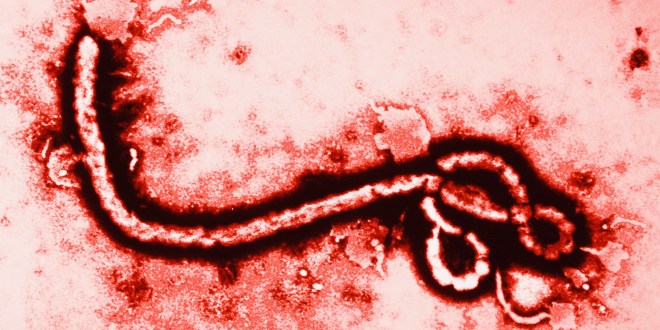
So a few months ago the country was enthralled with the idea of a few patients, infected with the Ebola virus, coming to the United States. Up until this point, we had been safe from Ebola due to the fact that bats can’t fly over the Atlantic. Some people were completely indifferent, while others had seen Outbreak one too many times. Most were a healthy mix, somewhere in between, but what bothered me the most was both the lack of education and the poor information that was spreading more virulently than the virus could ever hope to.
First, I want to stress that I am a nurse, not a virologist, and hopefully throughout my post you will see that I am not pretending to be one. I have a Bachelor’s in Nursing and am currently a graduate student. I have worked extensively with Infectious Disease Specialists. I have been exposed to almost every infectious disease known to the modern world. I have taken courses in Biology, Microbiology, Anatomy, Physiology, Pathophysiology, Advanced Pathophysiology, Pharmacology, and an assortment of others. However, I am not and will not pretend to be an expert, just an experienced professional. When it comes to an epidemic of any sort, my first focus is on the patient, protecting and healing them, my second focus is on protecting the community. I don’t care about which strain does what, or what we can do with in lab. As a nurse, I concern myself with the current patient and future possible patients. I feel the first thing we should examine is Ebola itself. It is foreign to the US, both literally and figuratively. What it does to people and how it harmonizes with nature are both things that most westerners have little concept of. It is a virus, not a bacteria. This means that it is not its own organism. It is actually much smaller and basic than you can imagine. It is nothing more than a few pieces of DNA/RNA and some proteins. No cell wall, no cytoplasm, no metabolic functions. This is both their advantage and their downfall. Viruses require a host. For this example I will use the HIV virus. HIV gets into the human body and invades the host’s white blood cells, T4 cells to be exact but I won’t get that involved. The proteins help get the virus into the cell and those few small sequences of DNA/RNA write themselves into the host DNA/RNA. Now instead of the white blood cell attacking invaders, it is nothing more than an HIV factory. All of its metabolic functions are redirected at producing more of the virus, which pours out of the white blood cell like a sieve until eventually the host cell dies. This is why HIV infected patients have poor immune systems. The virus re-writes the DNA of the host cells. This is not something we can stop. New viruses are pouring out of the white blood cells at a rate of millions a day. We cannot filter them out. We cannot “kill” a little chunk of DNA and we don’t know enough about the human genome to correct the DNA sequences. This is why a lot of viral infections like HIV, Herpes, and Hepatitis are life long infections. HIV invades the white blood cells, Herpes invade the nerve roots, and Hepatitis invades the liver.
Now that we have a better grasp of viruses, we will focus on Ebola a bit more. In tropical Africa, Ebola naturally lives in bats. It is nice to the bats and doesn’t cause them many issues. It is rumored that there are many viruses humans carry our entire lives and have no idea because they show zero symptoms. Therefore, they have never been studied. If this sounds crazy, just remember that it was in recent years the we discovered there was a virus behind cervical cancer. A virus that men can carry and spread without ever knowing they have it. Where the problem arises is that in tropical Africa, people like to eat bats. Sometimes they get infected with Ebola and it spreads. This process is called Zoonosis and can be true of bacteria or viruses. Racoons carry Rabies, Armadillos carry Leprosy, Birds carry the Flu, Bats carry Ebola.
When I said Westerners don’t really understand Ebola, the primary aspect that I am talking about is the patient. We don’t ever see what Ebola does. Our media is too censored, we hear how many died, and see people in haz-mat suits. Speaking of suits, we’ve all seen the pictures. Rubber gloves are adequate for AIDS and hepatitis, a simple mask (N95) stops Tuberculosis, but this requires space suits, just keep that in mind when you think its no big deal. So here is what happens when you catch Ebola, I figure you’re getting bored with reading right about now, so I’ll spice it up. First the virus gets into your system, I’ll elaborate on that later. Then, it hangs out for a few days, even up to 21, growing, multiplying at a rate of millions a day, and guess what, you’re infectious. Now at this point it would pretty much require a straight blood to blood interaction so the only real threat here is for IV drug users who share needles. Just like with the flu or hand foot and mouth disease, you can be spreading it to others before you show a symptom*(apparently not many see the *, so please read the elaboration at the bottom). Remember, nurse mind set, protect the community. At first it’s not bad, little nausea, some sweating, diarrhea, much like a stomach bug. But then the virus really starts to build up in your liver and adrenal glands, after it has saturated your blood cells, the lining of your vessel, your skin, and bones. Hepatocellular necrosis occurs, which is fancy term for your liver starts to decompose.Your liver is what regulates blood clotting. This causes your blood either clot up and turn to jelly in your veins, stay liquid and bleed profusely, or a combo of both. The adrenal glands then do the same, causing your blood pressure to drop. This requires lots of IV fluids to keep your circulating volume up. At the same time inflammatory cytokines are released which causes vascular leakage. Cells don’t do a good job of holding things together so it all becomes a bloody goop. Anywhere in your body that blood vessels are shallow, like your nose, ears, gums, throat, GI tract, urethra, vagina, rectum, all start oozing fluids and bleeding because the tissues that normally keep it contained are disintegrating. So now you bleed from every orifice, including your eyeballs. Every time someone or something touches you, your tissue gets damaged which further the cycle, so a shot in the arm can turn into a massive blood blister. Those who survive are left with massive scarring. Since the adrenals cannot keep your blood pressure up, and you are losing blood and fluids, we have to put IV fluids in to keep you out of hypovolemic shock. This in turn reduces your blood concentration, lowering your oxygen carrying capacity, which causes your heart to race. So you lay in bed, oozing fluids from everywhere, all while feeling like you just ran a marathon, with bloody diarrhea, oh and did I mention pain? Lots and lots of pain, but you can’t have any pain medicine because your liver and kidneys have failed. This why it pains me when I see this outbreak ONLY has a 50% death rate, when in Africa it is up to 90%…ONLY 50%. That is literally worse than cancer, and people are blowing it off. Imagine if cancer was infectious, and you lived in a country with zero cancer, and someone thought it would be a good idea to fly a few people in. I think there would be a different attitude.
The biggest part of the discussion is how Ebola is spread. I will say two things on the topic, no, it is not airborne, and yes, basic hygiene plays a HUGE factor. But while on the topic of whether it is or is not airborne, the definition of an airborne contagion is one that can freely float in the air, survive lengths of time, and infect someone else. VERY few things fit in this category, most have been eradicated, Small Pox, Tuberculosis, Measles. Things that are also NOT airborne, are the flu and the cold. For the flu, you have to come into direct contact with the patients body fluids. How then, do you explain why people catch it and have no idea how. Well for one, people can spread it before they show symptoms, just like Ebola, and one other HUGE factor…droplets….let that word really sink in. The virus may not be airborne, but the droplets are. I’m going to digress for a second and get back to HIV and Hepatitis, while I let droplets dwell in your mind. Everyone knows that HIV and Hepatitis are spread by blood contact, and sexual fluids, I don’t mean a drop of blood on the skin, or even a mucous membrane, it has to get INSIDE of you. This is why only gloves are required. HIV and Hepatitis are not found in urine, stool (Some forms of hepatitis are, but you have to eat the stool to get infected) saliva, sweat, tears, or mucous. This is where some viruses are different. The flu gets into your mucous and other secretions, Ebola tends to stay in the blood, but remember, every one of your bodily fluids are full of blood now. So a person with the flu sneezes, and now millions of little droplets (remember those guys?) shoot out of their nose at nearly mach 1, all across the room, same for a cough, all it takes is a little microscopic droplet to land in your eye, nose, mouth, or the unlikely scenario of an open wound, and you’ve now been infected, because you came in CONTACT with their bodily fluids. I see the word contact thrown around a lot, but most people think of mass amounts of contact with blood, but what they don’t realize is that contact also includes microscopic mucous and saliva droplets, each one chock full of Ebola. Bacteria can survive for long periods of time without a host because they are their own organism. They can feed on just about anything and be happy. Viruses lifespan without a host is much shorter. Their goal is to infect, replicate, and spread, if they cant replicate, they die. Measles only lives 2 hours. But Ebola, depending on what data you look at, can survive for several days.
So with all this information, lets have some role play, so that you can see exactly what this means, to a nurse, in the real world. Imagine it as a cheesy PSA or lifetime movie. You go to see your doctor because its that time of year, you need some blood drawn and refills of your blood pressure med. You sit patiently in the waiting room, thumbing a magazine while your 2-year-old plays with her toys. Like all two year olds, she touches everything, and everything goes in her mouth, toys, pens, her own fingers. She is a 22 lb drool factory and you love her to pieces. You see the doctor, get your goodies, and go home. A week later your angel starts vomiting blood and within 3 days she dies because her heart raced so fast it finally gave up while trying to maintain a blood pressure. Her eyes are blood red and demonic, her skin falls off in sheets. What you don’t know is that 3 days before your visit, someone thought they had the flu. It is October you see and they sneezed while thumbing through that very same magazine you thumbed through. The same thumb you grabbed her pacifier out of your purse with in the waiting room. The people caring for Ebola patients wear space suits, and burn the bodies, yet it still spreads. Here in America, we have much better protocols, and much better hygiene. So if it spreads, it will be contained much better. Still, it spreads prior to symptoms and survives will outside the body, just like the flu. Despite vaccines and good hand washing, thousands still get the flu every year. But while the flu kills 1-2% of its victims, Ebola kills 50% on a good day, and spreads the same way. So please, do not write it off as hype. It is a real thing and it is here.
The case in Dallas has been confirmed. The patient had contact with five children and adolescents prior to admission. Those five kids attend four of the largest schools in Dallas. One sneeze and we could already have thousands of people, who don’t know it yet, infected.
Thank you for reading. Please feel free to comment.
Symptoms* I have had a lot of comments in regards to this. I picked my words carefully, but I never imagined getting thousands of views an hour, or my article getting picked apart, but I will try to elaborate now. I said spread, the virus, I did not say you were contagious. What I meant by this, was the summation of two concepts. To fully explain everything I could write a book, but this is meant to be short and sweet. The first concept is that of a fomite. We have established that the virus can survive for an unspecified amount of time outside the host, and we have established that sneezing/coughing is a perfectly logical method of transmission. So if patient A is infectious/contagious, they sneeze on patient B, but then patient B goes home and picks up their sisters 1 6 month old, who rubs his face, and licks all over your shoulder, he could very well have just orally consumed large quantities of the virus, therefore become patient C. Patient B never got sick, the virus never entered their system, yet they are responsible for spreading the virus to someone else. This is why the 5 exposed kids are so important, there may only be a 2% chance or whatever that they’ll get sick, but if they went to school, and each rubbed up against 500 kids in the hallways, you now have 2500 exposed kids, 50 of which will statistically become infected, 25 of which will probably die. No I do not have a source for the 2%, that is just an EXAMPLE number used to represent the relatively low likelihood of contracting the virus if exposed, granted the R0 factor of R2 is correct. Remember, heal the patient, PROTECT the community. The second concept of this is defining “symptom”. Lets assume it means anything other than your baseline condition. That means the first signs of being contagious, are also the more mild symptoms, sneezy, achy, nausea, flu-like symptoms. So who is going to wake up, feel a little under the weather, and think, crap, I have Ebola, better get quarantined, no, THAT’S how you start fear mongering and mass panic. Again, flu season is upon us, the initial stages of Ebola are like the flu, and its human nature to be in denial, so many people, if infected, would hope its just the flu and wait it out, they are not showing symptoms indicative of Ebola, but they ARE symptomatic of something, and therefore, by the CDC definition, would be contagious. Its also normal procedure for people to be symptomatic BEFORE seeking medical care, so technically, everyone will be contagious, BEFORE knowing they have Ebola. But like I said before, I omitted this lengthy explanation because I didn’t feel it was necessary for the point of the article.
ADDENDUM: Sadly, I feel the need to point out that the title of this blog is “Ebola, A Nurse’s Perspective”, not “A Nurse’s Guide to Surviving the Apocalypse”, or “How to Become an Ebola Expert in 15 minutes”. It could just as well be “Hamburgers, A Chef’s Perspective” and no one would be hounding me over grammar, a misplaced comma, or wanting citations as to why I say it should be on the grill 5 minutes per side of 7 minutes per side. The point is those things are irrelevant to the goal of the article, this is MY perspective (a particular attitude toward or way of regarding something; a point of view.) I don’t have to prove anything, the point of my article is to take what the uneducated (in a medical sense) journalists say, what the talking heads on TV say, and then let you know what the people say who are on the front lines. That’s like discrediting your grandads account of what happened when he stormed Normandy beach, because its not what your history teacher told you. Have I experienced Ebola first hand? Nope, have I experienced a WHOLE lot of other things that the majority of the population has not? You bet your ass I have, and I felt the need to take the time to hopefully help other people out a little. So please keep that in mind, I’m not perfect, but my experiences are my experiences, and I wanted to share them with you, to let you inside the head of a nurse for a minute.
 dtolar
I feel you did an outstanding job of putting the dangers of the Ebola virus in a blog post-great job!
Ignore the negative comments-everyone’s an expert on Ebola now,because they read three paragraphs of “The Hot Zone”,and watched the dolts on CNN and/or MSLSD spew ignorance and misinformation.
LikeLiked by 1 person
Thank you. Just read this and I think whether the CDC told that nurse she could get on a plane or not, she should have known better. Those parents who pulled their kids out of Dallas schools did exactly what I would have done. I believe in preparing for the worst, and praying for the best. You gave a good description of how it all works. I feel horribly sorry for the nurses at the hospital that treated that man who died. They must be terrified.
LikeLike
By FAR the most informative as well as education thing that I have heard or read since this whole thing began. THANK YOU immensely!
LikeLiked by 1 person
How many weeks do I have to read that 4500 have died in West Africa with a populaionof over 350 million
For a disease that has been there for 7 months why only 4500 deaths?
What are they not telling us?
LikeLike
The are cases that were not reported or treated. The family handled the infected family member and buried the body. Sadly for the family, the infected person who died must be cremated. The family is infected by caring for the infected family member and handling the bodily fluids.
LikeLike
Although, I do not agree with this 100%, you did open my eyes to things I didn’t even think to see. It was well written and appreciated by me.
LikeLike
Thank you so much. I have learned things about Ebola that I did not know.There is a lot more to this than what we are being told..
LikeLike
Great Job I am also a nurse and understood every sentence. Thank you for sharring your knowledge.
LikeLike
wow! So informative.Thank you for the much needed information
LikeLike
I too am an RN with enough experience on the “front lines” to be very apprehensive of the situation surrounding the Ebola virus. I have a similar impression of the entire situation. I think you did a wonderful job expressing your opinions, experiences, and concerns surrounding the potential spread of this virus. Well stated and thank you.
LikeLike
Thank you for your post I am no expert but this is what I have been saying for days ppl just dont want to hear the truth I totally respect and admire you for posting this
LikeLike
Thank you. I appreciate this knowledge. I saw one mispelling. Your writing is more than adequate.
Once a week I am in the company of a 90 year old and among some with poor immune systems. So, if I am still achy on Sunday I will really consider staying home!
LikeLike
Some viruses prefer a particular climate. Influenza likes October to May, at least here in cold New England. I have kept my hypochondriac husband from walking around in a hazmat suit by convincing him a virus that enjoys a balmy west African climate won’t love a CT winter. I leave out viruses mutate like a mo-fo, but this is how I sleep at night.
LikeLike
I am also a nurse here in the Philippines, on public health specifically. I worked as surveillance officer of emerging and re-emerging diseases. This Ebola is a huge scare to us! Our government is telling that we are ready for this but truth is we on the front line dont know exactly what we will do. We dont have extensive training on PPE’s don and doffs. We dont have that kind of space suits PPE’s and much more we dont have isolation rooms for that special case. God bless Philippines!!
LikeLike
Great read! I am also an RN. You captured my fears without leading by emotions. Thank you!
LikeLike
Thanks for being honest and sharing what you have learned. We need more people like you stepping forward and giving us information. A government that will withhold information from its people and cover up the truth about such a lethal disease for political expediency is capable of any number of crimes against its people.
LikeLike
Thank you giving us the “benefit of your opinion”. I found this interesting to read and informative.
LikeLike
Superbly researched and articulated article. You deserve a prize for this.
LikeLike
I am also an RN and this article is typical media fear mongering- don’t believe the hype. There is not one single reputable source to support any of what is written here, if you are going to write stuff like this in a public forum you need to back it up! The information provided here is simply untrue. You should be ashamed of yourself!
LikeLiked by 1 person
You really should be a more respectful, Diane. Have you completely lost your mind? How about you cite the references that prove the facts in this article are untrue? You, Diane, lead me to believe that you are so terrified of the situation, you are burying yourself in denial and hiding from the truth. Get a grip lady.
LikeLiked by 2 people
“dont believe the hype?” “need to back it up” Apparently the Infection control information regarding responses to communicable disease has not been available to you. As a colleague/RN, I urge you to consider learning about the responses to transmissible diseases based on METHOD OF TRANSMISSION. Transmission via foamites/scurfs/shed squames has been well researched and documented for decades.
LikeLike
Thank you so much! My husband is an ER doc and has told me much of what you say. What I am most upset about is that there seems to be no process to get nurses and docs the equipment they need to treat these people without endangering themselves. Why would they work under these conditions? I hope there are a few companies that are mass producing these suits right now to protect those medical staff that are on the front lines!
LikeLike
Thank you for the information, It scares the crapola out of me. My husband may have to fly out of state for some classes and I truly don’t want him going. Yes I am paranoia right now.
LikeLike
Thank you for this article. I have been a nurse for 24 years and I think you did a fantastic job informing us about ebola and what it does in a basic way anyone could understand. I’m forwarding this article to many of my family members and friends.
LikeLike
Thank you for sharing your perspective on ebola. You did a wonderful job. You have confirmed many of my own beliefs regarding the spread of this virus. I have no medical background whatsoever, but I am a mother and grandmother, and have nursed my share of youngsters sick with symptoms of vomiting and diarrhea and I know how difficult it is to care for them and NOT come in contact with it. Out come the rubber gloves, buckets of bleach water, and I pray I’m not the next one to get sick, because who will take care of all this. And we’ve all at one time, experienced the horror of saliva escaping from our mouths while speaking. And it is just that easy to have contact with bodily fluids. It is unfathomable to me the lack of concern shown by the CDC, the chief’s of staff at the hospital, and the Dallas health department regarding the health and safety of patient #1’s family and friends, the medical personnel who cared for him, and the residents of the apartment complex he was residing in at the time he became ill. If he was an armed gunman, squads of well trained and well equipped law enforcement would have descended upon the building, evacuated all the residents and once he was removed, detectives would have swarmed in to investigate and procure evidence, cleaning the place out. Instead, they left his family helpless, except for the bottle of bleach brought in by his niece and whatever trash bags and maybe gloves they had on hand with which to clean up the mess. A maintenance man, in normal street clothes, hosed down the areas where he had vomited, while residents in the adjoining apartments stood outside and watched. Hospital staff were not provided with appropriate personal protection. While all along, the head of the CDC kept telling us how well prepared everyone was to handle this. Where were the specialists?? Who was monitoring the procedures within the isolation area?? Presbyterian Hospital should have been stormed by the CDC and they should have had experts monitoring and correcting procedure to ensure the safety of the hospital staff, and in turn, the public at large. They have acted with TOTAL DISREGARD, and should be ashamed of themselves. And as far as I am concerned, they are all guilty of dereliction of duty.
LikeLike
Thank you, thank you! I also am a Registered Nurse and agree that we care for the patient and the community! You have done an exceptionally brilliant job of making this horrible virus understandable to the layperson.
LikeLike
Thank you. Great job explaining. Really th first way I have read and understood. I hope more read it. It makes sense a little better but also makes me worry a little more!!
LikeLike
Very well written. I appreciate an article written by someone who is not entangled in the politics of a health agency or media service that must report only what they are told to report. Again thanks
LikeLike
thank you on your perspective. I truly enjoyed your article. I have spent 27 years as a registered nurse. And couldn’t agree more with what you have said. You made it very easy for a non medical person to comprehend. Thank you for writing it!
LikeLike
To the rn who stated this is all hype and that the author has no supportive documentation to what she writes:
If you remember anything from nursing school, than you would understand the difference between bacteria and a virus. You would also understand how a virus replicates and infects. As well as how it spreads. What support are you looking for? This is basic medical knowledge. Of course your contagious before symptoms. Why would this virus be the exception to the rule? Ebola stmptoms are what they are..thats not hype. Viruses and bacteria really do spread that easily. Im confused about what part of the article you feel is “hype” and unsupported?
I for one think the author is telling it like it is in laymens terms. I said just that the other day, when the cdc was saying “your only contagious when you have symptoms”…baloney!
One sneeze or cough can infect thousands…this isnt hype…its reality.
And quite honestly, Diane, you should be ashamed of yourself for not being knowledgable about disease processess and not taking something this serious, seriously.
LikeLike
Angeline you are right!
LikeLike
Thank you for writing this article. You have given such important information to those of us who aren’t in the medical field, in a way that can be understood by anyone. This is a really scary situation we have here. I live in Northeast Ohio mire miles from where the infected nurse traveled and was out in public. I have NO immune system because I had a lung transplant and am on 2 different immuno suppressants. This is nothing for any of us to scoff at. Again, thank u for your blog
LikeLike
Monica – Don’t panic – As a post transplant patient, you’ve probably already implemented sound measures to protect yourself from other contagious diseases. Those same actions are a very reasonable response to this situation. You don’t let the sick grandkids visit and cough on you? Check. Perhaps you even wear an N-95 type respirator mask when you visit the hospital or other public gatherings. Check. Probably limit your time in public, limit your touch and use regular hand hygiene? Check, check and check.
You’re already living in a heightened response to break the transmission of any communicable disease via contact, droplet or airborne modes. It remains to be seen what the rest of the world will need to do.
LikeLike
Thank you for the info, it was well written and very informative. The one question I was hoping would be answered on the news shows and I never heard it was If someone sneezes or coughs and fluids get on surfaces, do they die right away or can they survive and if they survive, for how long? I’m not sure why nobody thought to ask or answer this question, but I thought it was very important. Thank you for explaining what can happen and you should be commended for your explanation and honesty. God Bless You
LikeLike
To bad the politicians do not understand any of this..
LikeLike
I am a nurse educator. You mentioned Tuberculosis being eradicated. This isn’t true since TB is still around . Also, TB is due to a bacteria.
LikeLike
As a retired nurse TB is not real easy to get if u take proper precautions. I know, I worked in a TB sanitarium for three years in Salem Oregon 64, 65, 66. My point being if you follow protocol and know what your working with. Emergency nurses are at a real risk.
I was pregnant in 65 and 66, worked in recovery where we tracheal suctioned these patients every two hours if they did not cough. There was sputum everywhere sometimes out of their trachs. You used good isolation technique to prevent your self from contacting the disease. And, I might add, we did not have face shields at that time. As of this day, I am still a negative reactor. In nurses training and after graduating we had monthly education sessions at our facility. Isolation is only as the good as the people who teach it and follow protocol. I don’t like some of the news media saying it was some of the nurses faults that it spreads. They were not properly trained and the CDC is responsible. Another thing all hospitals do not have negative pressure rooms, contrary to the CDC and Obama has stated. We r not ready for a situation like this.
TB kinda came into focus again after HIV appeared.
Thank u for your comment Courtney. I think that nurses have far more insight to this problem of all the powers at be.
Terri Phillips
LikeLike
Terri –
Our medical director in Texas related the TB pandemic (50 ‘s, i think) and described how the streets had big blobs of red sputum everywhere because the danger of droplet spread was not recognized. He was emphatic that we should implement a plan for early identification, education, masking & isolation starting as a patient entered the hospital.
(This program was a response to the “Godzilla” TB of the mid-nineties, at time when the TB was being recognized in late stages due to the HIV + condition. One local woman tended her HIV+ son with undiagnosed virulent TB,returned to the area and died 2 weeks later of TB.)
Unfortunately a patient was direct admitted and slipped thru our net. In the end, the patient contacted 72 people, 4 of which converted to an ACTIVE disease process. One caregiver later died after treatment.
It seems if we do not take heed of our past experiences, we are doomed to repeat our mistakes. I agree with you when you wrote “Isolation is only as the good as the people who teach it and follow protocol”.
LikeLike
Thank you so much. Your thought that ebola is spreadable before symptoms appear is born out by the most recent illness of another Dallas nurse. It is now believed that she had symptoms but did not identify them as ebola despite her exposure. Another site with credible information is the National Nurses Union. This is the group that brought to light that the nurses in Dallas were inadequately protected, were required to care for other patients while caring for Mr. Duncan, and in an unsafe setting with contagious trash piled to the ceiling. I am a nurse. Like many, many others I have stepped up to serve in settings others could not tolerate or would feel unsafe. I think the truth will provide more reassurance that covering up the seriousness of this. With the facts we can act to protect our health care workers and give our patients safe and effective care. Again, thank you.
LikeLike
Thank you very much for sharing your knowledge,this is so interesting & very informative article…god bless.
LikeLike
Perhaps I didn’t read this correctly, but isn’t there some contradiction in this post? “Now at this point it would pretty much require a straight blood to blood interaction so the only real threat here is for IV drug users who share needles.” But then she talks about getting it from someone who thumbed the same magazine the mother of a toddler did – and that is way before that person would have been diagnosed.
LikeLike
When you read closely, she is discussing things in a timeline format. When “…at this point it would require a blood to blood interaction…” is early in a viral replication process, before the magazine thumbing transmission via surfaces. Which, is why she says “now, AT THIS POINT…”. Why is everyone trying to pick this author apart? She, very clearly, provided adequate disclosure, at the beginning of the article, that she is not an expert and offered us all an out. You didn’t have to read.
LikeLike
Cutting the funding from the CDC has occurred at least since the early 70’s. Funding for the states’ departments of health have been cut concurrently. It has been a long and devastating decline in the ability of these agencies to protect the public. It is not the only factor that leaves us unprotected but a significant one.
Angeline, thank you for your comment. I am also a nurse. Perhaps Diane is not a nurse but attempting to speak as one out of her own lack of knowledge and fear. For those who want to read another article on the topic of droplet infection or possible aerosolized ebola virus look up Dr. Lisa Brousseau, University of Ill. at Chicago, infectious disease expert. An article of her’s can also be found on the National Nurses Union website. A point she made in a recent speech was that we really don’t know how ebola is spread because all studies have been retrospective. That makes it all the more important that we act on what we know about all viruses rather than ignoring the facts. Thanks so much to everyone who is writing here. So reassuring.
LikeLike
Anne–“That makes it all the more important that we act on what we know about all viruses rather than ignoring the facts”.
I completely agree with you – We need to approach this with a measured and thoughtful response that addresses known routes of transmissible diseases.
Here’s av ery simple example – CDC hand hygiene guidelines don’t specifically address all situations that are necessary for hand washing or sanitization, but I absolutely stop and wash my hands on the way into the cafeteria before I pick up my cheeseburger and place it in my mouth. Perhaps i met the guidelines 10 minutes prior?- Yeah,but it doesn’t hurt to stop and reduce bioburden on my hands after I’ve walked thru the hospital and contacted elevator buttons, press plates and handrails. Do I know factually there are organisms at those places? No. However I do have a healthy respect for & knowledge of transmission. This is my commonsense, non-fear mongering, non- media hype method of a measured & thoughtful response to my personal infection control.
There are those folk that choose to characterize this article as non-scientific, politically motivated, personally deluded verbage —- Those are the people who scare me the most.
LikeLike
I have read and re-posted for others to read. It’s very informative, unlike anything we’ve not been provided by the CDC for education. CNN interviewed MD from Liberia whom has worked with Ebola on daily basis, safely with strict protocal, high praise was given for the use of chlorine spray upon leaving room of patient. Bleach as we know is effective for killing many forms of organisms. You would certainly think the CDC would be giving some ratios!
LikeLike
Tuberculosis is not eradicated.
LikeLike
I too am a registered nurse. I was on the front line when AIDs was first discovered, and remember the panic that created. I must commend you on writing this. You have provided a better and more accurate honest face on this disease than the CDC has even attempted to do. Ignore those who critique you on your grammar or spelling. If that is all they can comment on, then they will be the first to expect us to save them after they do nothing to prevent the spread. Personal responsibility is a swear word to way too many of our society.
LikeLiked by 1 person
What about the west Afrians who are still eating Bush Meat, monkeys sqirrells and bats , of which many contain E bola (, because they have nothing else to eat) / , What about the 70, thousand people confined in a slum in Liberia, with no running water or toilets. How can we stop Ebola among these folks. — Many of which do not believe ebola it exists and contine to haandle corpses and
even kiss them on the mouth?
LikeLike
I quickly became tired of hearing about ebola and it’ s requiring contact to spread from politicians, news readers, journalists, even doctors, etc. As a biologist I knew differently, but felt unqualified to write or utter my thoughts. You have done a remarkable job in educating the layman. Thank you. Currently my son works in West Africa (Nigeria) for a month or so at a time,several times per year. This gives rise to considerable worry. I think that, particularly in the case of Ebola, “firedoor”
protocol (restriction of movement) should be applied immediately the first victim is identified, and lasting for a month with no futher infections apparent. Sadly this is unlikely to ever happen.
LikeLike
I am also an RN and live in S.Africa. I have family LIVING in West Africa. Thank you for trying to give the world a wake-up call. When I hear the “educated” countries saying they are equipped to handle this, I think of the Titanic, the unsinkable ship. Do I want to promote world-wide panic? No, and I don’t think you do either. The fact is people must catch a wakeup. This is no game we’re playing that we can hit delete and start over. From a nurses’ perspective – it’s not just about providing the suits. It’s intensive training including post-contact training. Praying for your guys on the front line including my family!
LikeLike
I just shit my pants.
LikeLike
Reblogged this on Cabana's Bunny Barn and commented:
Refreshing to see a logical article without the fear mongering OR a politically correct attitude. Informative and down to earth.
LikeLike
Best article on this subject I have read -so easy to understand to everyone. I am sending this along the internet path to co-workers (I am a nurse). Thanks for taking the time to put this to paper.
LikeLike
Well written. The people in your care are blessed. Thank you.
LikeLike
Thank you for this information. I thoroughly appreciate you taking the time to educate me. This helps me understand what is happening with this virus.
LikeLike
The original article by “Mr. Nurse” was one that ENCOURAGED reasonable concern and use of simple precautions that will help contain and perhaps eradicate Ebola from our soil. As for comments made by Babar, Joshua Ripp, Amy and others, instead of being nattering nabobs of negativity, you might wish to accept the value of the positive info “Mr. Nurse” provided and become a powerful purveyor of positivity by supporting the main theme that calls for concern and appropriate precautions.
From my perspective it was a well written article with sufficient evidence to encourage wise precautions.
LikeLike
Thank you for taking the time to share your knowledge and experience. You answered some questions that I had that, as you said, have not been covered by the media. Very helpful and informative. And I agree, the title of your post was perfect.
LikeLike