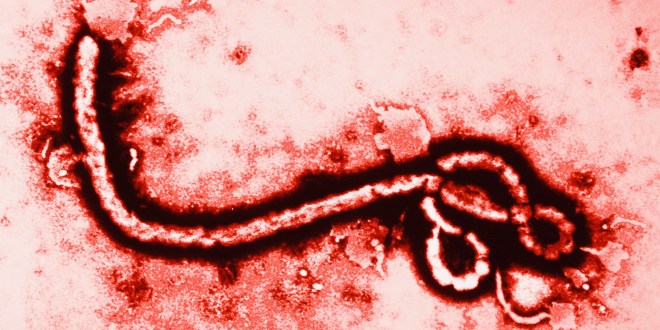
So a few months ago the country was enthralled with the idea of a few patients, infected with the Ebola virus, coming to the United States. Up until this point, we had been safe from Ebola due to the fact that bats can’t fly over the Atlantic. Some people were completely indifferent, while others had seen Outbreak one too many times. Most were a healthy mix, somewhere in between, but what bothered me the most was both the lack of education and the poor information that was spreading more virulently than the virus could ever hope to.
First, I want to stress that I am a nurse, not a virologist, and hopefully throughout my post you will see that I am not pretending to be one. I have a Bachelor’s in Nursing and am currently a graduate student. I have worked extensively with Infectious Disease Specialists. I have been exposed to almost every infectious disease known to the modern world. I have taken courses in Biology, Microbiology, Anatomy, Physiology, Pathophysiology, Advanced Pathophysiology, Pharmacology, and an assortment of others. However, I am not and will not pretend to be an expert, just an experienced professional. When it comes to an epidemic of any sort, my first focus is on the patient, protecting and healing them, my second focus is on protecting the community. I don’t care about which strain does what, or what we can do with in lab. As a nurse, I concern myself with the current patient and future possible patients. I feel the first thing we should examine is Ebola itself. It is foreign to the US, both literally and figuratively. What it does to people and how it harmonizes with nature are both things that most westerners have little concept of. It is a virus, not a bacteria. This means that it is not its own organism. It is actually much smaller and basic than you can imagine. It is nothing more than a few pieces of DNA/RNA and some proteins. No cell wall, no cytoplasm, no metabolic functions. This is both their advantage and their downfall. Viruses require a host. For this example I will use the HIV virus. HIV gets into the human body and invades the host’s white blood cells, T4 cells to be exact but I won’t get that involved. The proteins help get the virus into the cell and those few small sequences of DNA/RNA write themselves into the host DNA/RNA. Now instead of the white blood cell attacking invaders, it is nothing more than an HIV factory. All of its metabolic functions are redirected at producing more of the virus, which pours out of the white blood cell like a sieve until eventually the host cell dies. This is why HIV infected patients have poor immune systems. The virus re-writes the DNA of the host cells. This is not something we can stop. New viruses are pouring out of the white blood cells at a rate of millions a day. We cannot filter them out. We cannot “kill” a little chunk of DNA and we don’t know enough about the human genome to correct the DNA sequences. This is why a lot of viral infections like HIV, Herpes, and Hepatitis are life long infections. HIV invades the white blood cells, Herpes invade the nerve roots, and Hepatitis invades the liver.
Now that we have a better grasp of viruses, we will focus on Ebola a bit more. In tropical Africa, Ebola naturally lives in bats. It is nice to the bats and doesn’t cause them many issues. It is rumored that there are many viruses humans carry our entire lives and have no idea because they show zero symptoms. Therefore, they have never been studied. If this sounds crazy, just remember that it was in recent years the we discovered there was a virus behind cervical cancer. A virus that men can carry and spread without ever knowing they have it. Where the problem arises is that in tropical Africa, people like to eat bats. Sometimes they get infected with Ebola and it spreads. This process is called Zoonosis and can be true of bacteria or viruses. Racoons carry Rabies, Armadillos carry Leprosy, Birds carry the Flu, Bats carry Ebola.
When I said Westerners don’t really understand Ebola, the primary aspect that I am talking about is the patient. We don’t ever see what Ebola does. Our media is too censored, we hear how many died, and see people in haz-mat suits. Speaking of suits, we’ve all seen the pictures. Rubber gloves are adequate for AIDS and hepatitis, a simple mask (N95) stops Tuberculosis, but this requires space suits, just keep that in mind when you think its no big deal. So here is what happens when you catch Ebola, I figure you’re getting bored with reading right about now, so I’ll spice it up. First the virus gets into your system, I’ll elaborate on that later. Then, it hangs out for a few days, even up to 21, growing, multiplying at a rate of millions a day, and guess what, you’re infectious. Now at this point it would pretty much require a straight blood to blood interaction so the only real threat here is for IV drug users who share needles. Just like with the flu or hand foot and mouth disease, you can be spreading it to others before you show a symptom*(apparently not many see the *, so please read the elaboration at the bottom). Remember, nurse mind set, protect the community. At first it’s not bad, little nausea, some sweating, diarrhea, much like a stomach bug. But then the virus really starts to build up in your liver and adrenal glands, after it has saturated your blood cells, the lining of your vessel, your skin, and bones. Hepatocellular necrosis occurs, which is fancy term for your liver starts to decompose.Your liver is what regulates blood clotting. This causes your blood either clot up and turn to jelly in your veins, stay liquid and bleed profusely, or a combo of both. The adrenal glands then do the same, causing your blood pressure to drop. This requires lots of IV fluids to keep your circulating volume up. At the same time inflammatory cytokines are released which causes vascular leakage. Cells don’t do a good job of holding things together so it all becomes a bloody goop. Anywhere in your body that blood vessels are shallow, like your nose, ears, gums, throat, GI tract, urethra, vagina, rectum, all start oozing fluids and bleeding because the tissues that normally keep it contained are disintegrating. So now you bleed from every orifice, including your eyeballs. Every time someone or something touches you, your tissue gets damaged which further the cycle, so a shot in the arm can turn into a massive blood blister. Those who survive are left with massive scarring. Since the adrenals cannot keep your blood pressure up, and you are losing blood and fluids, we have to put IV fluids in to keep you out of hypovolemic shock. This in turn reduces your blood concentration, lowering your oxygen carrying capacity, which causes your heart to race. So you lay in bed, oozing fluids from everywhere, all while feeling like you just ran a marathon, with bloody diarrhea, oh and did I mention pain? Lots and lots of pain, but you can’t have any pain medicine because your liver and kidneys have failed. This why it pains me when I see this outbreak ONLY has a 50% death rate, when in Africa it is up to 90%…ONLY 50%. That is literally worse than cancer, and people are blowing it off. Imagine if cancer was infectious, and you lived in a country with zero cancer, and someone thought it would be a good idea to fly a few people in. I think there would be a different attitude.
The biggest part of the discussion is how Ebola is spread. I will say two things on the topic, no, it is not airborne, and yes, basic hygiene plays a HUGE factor. But while on the topic of whether it is or is not airborne, the definition of an airborne contagion is one that can freely float in the air, survive lengths of time, and infect someone else. VERY few things fit in this category, most have been eradicated, Small Pox, Tuberculosis, Measles. Things that are also NOT airborne, are the flu and the cold. For the flu, you have to come into direct contact with the patients body fluids. How then, do you explain why people catch it and have no idea how. Well for one, people can spread it before they show symptoms, just like Ebola, and one other HUGE factor…droplets….let that word really sink in. The virus may not be airborne, but the droplets are. I’m going to digress for a second and get back to HIV and Hepatitis, while I let droplets dwell in your mind. Everyone knows that HIV and Hepatitis are spread by blood contact, and sexual fluids, I don’t mean a drop of blood on the skin, or even a mucous membrane, it has to get INSIDE of you. This is why only gloves are required. HIV and Hepatitis are not found in urine, stool (Some forms of hepatitis are, but you have to eat the stool to get infected) saliva, sweat, tears, or mucous. This is where some viruses are different. The flu gets into your mucous and other secretions, Ebola tends to stay in the blood, but remember, every one of your bodily fluids are full of blood now. So a person with the flu sneezes, and now millions of little droplets (remember those guys?) shoot out of their nose at nearly mach 1, all across the room, same for a cough, all it takes is a little microscopic droplet to land in your eye, nose, mouth, or the unlikely scenario of an open wound, and you’ve now been infected, because you came in CONTACT with their bodily fluids. I see the word contact thrown around a lot, but most people think of mass amounts of contact with blood, but what they don’t realize is that contact also includes microscopic mucous and saliva droplets, each one chock full of Ebola. Bacteria can survive for long periods of time without a host because they are their own organism. They can feed on just about anything and be happy. Viruses lifespan without a host is much shorter. Their goal is to infect, replicate, and spread, if they cant replicate, they die. Measles only lives 2 hours. But Ebola, depending on what data you look at, can survive for several days.
So with all this information, lets have some role play, so that you can see exactly what this means, to a nurse, in the real world. Imagine it as a cheesy PSA or lifetime movie. You go to see your doctor because its that time of year, you need some blood drawn and refills of your blood pressure med. You sit patiently in the waiting room, thumbing a magazine while your 2-year-old plays with her toys. Like all two year olds, she touches everything, and everything goes in her mouth, toys, pens, her own fingers. She is a 22 lb drool factory and you love her to pieces. You see the doctor, get your goodies, and go home. A week later your angel starts vomiting blood and within 3 days she dies because her heart raced so fast it finally gave up while trying to maintain a blood pressure. Her eyes are blood red and demonic, her skin falls off in sheets. What you don’t know is that 3 days before your visit, someone thought they had the flu. It is October you see and they sneezed while thumbing through that very same magazine you thumbed through. The same thumb you grabbed her pacifier out of your purse with in the waiting room. The people caring for Ebola patients wear space suits, and burn the bodies, yet it still spreads. Here in America, we have much better protocols, and much better hygiene. So if it spreads, it will be contained much better. Still, it spreads prior to symptoms and survives will outside the body, just like the flu. Despite vaccines and good hand washing, thousands still get the flu every year. But while the flu kills 1-2% of its victims, Ebola kills 50% on a good day, and spreads the same way. So please, do not write it off as hype. It is a real thing and it is here.
The case in Dallas has been confirmed. The patient had contact with five children and adolescents prior to admission. Those five kids attend four of the largest schools in Dallas. One sneeze and we could already have thousands of people, who don’t know it yet, infected.
Thank you for reading. Please feel free to comment.
Symptoms* I have had a lot of comments in regards to this. I picked my words carefully, but I never imagined getting thousands of views an hour, or my article getting picked apart, but I will try to elaborate now. I said spread, the virus, I did not say you were contagious. What I meant by this, was the summation of two concepts. To fully explain everything I could write a book, but this is meant to be short and sweet. The first concept is that of a fomite. We have established that the virus can survive for an unspecified amount of time outside the host, and we have established that sneezing/coughing is a perfectly logical method of transmission. So if patient A is infectious/contagious, they sneeze on patient B, but then patient B goes home and picks up their sisters 1 6 month old, who rubs his face, and licks all over your shoulder, he could very well have just orally consumed large quantities of the virus, therefore become patient C. Patient B never got sick, the virus never entered their system, yet they are responsible for spreading the virus to someone else. This is why the 5 exposed kids are so important, there may only be a 2% chance or whatever that they’ll get sick, but if they went to school, and each rubbed up against 500 kids in the hallways, you now have 2500 exposed kids, 50 of which will statistically become infected, 25 of which will probably die. No I do not have a source for the 2%, that is just an EXAMPLE number used to represent the relatively low likelihood of contracting the virus if exposed, granted the R0 factor of R2 is correct. Remember, heal the patient, PROTECT the community. The second concept of this is defining “symptom”. Lets assume it means anything other than your baseline condition. That means the first signs of being contagious, are also the more mild symptoms, sneezy, achy, nausea, flu-like symptoms. So who is going to wake up, feel a little under the weather, and think, crap, I have Ebola, better get quarantined, no, THAT’S how you start fear mongering and mass panic. Again, flu season is upon us, the initial stages of Ebola are like the flu, and its human nature to be in denial, so many people, if infected, would hope its just the flu and wait it out, they are not showing symptoms indicative of Ebola, but they ARE symptomatic of something, and therefore, by the CDC definition, would be contagious. Its also normal procedure for people to be symptomatic BEFORE seeking medical care, so technically, everyone will be contagious, BEFORE knowing they have Ebola. But like I said before, I omitted this lengthy explanation because I didn’t feel it was necessary for the point of the article.
ADDENDUM: Sadly, I feel the need to point out that the title of this blog is “Ebola, A Nurse’s Perspective”, not “A Nurse’s Guide to Surviving the Apocalypse”, or “How to Become an Ebola Expert in 15 minutes”. It could just as well be “Hamburgers, A Chef’s Perspective” and no one would be hounding me over grammar, a misplaced comma, or wanting citations as to why I say it should be on the grill 5 minutes per side of 7 minutes per side. The point is those things are irrelevant to the goal of the article, this is MY perspective (a particular attitude toward or way of regarding something; a point of view.) I don’t have to prove anything, the point of my article is to take what the uneducated (in a medical sense) journalists say, what the talking heads on TV say, and then let you know what the people say who are on the front lines. That’s like discrediting your grandads account of what happened when he stormed Normandy beach, because its not what your history teacher told you. Have I experienced Ebola first hand? Nope, have I experienced a WHOLE lot of other things that the majority of the population has not? You bet your ass I have, and I felt the need to take the time to hopefully help other people out a little. So please keep that in mind, I’m not perfect, but my experiences are my experiences, and I wanted to share them with you, to let you inside the head of a nurse for a minute.
 dtolar
Thank you for the article, it is informative & tells the truth the media, CDC, & others are trying to hide. I learned a few things I didn’t know as many others will, too. As for those who suffer anxiety, you need to know the real truth just like everyone else.
LikeLiked by 1 person
Very informative article. Thank you for taking the time to share your knowledge. My wife is also an RN and she has been saying the exact same things that you have stated. Hopefully people will take this article for what is really is, a helpful basic explanation of what Ebola is and how we can try to protect ourselves.
LikeLiked by 2 people
Great information, thank you for sharing. However TB has not been eradicated and is killing thousands of people annually.
LikeLiked by 1 person
Thank you. It is nice to hear the real story. Very, very scary and serious.
LikeLiked by 1 person
Thanks for the info. I disagree re: cause of cervical cancer. I have my own proof.
LikeLike
I’ve shared this so many times lol I work in a hospital, though I work for an independent doctor within it – a retina specialist. I sometimes come across infectious diseases such as conjunctivitis and herpes(Both are rare in our office, that is more of something you see in optom) and even as insignificant as those are, Doctor takes them extremely seriously and we have our own protocol we have to follow to sanitize the room they were in and everything they may have touched in the lobby. Our hospital, as well as several others in the state, are gearing up in preparation for a possible case. Being in Oklahoma and only 200 miles away from Dallas puts us very much at risk. People constantly travel to and from Dallas/OKC. I’m confident that if a case springs up here, our hospitals will be able to effeciently contain it. Unfortunately, as it is pointed out, the patient is usually contageious before coming to the doctor, so other infections are quite literally unavoidable.
The moment this became an epidemic over there, I told my spouse it was only a matter of time before it gets here. With all the aid workers coming to and from, refugees, ect. I said “You watch, in a few months we’ll see it here.” And I was right. I didn’t want to be right. Because then I knew it would happen exactly as it is happening. We Americans think, just because our health system is so much better than where Ebola originates, that we are impervious to the virus. It’s just one case, no big deal. Thats the mentality everyone had. My mentality was this: People thought HIV and AIDS were no big deal, and look what happened. It only affects homosexuals they thought. The numbers were so insignificant they thought. But then it spread, and it spread like wildfire because of this lackadaisical attitude and the stigma attached to the virus.
Ebola is not being treated much differently. Again, misinformation and ignorance has people turning a blind eye to it. They simply don’t care, and that is terrifying to me. Everyone should care. Everyone should be informed. Everyone should be taking precautions – especially if their risk is higher because they are in a closer radius to those infected.
When they announced the first Dallas patient was confirmed, I said to my spouse “This is it. This is the beginning of a pandemic. It’s far beyond an epidemic now. It’s crossed the ocean, and we aren’t prepared for it. Just wait a few weeks, there will be more.” He, of course, has no medical background. While he agrees, he doesn’t understand the level of a threat this is like those of us in healthcare do.
Again, I was right and I didn’t want to be. Bam, another one, and another, and suddenly theres 132 people that need to be found and screened, possibly more considering the plane took a couple more flights before being taken out of commission. And the two airports she was at where thousands of people frequent hourly. Not to mention other nurses who may have been exposed and infected who aren’t being contained like this one wasn’t. Suddenly we’ve gone to one single case to the potential of thousands, who then have the potential to spread it to thousands more. It’s stuff right out of a horror movie.
Yes, we may be equipped with better healthcare than the hotspots in Africa, but there still isn’t a cure. Treatments are still extremely experimental with no time to go through the usual steps. The two that are currently “cured” can only give so much blood to harvest antibodies, and that can only be done so fast.
Meanwhile, we still don’t have an appointed surgeon general to take command and regulate anything. We have our government trying to stop panic all together instead of educate the public, while the news is busy fear mongering to get ratings.
We can follow protocol as best we can, contain each new case as best we can, but we are not ready for this and time ran out already. Now we’re playing catch-up with the virus.
The public needs information like what you have provided. It’s simple and to the point. Everyone can understand it and relate to it. It’s easily explained. Best of all it’s neutral. You are not fear mongering while at the same time you are not sugar coating the situation. I really feel like nurses and doctors alike need to take the media by storm and get this kind of information out there. Right now it’s black and white; either people are in a panic and scared about it or they simply couldn’t care less. Sadly, I don’t think that will happen. The news will continue to feed us what they want to so people will watch and read, and the government will continue to try and put out fires instead of prevent them.
I really, really, really don’t want to be right anymore. I don’t want to see this turn into another AIDS epidemic. You’d think we would have learned from that. Or from Hepatitis, or small pox, or polio, or TB… but apparently not.
LikeLiked by 3 people
Thank you so much for sharing your factual info!! It is good to know these things. Especially in this day and age when there is SO much misinformation or omitting of information.
LikeLiked by 1 person
I don’t think you can get ebola from a magazine. Everything I have read says that a person needs direct contact with the infected person. See http://www.npr.org/blogs/goatsandsoda/2014/09/12/346114454/how-do-you-catch-ebola-by-air-sweat-or-water In this time of easy hysteria, one should not be reluctant to site references.
LikeLike
This link you posted doesnt make me feel any relief at all. It says Ebola is harder to catch than the common cold. In fact that makes more reason to be worried since I have seen the common cold spread through my work office so quickly several times.
Also I dont believe you can only catch it through bodily fluids that enter through a wound or mycus membrane. Then explain to me how two nurses wearing space suits caught it. I believe its more contagious than they realize itherwuse those nurses would nit have caught it.
Let’s just pray the CDC start educating the public with real facts so we can all be more cautious.
LikeLike
They’ve already surmised that the two nurses caught it in the couple of days that they were NOT wearing “space suits”.
LikeLike
When I wrote this, over 2 weeks ago, I knew that nurses here would not be as well equipped as the workers we see on TV
LikeLike
What makes NPR more credible than me? They’re journalists who are trying to get views and get paid. I get no pay for this and am a faceless name. I have no ulterior motives. You don’t have to contact their body, just their body fluids. and “fluids” can be a 50 micron mucous droplet. The liberal media (like NPR) wants you to believe that you have to bath in their blood to catch it. Ebola is in every body fluid the flu is in. Can you always track exactly who you got the flu from? No. because you come into to contact with other peoples bodily fluids every day without ever realizing it.
LikeLiked by 1 person
Okay… firstly. People need to stop blaming the government. It’s rare I ever feel the need to say that… Anyway. Yeah the people in charge up on Capital Hill don’t tell us a lot. They hide a lot of information most of us likely feel we need to know. However…for one, if you want to know how Ebola is transmitted? Google it. The nurse herself said it is a Virus so pull out your dusty dictionary or type in your Google or Bing search and look it up. Don’t blame the government because you won’t do that yourself.
Secondly, yeah they are trying to keep a bit of a cap on it. That is there job, so we don’t go all panicky and psychotic as we are prone to do as humans. If they gave us everything, people would likely be rioting and looting hand sanitizes, masks, etc. Keeping their kids from school, not going to work, the economy comes to a halt.
Heck, some people already are to that point with the way it is now.
Lastly, Thank you for this perspective Madam/ Mr. Nurse. It is a good resource to consider and nice to hear from someone who has an idea on what is going on and can put it in a perspective so well understood. I think you would make a splendid teacher for future nursing students with how well you could put this in terms the masses can understand.
LikeLiked by 1 person
Thank you for your article.
As a nurse, what is your opinion on how prepared hospitals are for an epidemic?
My husband is pharmacist in hospital and he says they are not prepared at all. In fact, they are already overloaded at his hospital and it’s not flu season yet.
LikeLiked by 1 person
Thank you so much for this information. I applaud you for sharing your truth with us. We need the truth. It prepares most of us for what is really out there. May God help our Country.
LikeLiked by 2 people
Thank you.
LikeLiked by 1 person
Thank you for sharing. Nurses are awesome!
LikeLiked by 1 person
This is scary stuff. Thanks for the good information. I wrote a blog entry that may be helpful to some. http://faithlikedirtydiapers.blogspot.com/2014/10/when-pandemic-is-more-than-just-family.html
LikeLike
Thank you for a perspective from the front lines.
LikeLiked by 1 person
From one nurse to another, well done!! 😷
LikeLiked by 1 person
Thank you so the article!!!
LikeLike
thank you so very much for educating we, the people, as our government seems to have failed to do so.
I know this is terribly serious, but yet there seems to be no quarantine in place for people arriving from Africa into this country, regardless of their insistence that they came in contact with no one who had Ebola. I have personally contacted two congressional reps and received no reply from either – obviously the leadership of this country chooses not to engage in what would be sound management at this time.
My prayers and heart goes out to the dedicated nurses who took care of Mr. Duncan, but seriously, he should have been relayed immediately to Atlanta. I do have one question, though. If you are not a match for transfusion (I am assuming from a survivor) am I correct to assume your chances of recovery are much less?
Blessings to you,
LikeLiked by 1 person
Now that we have a better understanding of what it is and how you can get it. I was wondering if you could tell us some ways to protect ourselves from getting it or make us less likely
LikeLiked by 1 person
From a Hospice Nurse……THANK YOU!
LikeLiked by 1 person
There have been two cases: patient 0 and a nurse who took care of him. Before nurses from okc (btw I am from OKC too) and non nurses give their perspective, here is a little perspective:
HIV, when it came to the US, was able to grow in numbers because for a long period of time scientists did not understand how it was transmitted. By the time they did, straight-gay people did not have a proper sexual protocol.
Ebola: we know how it is transmitted. We know how it works. And if the nurse that posted on here wants to make more bold predictions with her crystal ball, take this into account: we have known about Ebola for over 40 years. Of all the outbreaks that have occurred (most of them in Africa) the number never rose over 300. Even in the Congo, the virus was contained.
People, be smart. Wash your hands after touching something in public. Be aware of your health. Don’t go into panic mode or listen to these people warning about the next plague. Be alert and a citizen to your community in being socially higienically responsible.
LikeLiked by 2 people
I remember in the 80s there were protests about HIV students be let into public schools so ppl were scared and HIV is less contagious.
Populations who gave had Ebola in Africa close the borders to contain the virus. They dont get on airplanes with 132 other passengers. The nurse didnt know but the CDC should have told her no traveling for the 21 day period to ne more cautious. What if you were a passenger on the plane? If you were told this woman had Ebola would you still have gotten on that plane?
LikeLike
Well written. Thank you for trying to educate the lay person.
LikeLike
She knows more than most of us do, so I will take precautions. And, I came to the conclusion that if a sneeze can spread the flu because it carries saliva then why not Ebola? Just saying, God Bless You and all mankind.
LikeLike
LOVE That YOU took the time to let us inside your head for a little while.. don’t let the people who have anything negative to say, get to you… You are an awesome person and Thank You for posting for the WORLD to learn probably more than they ever would have if you didn’t share 😀
feel free to check out my page that will definitely put some POSITIVE in Your Day~ on fb.. https://www.facebook.com/profile.php?id=828430813853106
LikeLike
From a former public school teacher–thank you!!
LikeLike
Thanks for the information. For a “simple” explanation I end reading it feeling very informed with detail that’s not been available elsewhere! THANKYOU!
I do feel sad that we haven’t wanted to know more about this virus or do more to stop it’s spread until it’s outside Africa.
LikeLike
Great article. Learn to ignore. You dont need to reply to people who discredit you. Its peoples own opinions which they are entitled to, just like your entitled to your own opinions. Again great article, very informative!
LikeLike
Thank you for sharing the truth our government is hiding!
LikeLike
Excellent article. Truthful. I was once a Federal Investigator for the Bureau of Drugs. Great job. Love how you describe that gray area, the time right before you know you have a fever, but had one and didn’t think much about it. THAT is how this thing will spread like wildfire as it gets out into the general population. Like the gal who rode on the plane… she might have been pre-fever (like having a 99). She was infectious but didn’t know it.
LikeLike
Thank you for explaining this so well! I wish that everyone would get over themselves and realize that this is a disease! It’s no time to be politically correct, anti-racist, or throw the trump card of “we are the world” crap. It’s a disease that needs to be kept out of the public domain. People in infected African countries have no “right” to be in the US. This country spends millions upon millions to eradicate diseases in this country alone. We do not need to import them. This doesn’t mean we can’t help those countries over there!
My mom was an RN. She used to have wars getting housekeeping to really clean the rooms after something as “simple” as strep or staph infections. Cleaning the bedrails or wiping the tops of side tables was considered overkill. I can’t imagine the battles that RN’s now face with so many more dangerous virus and bacteria based diseases. Again, thank you for stepping onto the front lines everyday!
LikeLike
Thank you so much for sharing this information! I can see a lot of people have reprimanded you for saying that it is contagious before you start showing symptoms. I agree with the point that you raised that it IS CONTAGIOUS BEFORE showing symptoms. As any practicing RN should know that once you are carrying a virus (DNA/RNA strands that mimic your own DNA/RNA replication) then if a BLOOD TRANSFUSION were to occur than you would be transmitting that virus to the receiver of the blood. I think you made that abundantly clear. I appreciate you sharing this information in an easy to read and follow format.
Do you know if non-immunocompromised individuals are just as vulnerable to contracting this disease as immunocompromised patients? Is it possible to boost your own immunity so contraction is less likely (similar to the flu) or is it that once you contact the infected bodily fluid is that it, you now have the Ebola Virus, no matter how previously healthy you were??
LikeLike
Thank you. I found this very informative. I would prefer to err on the side of caution. I have canceled our Holiday travel plans. That doesn’t make us 100% safe but, I think, a goodly percent, wise.
LikeLike
Thank you!!! I am a nurse also and I appreciate your effort to protect all of us.
LikeLike
Read Richard Preston’s”The Hot Zone”……he predicted this 20 years ago.Pity he wasn’t listened to…
LikeLike
What is scary, is that my wife came home today after speaking with a nurse from East Texas Medical Center in Tyler Texas. Yes my grammar is not great, get over it. The nurse says that they are getting NO training and are not ready for an Ebola patient to walk in. I suspect that was the case in Dallas as well. Thank you for your insights, it is much appreciated.
LikeLike
Mary Lou Jones:
What if someone infected was sitting there waiting for their Dr. appointment (thinking they simply have the flu) & sneezed on that magazine. They got up & went to their appointment moments later. You just walk in, sit where they were & pick up the same magazine & thumb through it…The same magazine the person just before you sprayed snot & spit droplets on sneezing. (very fine mind you so no it is not all wet & gross)
Now … look around at the other readers around you waiting for their appointment, thumbing through the pages. What are most doing? Thumb through a few pages, lick their thumb (because a little wet on the thumb allows better gripping of the pages & they turn easier), thumb a few more pages, lick thumb…repeat. They may have just licked someone else’s snot/spit. Gross? Yes! But people do it all the time.
Now – back to your magazine… did you catch yourself doing the same? Did you stop in time? Put down the magazine & go wash your hands?
Hope so.
I’m not saying we all need to go hide under a rock & avoid any social interaction totally – however caution should be taken.
I am not sure enough is known yet about the virus to know exactly how it can be spread & if there is the possibility of a slight mutation of this virus that may use other ways to spread, live longer outside the host, etc.
LikeLike
Thank you for the awesome article.
Very well written & easy to understand.
Stay safe & healthy 🙂
LikeLike
Could we get volunteers to get transfusions from survivors so we can increase the capacity of those who can produce antibodies and then donate serum?
LikeLike
Thanks so much for your post! We, (as professionals), need to be able to speak about patient care as we see and know it! I am an RN and am not sure enough about my own knowledge of the Ebola virus. I am so grateful for your willingness to share your understanding of caring for patients with this virus. Your explanation is very articulate and sheds a light on what health professionals are up agains in the fight to contain this deadly disease. I applaud your courage for standing up with a voice and look forward to positive developments in the managemen of this deadly epidemic!
LikeLike
I read every word and I’m taking it all to heart. I have a few questions. I read that UV light/sunlight kills this virus. But can’t find out how LONG does it take? What about foods? Boiling for 5 minutes kills it, but what about baking? Does Lysol effectively kill it or ONLY bleach and UV light and high temp heat? I’m wondering how to protect my family from food contamination. We don’t eat out so I want to be safe in my own kitchen. Thanks so much for your enlightening essay.
LikeLike
PS. Does freezing kill it?
LikeLike
Freezing preserves it, the colder the better…heat kills it
LikeLike
There’s some studies out there that look into UV survival but I dont know it off hand
LikeLike
I for one appreciate your taking the time to shed some light on this major healthcare concern. You have given the general public some good information that hopefully can minimize fears while at the same time alert us all to precautions we might wish to consider. Since I have the choice of listening to the talking heads or reading a medical professionals viewpoint, one that is not clouded by the politics of the time, I will read and take in what the professional has to say, thank you very much. Too bad there are so many who are quick to criticize without appreciating the service that you provided. You are to be congratulated for your integrity.
LikeLike
I work in a small office with my boss and she is going to Dallas from Orlando tomorrow and will be back in the office on Monday. When I asked an assistant manager if she was going to take any precautions, I was told…she’s not worried about it and not to ask her because she will get insulted. Should I (try) to wait a few weeks before I go back?
LikeLike
Is your boss going to care for an Ebola patient or be in contact with someone who did? I assume not. I would not worry if she is just going for business and not to provide care.
LikeLike
Thumbs up!!! Thank you for the clear and realistic explanation!
LikeLike
Thank you for expressing your thoughts. It is great to see someone not afraid to give their perspective! And to the people that want to “pick apart” your thoughts and be negative Nancy’s about it…..forget ’bout ’em!
LikeLike
Hospital have enough problems preventing hospital acquired infections as twenty-five people receive nosocomial infections every day. 75,000 hospital patients DIE every year from these run of the mill infections. As a nurse, I do not trust a hospital system following CDC guidelines will be able to keep me safe from a virus which is not well understood, kills fast and kills often. The reason Presby took the Ebola patient and did not immediately turf him to a center was because the CDC guidelines are allowing ANY of our 4200+ private hospitals in the United States to take them on. A ridiculous policy which is unconscionable.
I believe EVERY Ebola patient needs to be cared for in a regional center which is not only architecturally designed but also clinically trained to handle such patients. Patients should not be subjected to less than optimal care, staff should not be subjected to contracting deadly diseases, and the general public should be protected with a reasonable policy of travel restrictions.
Ebola cannot be compared to HIV/AIDS. When I first graduated nursing school 30 years ago, everyone was afraid of this new thing called HIV/AIDS but I felt perfectly comfortable taking care of patients because I knew I certainly wasn’t going to have sex with them, I wasn’t going to share a needle with them, or put myself in a situation where I was at high risk to blood exposure. Even with direct patient care of AIDS patients with bloody vomit and feces, I never felt I was at risk because I knew the PPE I wore was enough. Ebola is much, much easier to contract and that is why lab workers wear full on hazmat suits and why healthcare providers are getting sick in huge numbers in Africa. I remember in August, a physician was commenting on television saying we are safe here because of our advanced hospital systems and sanitation. Sorry! That is not enough re-assurance for me. No nurse should have to provide ongoing care for an Ebola patient outside of a regional center. And, no patient should be a test case for a hospital new to this kind of illness.
LikeLike
Thank you SO much for your perspective. I believe people like YOU, FAR MORE than the suits that read the cue cards to us, telling us what we “want to hear” and what they’re instructed to say;regardless of the truth.
LikeLike
To the person who said they don’t believe you can get it from a magazine, consider this. The person looking at the magazine before you has the ebola virus and doesn’t know it yet. He/she sneezes or coughs and droplets land on the magazine. A short while later you pick it up and start thumbing through it. You have to cough or sneeze so you cover your mouth or God forbid you pick your nose….done! You’re infected!
LikeLike
Thank you for your article. I believe as nurses we are expected to be translators for the population we serve. This was clear and concise for the average lay person to understand.
LikeLike