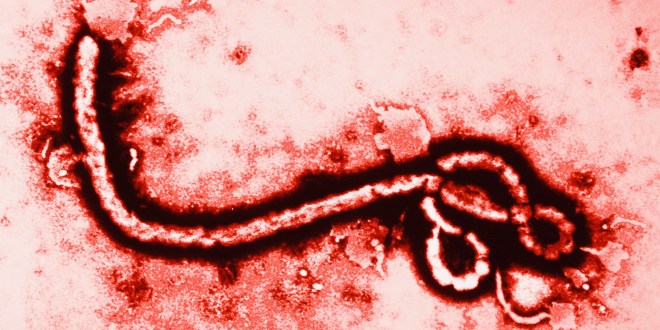
So a few months ago the country was enthralled with the idea of a few patients, infected with the Ebola virus, coming to the United States. Up until this point, we had been safe from Ebola due to the fact that bats can’t fly over the Atlantic. Some people were completely indifferent, while others had seen Outbreak one too many times. Most were a healthy mix, somewhere in between, but what bothered me the most was both the lack of education and the poor information that was spreading more virulently than the virus could ever hope to.
First, I want to stress that I am a nurse, not a virologist, and hopefully throughout my post you will see that I am not pretending to be one. I have a Bachelor’s in Nursing and am currently a graduate student. I have worked extensively with Infectious Disease Specialists. I have been exposed to almost every infectious disease known to the modern world. I have taken courses in Biology, Microbiology, Anatomy, Physiology, Pathophysiology, Advanced Pathophysiology, Pharmacology, and an assortment of others. However, I am not and will not pretend to be an expert, just an experienced professional. When it comes to an epidemic of any sort, my first focus is on the patient, protecting and healing them, my second focus is on protecting the community. I don’t care about which strain does what, or what we can do with in lab. As a nurse, I concern myself with the current patient and future possible patients. I feel the first thing we should examine is Ebola itself. It is foreign to the US, both literally and figuratively. What it does to people and how it harmonizes with nature are both things that most westerners have little concept of. It is a virus, not a bacteria. This means that it is not its own organism. It is actually much smaller and basic than you can imagine. It is nothing more than a few pieces of DNA/RNA and some proteins. No cell wall, no cytoplasm, no metabolic functions. This is both their advantage and their downfall. Viruses require a host. For this example I will use the HIV virus. HIV gets into the human body and invades the host’s white blood cells, T4 cells to be exact but I won’t get that involved. The proteins help get the virus into the cell and those few small sequences of DNA/RNA write themselves into the host DNA/RNA. Now instead of the white blood cell attacking invaders, it is nothing more than an HIV factory. All of its metabolic functions are redirected at producing more of the virus, which pours out of the white blood cell like a sieve until eventually the host cell dies. This is why HIV infected patients have poor immune systems. The virus re-writes the DNA of the host cells. This is not something we can stop. New viruses are pouring out of the white blood cells at a rate of millions a day. We cannot filter them out. We cannot “kill” a little chunk of DNA and we don’t know enough about the human genome to correct the DNA sequences. This is why a lot of viral infections like HIV, Herpes, and Hepatitis are life long infections. HIV invades the white blood cells, Herpes invade the nerve roots, and Hepatitis invades the liver.
Now that we have a better grasp of viruses, we will focus on Ebola a bit more. In tropical Africa, Ebola naturally lives in bats. It is nice to the bats and doesn’t cause them many issues. It is rumored that there are many viruses humans carry our entire lives and have no idea because they show zero symptoms. Therefore, they have never been studied. If this sounds crazy, just remember that it was in recent years the we discovered there was a virus behind cervical cancer. A virus that men can carry and spread without ever knowing they have it. Where the problem arises is that in tropical Africa, people like to eat bats. Sometimes they get infected with Ebola and it spreads. This process is called Zoonosis and can be true of bacteria or viruses. Racoons carry Rabies, Armadillos carry Leprosy, Birds carry the Flu, Bats carry Ebola.
When I said Westerners don’t really understand Ebola, the primary aspect that I am talking about is the patient. We don’t ever see what Ebola does. Our media is too censored, we hear how many died, and see people in haz-mat suits. Speaking of suits, we’ve all seen the pictures. Rubber gloves are adequate for AIDS and hepatitis, a simple mask (N95) stops Tuberculosis, but this requires space suits, just keep that in mind when you think its no big deal. So here is what happens when you catch Ebola, I figure you’re getting bored with reading right about now, so I’ll spice it up. First the virus gets into your system, I’ll elaborate on that later. Then, it hangs out for a few days, even up to 21, growing, multiplying at a rate of millions a day, and guess what, you’re infectious. Now at this point it would pretty much require a straight blood to blood interaction so the only real threat here is for IV drug users who share needles. Just like with the flu or hand foot and mouth disease, you can be spreading it to others before you show a symptom*(apparently not many see the *, so please read the elaboration at the bottom). Remember, nurse mind set, protect the community. At first it’s not bad, little nausea, some sweating, diarrhea, much like a stomach bug. But then the virus really starts to build up in your liver and adrenal glands, after it has saturated your blood cells, the lining of your vessel, your skin, and bones. Hepatocellular necrosis occurs, which is fancy term for your liver starts to decompose.Your liver is what regulates blood clotting. This causes your blood either clot up and turn to jelly in your veins, stay liquid and bleed profusely, or a combo of both. The adrenal glands then do the same, causing your blood pressure to drop. This requires lots of IV fluids to keep your circulating volume up. At the same time inflammatory cytokines are released which causes vascular leakage. Cells don’t do a good job of holding things together so it all becomes a bloody goop. Anywhere in your body that blood vessels are shallow, like your nose, ears, gums, throat, GI tract, urethra, vagina, rectum, all start oozing fluids and bleeding because the tissues that normally keep it contained are disintegrating. So now you bleed from every orifice, including your eyeballs. Every time someone or something touches you, your tissue gets damaged which further the cycle, so a shot in the arm can turn into a massive blood blister. Those who survive are left with massive scarring. Since the adrenals cannot keep your blood pressure up, and you are losing blood and fluids, we have to put IV fluids in to keep you out of hypovolemic shock. This in turn reduces your blood concentration, lowering your oxygen carrying capacity, which causes your heart to race. So you lay in bed, oozing fluids from everywhere, all while feeling like you just ran a marathon, with bloody diarrhea, oh and did I mention pain? Lots and lots of pain, but you can’t have any pain medicine because your liver and kidneys have failed. This why it pains me when I see this outbreak ONLY has a 50% death rate, when in Africa it is up to 90%…ONLY 50%. That is literally worse than cancer, and people are blowing it off. Imagine if cancer was infectious, and you lived in a country with zero cancer, and someone thought it would be a good idea to fly a few people in. I think there would be a different attitude.
The biggest part of the discussion is how Ebola is spread. I will say two things on the topic, no, it is not airborne, and yes, basic hygiene plays a HUGE factor. But while on the topic of whether it is or is not airborne, the definition of an airborne contagion is one that can freely float in the air, survive lengths of time, and infect someone else. VERY few things fit in this category, most have been eradicated, Small Pox, Tuberculosis, Measles. Things that are also NOT airborne, are the flu and the cold. For the flu, you have to come into direct contact with the patients body fluids. How then, do you explain why people catch it and have no idea how. Well for one, people can spread it before they show symptoms, just like Ebola, and one other HUGE factor…droplets….let that word really sink in. The virus may not be airborne, but the droplets are. I’m going to digress for a second and get back to HIV and Hepatitis, while I let droplets dwell in your mind. Everyone knows that HIV and Hepatitis are spread by blood contact, and sexual fluids, I don’t mean a drop of blood on the skin, or even a mucous membrane, it has to get INSIDE of you. This is why only gloves are required. HIV and Hepatitis are not found in urine, stool (Some forms of hepatitis are, but you have to eat the stool to get infected) saliva, sweat, tears, or mucous. This is where some viruses are different. The flu gets into your mucous and other secretions, Ebola tends to stay in the blood, but remember, every one of your bodily fluids are full of blood now. So a person with the flu sneezes, and now millions of little droplets (remember those guys?) shoot out of their nose at nearly mach 1, all across the room, same for a cough, all it takes is a little microscopic droplet to land in your eye, nose, mouth, or the unlikely scenario of an open wound, and you’ve now been infected, because you came in CONTACT with their bodily fluids. I see the word contact thrown around a lot, but most people think of mass amounts of contact with blood, but what they don’t realize is that contact also includes microscopic mucous and saliva droplets, each one chock full of Ebola. Bacteria can survive for long periods of time without a host because they are their own organism. They can feed on just about anything and be happy. Viruses lifespan without a host is much shorter. Their goal is to infect, replicate, and spread, if they cant replicate, they die. Measles only lives 2 hours. But Ebola, depending on what data you look at, can survive for several days.
So with all this information, lets have some role play, so that you can see exactly what this means, to a nurse, in the real world. Imagine it as a cheesy PSA or lifetime movie. You go to see your doctor because its that time of year, you need some blood drawn and refills of your blood pressure med. You sit patiently in the waiting room, thumbing a magazine while your 2-year-old plays with her toys. Like all two year olds, she touches everything, and everything goes in her mouth, toys, pens, her own fingers. She is a 22 lb drool factory and you love her to pieces. You see the doctor, get your goodies, and go home. A week later your angel starts vomiting blood and within 3 days she dies because her heart raced so fast it finally gave up while trying to maintain a blood pressure. Her eyes are blood red and demonic, her skin falls off in sheets. What you don’t know is that 3 days before your visit, someone thought they had the flu. It is October you see and they sneezed while thumbing through that very same magazine you thumbed through. The same thumb you grabbed her pacifier out of your purse with in the waiting room. The people caring for Ebola patients wear space suits, and burn the bodies, yet it still spreads. Here in America, we have much better protocols, and much better hygiene. So if it spreads, it will be contained much better. Still, it spreads prior to symptoms and survives will outside the body, just like the flu. Despite vaccines and good hand washing, thousands still get the flu every year. But while the flu kills 1-2% of its victims, Ebola kills 50% on a good day, and spreads the same way. So please, do not write it off as hype. It is a real thing and it is here.
The case in Dallas has been confirmed. The patient had contact with five children and adolescents prior to admission. Those five kids attend four of the largest schools in Dallas. One sneeze and we could already have thousands of people, who don’t know it yet, infected.
Thank you for reading. Please feel free to comment.
Symptoms* I have had a lot of comments in regards to this. I picked my words carefully, but I never imagined getting thousands of views an hour, or my article getting picked apart, but I will try to elaborate now. I said spread, the virus, I did not say you were contagious. What I meant by this, was the summation of two concepts. To fully explain everything I could write a book, but this is meant to be short and sweet. The first concept is that of a fomite. We have established that the virus can survive for an unspecified amount of time outside the host, and we have established that sneezing/coughing is a perfectly logical method of transmission. So if patient A is infectious/contagious, they sneeze on patient B, but then patient B goes home and picks up their sisters 1 6 month old, who rubs his face, and licks all over your shoulder, he could very well have just orally consumed large quantities of the virus, therefore become patient C. Patient B never got sick, the virus never entered their system, yet they are responsible for spreading the virus to someone else. This is why the 5 exposed kids are so important, there may only be a 2% chance or whatever that they’ll get sick, but if they went to school, and each rubbed up against 500 kids in the hallways, you now have 2500 exposed kids, 50 of which will statistically become infected, 25 of which will probably die. No I do not have a source for the 2%, that is just an EXAMPLE number used to represent the relatively low likelihood of contracting the virus if exposed, granted the R0 factor of R2 is correct. Remember, heal the patient, PROTECT the community. The second concept of this is defining “symptom”. Lets assume it means anything other than your baseline condition. That means the first signs of being contagious, are also the more mild symptoms, sneezy, achy, nausea, flu-like symptoms. So who is going to wake up, feel a little under the weather, and think, crap, I have Ebola, better get quarantined, no, THAT’S how you start fear mongering and mass panic. Again, flu season is upon us, the initial stages of Ebola are like the flu, and its human nature to be in denial, so many people, if infected, would hope its just the flu and wait it out, they are not showing symptoms indicative of Ebola, but they ARE symptomatic of something, and therefore, by the CDC definition, would be contagious. Its also normal procedure for people to be symptomatic BEFORE seeking medical care, so technically, everyone will be contagious, BEFORE knowing they have Ebola. But like I said before, I omitted this lengthy explanation because I didn’t feel it was necessary for the point of the article.
ADDENDUM: Sadly, I feel the need to point out that the title of this blog is “Ebola, A Nurse’s Perspective”, not “A Nurse’s Guide to Surviving the Apocalypse”, or “How to Become an Ebola Expert in 15 minutes”. It could just as well be “Hamburgers, A Chef’s Perspective” and no one would be hounding me over grammar, a misplaced comma, or wanting citations as to why I say it should be on the grill 5 minutes per side of 7 minutes per side. The point is those things are irrelevant to the goal of the article, this is MY perspective (a particular attitude toward or way of regarding something; a point of view.) I don’t have to prove anything, the point of my article is to take what the uneducated (in a medical sense) journalists say, what the talking heads on TV say, and then let you know what the people say who are on the front lines. That’s like discrediting your grandads account of what happened when he stormed Normandy beach, because its not what your history teacher told you. Have I experienced Ebola first hand? Nope, have I experienced a WHOLE lot of other things that the majority of the population has not? You bet your ass I have, and I felt the need to take the time to hopefully help other people out a little. So please keep that in mind, I’m not perfect, but my experiences are my experiences, and I wanted to share them with you, to let you inside the head of a nurse for a minute.
 dtolar
Phenomenal article. Keep writing, you have a knack for simplifying the complex…
LikeLiked by 2 people
I’ve always worked in complex areas, and putting things in basic terms to teach patients and families has always been something I felt I was good at, thought I’d try taking it to the next level.
LikeLiked by 1 person
Great Job Maggie!!! These devastating viruses coming out of Africa like Aids, Ebola, the Dengue Virus and other pandemic world threats originating or propagating in that region make the ISIS Crisis seem tame in comparison. President Obama recently acknowledged that Ebola is controllable with proper Public Health Programs. Then why doesn’t he take action to stop travel to and from such areas of the world until the threat is abated, and, or until these African countries get an adequate Public Health Infrastructure in place. Political correctness is absurd when the entire population of the world is threatened. There are many people who did not finish reading your fine article, nor my response, because they are programed to reject anything negative or unpleasant , and these are the people who need to get involved and help bring about some changes.
LikeLike
Who’s Maggie?
LikeLike
Phenomenal article.
You have a knack of simplifying the complex. Don’t stop…
LikeLike
Thank you for the wonderful and most informative article. I too, am a professional nurse and couldn’t have wrote any this better.
Word of caution to all (not fear mongering) in light of some who are asking: “What should we do? What are good precautions to take?” First, don’t wait for your government to save you, no matter what disaster may occur (think Katrina). Be pro-active and start (if you haven’t yet begun to) “saving up” for a rainy day. Start here!
Just take a look around, not just at the Ebola situation, but the economy, war, crime, lasciviousness period, is on the rise! We’ve been warned time and time again (see opening ceremony of Sochi 2014 Olympics, see the “prepare” message issued at Super Bowl 48 half time show? No? Well you should!)People, the writings on the wall. Let those who have eyes to see and ears to hear…. had better listen!
LikeLiked by 1 person
Only thing. Ebola can’t live any longer than 3 hours in perfect conditions. Unless it’s cold then weeks.
LikeLike
Ebolas natural habit is tropical Africa. It thrives inside the human body, wet and 98 degrees. According to the CDC it can live for 7 days. It has to be heated to 140f to be killed.
LikeLike
Carter, not sure where you got your information but Ebola lives outside the host for up to 3 days.
LikeLike
“Ebola on dried on surfaces such as doorknobs and counter-tops can survive for several hours; however, virus in body fluids (such as blood) can survive up to several days at room temperature.” – Center for Disease Control
http://www.cdc.gov/vhf/ebola/transmission/qas.html
LikeLiked by 1 person
Reblogged this on Franklemoine's Blog and commented:
Great explanation, easy to understand. I look forward to following your future post.
LikeLike
Thank you so very much for taking your time to share all of this info with us. I for one greatly appreciate it!
LikeLike
Your article locked in for memory with Organized Mnemonics! Because all knowledge is the direct result of memory. It’s free always just a testimony of wisdom. Again, you did a great job of making something complicated so simple to understand.
What can an ant, snail, elephant and a bow tie teach you about Ebola.
Children have imaginations, when you learn to tap into it you empower the mind.
Despite vaccines and good hand washing, thousands still get the flu every year. But while the flu kills 1-2% of its victims, Ebola kills 50 %
Mnemonic Ebola
Ant = A
Ant airborne = not like a mosquito rather: blood, vomit, sweat & stool YIKES. Picture that in your minds eye. (not descriptive geometry but descriptive imagination)
Snail = S Sneezing
The snail using an AEROSOL can:
droplets larger than micron [µm]; 1/10 the width of a hair), fall without evaporating
Smaller droplets remain suspended evaporate quickly (< 1/10 sec in dry air), leaving behind particles consisting of proteins, salts and other things, including suspended viruses and bacteria. remain airborne for hours Droplets smaller than 5-10µm dry fast enough to form droplet nuclei without falling to the ground, and it is usual for scientists to refer to these as being in the airborne size range. It is only the droplet nuclei that are capable of riding the air currents through a, shopping centre or office building.
Monkey = Micron
Coughing up a monkey with a "TIE" on (TIE gives you 10 for the analogy)
Smaller than a monkey it's airborne
Bigger than a monkey it's falling to the ground.
The bigger Monkey.
Ebola not airborne, (Elephant = E)
Hygiene (subconscious link)
Flu and the cold. NOT airborne
Contact microscopic mucous and saliva droplets,
HIV and Hepatitis lives outside of the human body for a few seconds.
Ebola on the other hand survives up to 4 days.
Spreads prior to symptoms
survives well outside the body, just like the flu.
Kids love stories-why can't they be educational with a subconscious link? Mine link the Bible, chemistry, physics, business, reading. . .
The stories you allow your children's impressionable minds to be exposed to? Are they productive? . . . Shriners 101, Rotary 201.
LikeLiked by 1 person
Thank you for the article. I live in Red Oak, Texas just less than a Mike from the Dallas county line. I work in Dallas as a matter of fact literally just across the public rail system from the hospital this patient is in. In efforts to save money and my sanity u have been riding the park and ride to downtown and hopping on the rail which literally stops at the hospital. Tons of medical staff ride the same line as me. No one knew of the Ebola issue until it was made public. So many ride the rail and are of many ethnicities including African. I see many riding that are sniffling and coughing (no ethnicity in particular) and now all I can do is just wonder if anyone has been exposed before this became public. Worst of all this job is a temporary assignment and it would be horrible to think I risked myself and family for a temp job! Thanks for sharing your knowledge!
LikeLike
Well in a few days guess we will see if CDC was lying or being truthful, new cases show up in urban areas or the scares passes with no new cases..time will tell.
LikeLike
Great article. I am an RN as well and do my best to explain to my patients what the doctors have told them, keeping it as simple as possible. I will keep this article and share it.
LikeLike
Please do
LikeLike
I have a question about the days during which the Ebola patient was languishing in the apartment before being taken to the hospital via ambulance. According to those close to him who have been interviewed, the man was repeatedly rushing to the bathroom, we can only presume why. Anyway, wouldn’t the bodily fluids of this man at that time be of a virulent enough nature to be considered hazardous bio-waste, which in a hospital setting would require special decontamination before being flushed into the sewer system? It would seem that several day’s worth of bio-hazardous fluids were flushed into the regular sewage system…so…I’m guessing that’s not a great thing to have happen? Also, stories have come from witnesses who say that when the ambulance arrived to pick up the patient he was outside vomiting profusely on the sidewalks, etc. Again, what would be the ramifications of all this Ebola laced body fluid laying about on the sidewalks and yard areas for whatever time before it was cleaned up. Could the virus be picked up by rats, birds, passing dogs, etc? Anyway, thank you for your excellent article.
LikeLike
You would think….
LikeLike
I think Shelby needs a slightly better answer. A virus like the poster explained is only DNA/RNA/Protein, it can’t survive without a host. In the sewer system or out on the sidewalk it need only enough time to break apart to have its virulence become irrelevant, it becomes no more hazardous than the other proteins and bits of DNA already in our environment.
LikeLike
Why have they been saying it is not contagious until you have symptoms on the TV? Can you list your sources for your facts? Thanks
LikeLike
I’ll put it a different way, let’s say the TV is correct, and you’re contagious when you start showing symptoms…the first symptoms are mild and vague, headache, nausea, feeling tired. If its THAT cut and dry, then every American who wakes IP in the morning feeling under the weather, needs to quarantine themselves until testing can be confirmed….but it reality that’s not logical. Denial is human nature, most people are going to wait it out and “see how I feel in the morning” but those mild symptoms may last a week, during which time you are not diagnosed with Ebola, but contagious. Most won’t seek medical attbetion until the indicative symptoms start, like the bleeding, high fever, etc. And the fact of the matter is, about a 1/3 of Ebola victims have a disease course that mimics our flu, its flu season here, so people may again be in denial and say hey, its just the flu, and in fact be spreading Ebola. So its debatable what exactly defines “symptomatic”, is it symptomatic of Ebola, or symptomatic of anything other than 100% normal.
LikeLiked by 1 person
Another way its been described to me, is that the vascular lining is where it first habitates. So the virus is in your blood from day 1, theoretically, if your blood got into someone else, shouldn’t they get infected as well?
LikeLike
Reblogged this on Inform Inspire Change and commented:
An informative education…
LikeLike
Is there anything we can take to.boost immune system to.fight it off? Are there any know pharma or natural homeopathics that help ?
Does bleach kill it?
LikeLike
Not really, unless you have some sort of compromised immune system, most Americans are running at full capacity, diet has a lot to do with it, most of us aren’t deficient in anything vital for immune health. Because bleach is an oxidizer, I would assume it would kill the virus very well.
LikeLike
Yes…is there anything we can “take” in order to boost our immune systems against this? I’m sorry for the dumb question
LikeLike
Great article. Is it really true that it is contagious before the infected person shows synonyms? The news seems to be “stressing” that it is not contagious unless the patient is showing symptoms.
LikeLike
Read my prior replies
LikeLike
I knew it! EVERYTHING you have said, Dustin Tolar, I already “knew” it!!! Only an IDIOT would believe that one is not contagious until one begins to exhibit “symptoms”…..THAT was the dead give-a-way! America, brace yourselves and pray!
LikeLiked by 1 person
Would you have any advice or idea on what someone with a compromised immune system (like lupus and anti-phospholipid syndrome) may be able to do to help their body to be more prepared due to the obvious ? Thanks for the article and information.
LikeLike
No earthly idea, sorry
LikeLike
“Ebola on the other hand survives quite well outside of the host, I can’t find my source again, but I believe its up to 4 days.”
The data on the survivability of this virus is extremely sparse. The media is quoting the following papers in that regard: The Bausch et al (JID 2007:196) and Sagripanti, Archives of Virology Volume 155, Issue 12 , pp 2035-2039.
The Sagripanti paper has drawn the following conclusions:
In the 24 hours 90% inactive
48 hours 95% inactive
72 hours 99% inactive
96 hours 99.9% inactive
144 hours 99.99% inactive (1 week)
The sample size used in the study is questionable as this was obtained from a single patient back in 1994. Surely the virus has mutated in the wild over nearly a 20 year period and any conclusions based on such a small sample is questionable. The viruses were tested only on a glass surface.
From the abstract:
The Zaire strain of the Ebola virus, isolated from a patient during the 1994-1995 outbreak in the Kikwit District in the Democratic Republic of Congo (former Zaire), was kindly provided by Dr. Peter Jahrling from the United States Army Medical Research Institute for Infectious Diseases (USAMRIID, Fort Detrick Maryland).
The Bausch paper is really irrelevant to the general public as these tests were conducted within an Ebola isolation ward that was disinfected on a daily basis:
Clinical specimens. The study was conducted in the isolation ward at Gulu Regional Hospital during an outbreak of EHF (Sudan EBOV) in Gulu, Uganda, in 2000 [8]. The ward was divided into patients with “suspected EHF” and patients with “probable EHF” on the basis of the clinician’s judgement with subsequent use of the laboratory data when available. The daily cleaning/decontamination procedure in the ward consisted of spraying a 0.5% bleach solution on the floors each morning and a 0.05% solution on other visibly contaminated surfaces as needed [3].
This paper concludes that the Zaire strain is able to survive on surfaces from 3 to 5 WEEKS (not days).
J Appl Microbiol. 2010 Nov;109(5):1531-9. doi: 10.1111/j.1365-2672.2010.04778.x. Epub 2010 Jun 10. The survival of filoviruses in liquids, on solid substrates and in a dynamic aerosol.
http://www.ncbi.nlm.nih.gov/pubmed/20553340
A good overview of the Virus here:
Public Health Agency of Canada
http://www.phac-aspc.gc.ca/lab-bio/res/psds-ftss/ebola-eng.php
LikeLike
I’m unsure of the point you are trying to make, can you clarify for me. I can’t tell if you’re trying to make an argument or provide supporting data.
LikeLike
I am just an individual trying to understand the survivability of this virus for the protection of myself and the people that I care about. From my point of view there are two important aspects, how can you contract it and how long can it live on a surface like a door knob, railing, or elevator button for example.
The papers that I am reading vary wildly on the survivability of this virus on everyday surfaces. The two papers that I mentioned are being repeated over and over on CNN. As I pointed out, the paper related to testing in an isolation ward that had undergone daily bleaching is completely irrelevant to what the public needs to understand.
I believe that the CDC with the cooperation of the media is attempting to downplay about the transmissibility of the virus as well as the ability of this virus to live on surfaces outside of a host. These topics are the most relevant to the public and I feel the information is not being delivered with intellectual honesty.
In the meantime I found this very good document that lays out the facts and the precautions that the public should be told.
Click to access k-c-ebola-precautions-brief-truscott-final.pdf
LikeLike
Ive seen a few places saying 7 days at room temp, but have not found the supporting study.
LikeLike
The only thing I have to say, either way, is that I wrote this to be anectodal, for the public to see what nurses see, not to be a survival guide. That’s why I left out sources and hard data, because “joe public” simply doesn’t care. I’m a graduate student so of course I take into account study age, sample size, internal and external threats to validity. I personally skip most anything that isn’t an RCT or meta analysis, but like I said, the average citizen doesn’t care. Besides, the only consistent data I’ve found on Ebola, is how inconsistent it is.
LikeLike
Public Health Agency of Canada
SURVIVAL OUTSIDE HOST:
Filoviruses have been reported capable to survive for weeks in blood and can also survive on contaminated surfaces, particularly at low temperatures (4°C). One study could not recover any Ebolavirus from experimentally contaminated surfaces (plastic, metal or glass) at room temperature Footnote 61. In another study, Ebolavirus dried onto glass, polymeric silicone rubber, or painted aluminum alloy is able to survive in the dark for several hours under ambient conditions (between 20 and 250C and 30–40% relative humidity) (amount of virus reduced to 37% after 15.4 hours), but is less stable than some other viral hemorrhagic fevers (Lassa).
When dried in tissue culture media onto glass and stored at 4 °C, Zaire ebolavirus survived for over 50 days. This information is based on experimental findings only and not based on observations in nature. This information is intended to be used to support local risk assessments in a laboratory setting.
http://www.phac-aspc.gc.ca/lab-bio/res/psds-ftss/ebola-eng.php
LikeLike
Ebola is NOT contagious until a person is symptomatic; it replicates in the body very quickly so people become very sick very fast (and thus there is little question as to when symptoms begin). Internal and external bleeding are very late symptoms of Ebola, and don’t happen in all people with the virus. Ebola does not survive long on inanimate surfaces, especially not up to 4 days. Further, it is a highly infectious disease but is not considered highly contagious. I don’t know what the point of this article is other than to scare people; you don’t list a single reference for your “facts.” If anyone is interested in factual information, they should visit http://www.cdc.gov/vhf/ebola/. Ebola is spreading like wildfire in West Africa because they lack basic health care and infrastructure, and what they need is help, not fear. Americans have very little to fear from this and we should be thankful for that.
For the record, I am also an (American) RN and have been working on Ebola preparedness for our Ghana clinics since March.
LikeLiked by 1 person
If we get “very sick very fast” then why are we being told that you may not show symptoms for 21 days. And the point of my article is that the American american people have no idea what Ebola actually does to the human body, I literally have people saying, its not THAT bad, it ONLY kills 50%. And we live in a culture where people want to take antibiotics for colds. The purpose of my article is education, not fear.
LikeLike
“Ebola does not survive long on inanimate surfaces, especially not up to 4 days. Further, it is a highly infectious disease but is not considered highly contagious.”
Can you please cite a publicly available source that backs up your statement? Everything that I am reading is contrary to your statement.
LikeLike
Too many people are commenting under smith….please cite your data…and please cite two that consistently back each other up.
LikeLike
Dustintolar, there is only one SMITH posting, me.
I am challenging KLG23 to produce a paper or any public source of information that backed up her/his claim that “Ebola does not survive long on inanimate surfaces, especially not up to 4 days. “.
I believe that is an factually incorrect claim and they are accusing you of not providing “factual” information. I contend that KLG23 does not have any special access and has not stated “factual” information.
LikeLike
“Ebola on dried on surfaces such as doorknobs and counter-tops can survive for several hours; however, virus in body fluids (such as blood) can survive up to several days at room temperature.” – CDC
LikeLike
Just checking, I’m usually on my phone, so it’s hard to keep up with the comments. I’d also like to point out that this is an opinion article, citations are not required. Don’t agree with it? don’t read it.
LikeLike
Please excuse the typo “I believe that is a factually incorrect claim”.
LikeLike
Please see my addendums
LikeLike
I am so pleased that you shared your article. I work at a public school less than a hour south of Dallas. Hoping to share your information with the administrators and have them go over the safety precautions when coughing and sneezing with the students. Something is better than nothing.
LikeLike
Thanks for not fear mongoring over Ebola like some have taken to, but I must ask you to go back and edit a couple of things in your post. If you could just find and replace everytime you wrote “The HIV virus” and simply use “HIV” it would be much better.
LikeLike
What an ass hat.
She did this to emphasize the correlation that they are both viruses. This is an informative article for those who aren’t as educated in her field.
LikeLike
He* 🙂 Also, I took the liberty of fixing your first post so I deleted the other one with the correction.
LikeLike
I think Shelby, an earlier comment, needs a slightly better answer. A virus like the poster explained is only DNA/RNA/Protein, it can’t survive without a host. In the sewer system or out on the sidewalk it need only enough time to break apart to have its virulence become irrelevant, it becomes no more hazardous than the other proteins and bits of DNA already in our environment.
LikeLike
Thanks, I wasn’t sure how to describe that, I also was unsure of how that would affect the virus by allowing it to stay wet, rather than dry onto surface.
LikeLike
Thanks so much for the article.I too am an RN.I work everyday with people who have compromised immune systems. I like to err on the side of caution when teaching.The information is very usefull. It is a scary situation for all of us but I think we have better chances than those on Africa due to our policies and protocols it won’t be long and we will have those for Ebola.Our biggest problem will be not to panic.I just have one question.Do those who recover have immunity through antibodies?
LikeLike
I’ve tried to find an answer to that. Since this seems to be somewhat seasonal I would think not, but at the same time it doesn’t mutate a whole lot. So I really don’t know, I wouldn’t be surprised either way
LikeLike
Thank you for adding your comment and for working with those with compromised immune systems. What extra precautions or preventive measures can you recommend for others, specifically lupus and anti phospholipid syndrome? Even a cold can become serious and with the aps, also, I can’t imagine any treatments. Thank you for any help.
LikeLike
I’m not familiar with APS, sorry 😦
LikeLike
Wondering if herpes ,HIV, and other virus can’t be killed. Can you say someone who survived being sick with Ebola is not contagious 5 yrs. from now?
LikeLike
Nope, most viruses have a built in “death clock” the same way you get the flu, you’re sick for a week, then you get better. Ebola does the same thing. I don’t know why some viruses do this, some don’t. I just find it interesting that the lifelong viruses seem to be sexually transmitted, but that’s a different story.
LikeLike
You had me right up until -“you can be spreading it to others before you show a symptom.” Spreading false information like this only cause mass hysteria, and we have enough of that without your help. As an “educated” person, you should probably have correct facts before putting them out to the public like that.
LikeLike
I’ve already elaborated on this in prior comments but I’ll approach yours differently. Tell me, a definitive point, at which a person should say, I think I have Ebola, I need to go to the hospital. And please respond, I think this could be a good discussion
LikeLike
I went ahead and wrote an addendum elaborating my point if you would like to read it.
LikeLike
Reblogged this on afallenaglewithbrokenwings and commented:
Wow
LikeLike
Good info, but Hepatitis can live outside the body for up go 4 days. It is relatively hardy. The rest looks like good info.
LikeLike
“How to build up the immune system against viruses” would be a helpful article to write. If you already have please let me know!
LikeLike
Have not, this is the first thing I’ve ever written
LikeLike
It’s not enough to know about it, BE ABOUT IT! Be proactive and start formulating a plan for you and your family. Here’s a great place to start. God bless.
Week 1 of 52: Short Term Emergency Food Supply (List 1) http://readynutrition.com/resources/week-1-of-52-two-weeks-of-food-and-water_06042011/
LikeLike
Dustin…great article. Do you have any similar insights on the cytomegalovirus? Especially as it reoccurs, what it’s potential long term affects on the immune system are? I’m interested to know if it also “writes itself” into the DNA of the host, thus compromising the immune system.
LikeLike
I don’t know that Ebola effects the white blood cells, it tends to prefer soft tissue, especially the liver and adrenal glands. Cytomegalovirus is so strange it gives me a headache so I don’t study it much.
LikeLike
Thank you for this informative article and breaking it down to where I can some what understand. I would like to add that I am a Leukemia patient and worried about my immune system even more. Saving and sharing!
LikeLike
Can you please correct the “shoot out of their nose at nearly mach 1″… It’s not even close to accurate. More like 39 mph (no where near 761 MPH aka: Mach 1). It’s stuff like that which will make your article less credible. Still very good info and appreciate the share!
LikeLike
Feel free to write your own article….If I “corrected” every little tidbit and hyperbole that everyone doesn’t agree with, it wouldn’t even be the same article. The speed of snot is completely irrelevant to the purpose of the article
LikeLike
LOL!! So I guess that “feel free to comment” was just hyperbole as well. Got it, thanks!
LikeLike
Lol, true, don’t worry, my skin is thick, my wife is the one to watch out for, shes not allowed to comment
LikeLike
I BELIEVE there is a bigger picture here. HERE ME OUT CAUSE YOU CANT RULE OUT WHAT WE DONT KNOW…….I have a friend who stupidly started smoking this new synthetic drug that replaced mary jane.. Could it be possible that some one invented a new biological weapon. My friend who is now under doctors care has shown everyone off the symptoms down to the tee!!! They are treating him with antibiotics and other meds. He has had an C T scan that show i little spot on his live which dr said he thought was benign or so small that its nothing. Dr told him he could do a follow up in 6 months to see if it grew. He says that under his right rib that he has constant pain and it actually spasms where it tries to come over the ribs.. his weight has dropped 20 pounds in two weeks. the systems just started getting bad but he has had them for a while at least 3 weeks now. the worst symptom which is loss of muscular use. He says his muscle were actually shrinking. he cant hardly eat has to be liquid most of the time because it made him sick to chew. now his skin on his face feels like it thinning out and he has put two scratches on his face. the doctor is sending him for a ultra sound to see if its his gall bladder. dr said if it aint that then he would have to go see a specialist…..YOU CANT RULE EVERYTHING OUT NOWADAYS. THE TERRORIST ARE GETTING SMARTER BY THE DAY. WERE IS THIS SYNTHETIC DRUG COMING FROM. WHY DOES AMERICA ALLOW THEM TO KEEP SELLING IT? MOST OF THE STORES THAT SELL IT ARE OWNED AND OPERATED BY FOREIGNERS…..PL,EASE CONSIDER THIS…
LikeLike
Dustin, One epidemiological concept that I did not see addressed in your otherwise fine article, is that of “infectious dose.” There’s a reason we don’t get TB from sitting near someone who has it and coughs in our direction. A person has to be exposed to a large enough quantity of the organism in order to become infected. That’s why the health care workers need the suits; *they* are being exposed to high viral doses over a long period of time. Although it is theoretically possible to be infected with Ebola from droplets, the likelihood is so small as to be nonexistent (consider HIV…same premise).
Someone else may have pointed this out, but one reason the disease spread so rapidly in those African countries is the total lack of any sanitation infrastructure: they couldn’t wash their hands if they wanted to. There is no clean water, no system for removal of sewage, and often not even enough healthy food to keep people healthy enough to fight off the virus.
You may have your own opinions about the CDC, but let’s give credit where it’s due: they have responded much better than they did at the beginning of the HIV situation, when hundreds of people died before they were given the resources to be able to take any action.
LikeLike
The reason that was not addressed is because this was written as a nurses perspective, not the publics perspective. The people in the suits are nurses, being exposed to high levels, therefore I didn’t feel the need to explain. You’re looking at it as”they” are wearing the suits, I look at it as “we” are wearing the suits. But thanks you for elaborating it for me, if I fully explained everything my page would take hours to read, trying to keep it short and sweet
LikeLike
Very good article… I appreciate being informed… I can’t understand why anyone would suggest a website ending with .gov for us to be more informed abut something this serious … Like “they” are going to tell us “everything”…
LikeLike
So what are you saying? There for sure will be an outbreak? If I’m not mistaken, everybody that has had contact with the Dallas patient have shown 0 symptoms. It’s been 11 days since he started showing symptoms. Also are you saying that people with liver disease will surely die if they get Ebola? Thanks. ….
LikeLike
I’m saying what I said in the article, this is how a nurse views the situation. So far they have shown none, but there’s still 10 more days, and I wrote this 4 day ago. Plus the people that could have encountered secondary exposure who are not being monitored. I would think that underlying liver failure would make the case worse, but then again Ebola pretty well destroys the liver, so its prior health may not be that relevant. I doubt there will be any serious outbreak though.
LikeLike
In one of the comments someone mentioned “to err on the side of caution”. OMG this is what we all need to do. Yes, Ebola is stable even from the first cases, but who would know about mutation. The longer it is active as in West Africa the more possibly of mutation. I thought you wrote a good article. We all need to be erring on the side of caution.
LikeLike
“Feel free to write your own article….If I “corrected” every little tidbit and hyperbole that everyone doesn’t agree with, it wouldn’t even be the same article. The speed of snot is completely irrelevant to the purpose of the article”
If you are going to write, especially articles without references, which I am sure you have been taught about as a nurse, then you will have to become accustomed to minor corrections and challenges by your reading public. Include your references, make your articles irrefutable and you will have much more credibility.
An example is your statement that flu kills 1-2% of its victims, is that worldwide, in the USA and where do those figures come from? A simple reference makes the statement irrefutable.
LikeLike
This is not a research article, of which I have done many, high budget hospital programs have been based on my research, so I am used to scrutiny. This however, was something I wrote for pleasure to take a break from the presentation I am making about effective leadership styles needed to convert a hospital from paper charting over to computerized physician order entry. This is a perspective article, an expert opinion, which is level 6 research, they lowest level, this article is not even worthy of being cited itself, so why would I put forth the effort to cite whats in it? You have utterly missed the purpose of this article. For an elaboration please see the addendum
LikeLike
That proves his point, if you were anything remotely as important as you claim to be in the post above, you would care enough about even the smallest thing you write to make sure it didn’t make you like like an amateur fear-monger.
Despite your claims about not representing yourself as an expert on Ebola, that is exactly what you are doing here as you answers people’s questions and so forth. You keep saying “we” “we” “we” but you are not one of the nurses on the front line, and never have been, so perhaps you should step back and consider that some people who are reading this article are not as easily impressed with your unsupported claims of perspective where you honestly have none.
To say that because you have worked in a lab with specialists on other viruses gives you the background to write on Ebola would be like assuming because you have watched knee surgery makes you qualified to educate the public about heart surgery.
LikeLike
Have you read the article? I have never worked in a lab, I work in the hospital, as the bed side, treating the actual patients, please read the entire article and the addendum to get a better grasp on what I am saying, this is an opinion article. I wrote it to get some thoughts out of my head and share with my friends, I’m not the thousands of people who shared, I honestly told my wife I would be excited if 500 people read it, right now its at 8,000 people per hour. I have seen first hand, Tuberculosis, MAC, MRSA, VRE, ESBL, HIV, several forms of Hepatitis, Necrotizing Fascitis, Fournier Gangrene, Flu, Bird Flu, Swine Flu, an assortment of Herpes and fungal infections. So no, I have not treated Ebola first hand, but when it comes to people, and infections, my experience is decent. Watching a knee surgery, which I have done, may not make me an expert in heart surgery, but the initials RB, BSN after my name means I spent years studying every body system. Also holding an ACLS accreditation, amongst others means I’m qualified to test you heart, interpret the rhythm, and shock the ever living crap out of you. I’m also trusted with drugs that will stop your heart within seconds. Have I done? Nope, but I’ve done everything required to be qualified to do so. Like Mr. Dunn, if you would like to offer anything the refutes anything I have said, or give an expample of how anything I have said could result in the detriment of any ones health, please feel free to do so.
LikeLike
Reblogged this on mini2z.
LikeLike
Great article- simplified perfectly for the general public and those who are not in the medical field. As a nurse as well, I agree that this information is crucial to spread as the media has censored it so much.
LikeLike
Reblogged this on joans5starreviews and commented:
This is an awesome post about Ebola Virus and certainly explains it better than any hype I have heard on television. I have to believe, unfortunately, that the poor man in Dallas with Ebola exposed so many more people that mentioned. What about the airports, planes, etc? Did he shop in a grocery store? Time will tell but history shows it only takes 1 person to start an epidemic. Time will tell. Let’s all pray for the sick patient and all the victims in Africa, and for any possible future victims.
LikeLike
Loved your article and shared with family and friends on Facebook. I explained to everyone that there is a need to be informed and the media isn’t going to take on the Ebola problem. Some might mention it in passing but down play it. Why the hell didn’t our President stop all flights from those area is a misery to me. Maybe it was his golf time and couldn’t be bothered. This World is in real trouble. God help us.
LikeLike
I think the safest way to know is that from here on in it should be SOP to test for Ebola if anyone is presenting ANY of the symptoms PERIOD!!!!
LikeLike
From one nurse to another Thank You!!!!! It’s very scary! Especially for a nurse like me that has a weakened immune system already…..
LikeLike
thank you for the great explanation
LikeLike
THANK YOU! I very much appreciate the info from someone in the trenches! I have intuitively suspected this all along. Bravo!
LikeLike
Thank you. Very informative. Appreciate you taking the time to educate.
LikeLike
The CDC says the person is not contagious before symptoms appear.
LikeLike
Please see the * at the bottom
LikeLike
Dude, this is so irresponsible. You claim credibility because you’re a nurse, when that actually gives you none at all. I, too, am a nurse, but since I don’t work in virology and infectious disease in third-world nations or the CDC or NIH, I would never dare to do this. And since you’re in the midst of writing a paper on converting from paper charting, I’m guessing infectious disease isn’t your area of research either.
And yet, when people call you out on facts and ask for elaboration, you talk down to them, condescend, and continue to fear monger. As a nurse, that is wildly irresponsible. Your job, as a medical professional, is not to spread misinformation without citing sources. It is the opposite.
Poorly done, sir.
LikeLike
You sir, are another who fails to understand the difference in an opinion article and a research article. You also must have failed to understand that I am in graduate school, and I’m not writing a paper, I’m making a presentation, it is for school, and has no bearing on my current employement. I try my hardest to respond to ever person on here who comments, good or bad, as well as the forums and websites that get posted. Sometimes I feel like I’m beating a dead horse by refuting the same comment over and over. Right now its being read 8000 times per hour in 122 countries, and has spread to Twitter, Flipboard, and Stumble upon. So I must be doing something right. I’m not condescending and I don’t talk down to anyone who wasn’t being a dick first. Many before have disagreed with my statements, and the best argument so far is “but the CDC says so” no one has provided any legitimate citation to disprove anything. You didn’t even list a comment for me to defend. Please see the * below in regards to symptoms, and read the addendum. Hopefully then you will understand the purpose of this blog. If you would like to discuss a particular aspect feel free to pick a few and comment back
LikeLike
Also, the best citations would be level 1 meta analysis which reviews multiple randomized control trials, behind that is level 2, which are the randomized control trials. Those dont exist because you’d have to have Ebola patients willing to be experimented on, but since the outbreak is current, that has not been done, so level 3 research is the best you’ll be able to get, which is a systematic review of observation studies, which can’t be current due the fact that the outbreak is current. So any level 3 data would be from prior outbreaks, which so far none have been like this one, so in the end, there is no reliable, relevant, and current data in regard to this outbreak.
LikeLike