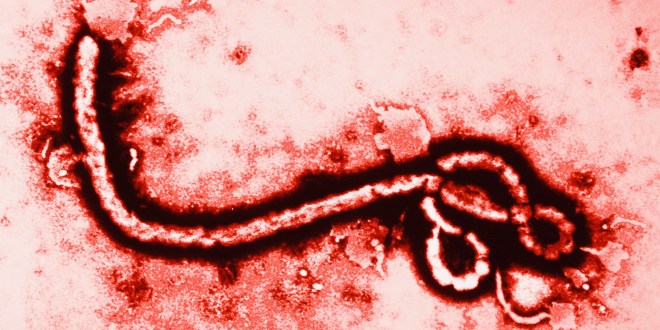
So a few months ago the country was enthralled with the idea of a few patients, infected with the Ebola virus, coming to the United States. Up until this point, we had been safe from Ebola due to the fact that bats can’t fly over the Atlantic. Some people were completely indifferent, while others had seen Outbreak one too many times. Most were a healthy mix, somewhere in between, but what bothered me the most was both the lack of education and the poor information that was spreading more virulently than the virus could ever hope to.
First, I want to stress that I am a nurse, not a virologist, and hopefully throughout my post you will see that I am not pretending to be one. I have a Bachelor’s in Nursing and am currently a graduate student. I have worked extensively with Infectious Disease Specialists. I have been exposed to almost every infectious disease known to the modern world. I have taken courses in Biology, Microbiology, Anatomy, Physiology, Pathophysiology, Advanced Pathophysiology, Pharmacology, and an assortment of others. However, I am not and will not pretend to be an expert, just an experienced professional. When it comes to an epidemic of any sort, my first focus is on the patient, protecting and healing them, my second focus is on protecting the community. I don’t care about which strain does what, or what we can do with in lab. As a nurse, I concern myself with the current patient and future possible patients. I feel the first thing we should examine is Ebola itself. It is foreign to the US, both literally and figuratively. What it does to people and how it harmonizes with nature are both things that most westerners have little concept of. It is a virus, not a bacteria. This means that it is not its own organism. It is actually much smaller and basic than you can imagine. It is nothing more than a few pieces of DNA/RNA and some proteins. No cell wall, no cytoplasm, no metabolic functions. This is both their advantage and their downfall. Viruses require a host. For this example I will use the HIV virus. HIV gets into the human body and invades the host’s white blood cells, T4 cells to be exact but I won’t get that involved. The proteins help get the virus into the cell and those few small sequences of DNA/RNA write themselves into the host DNA/RNA. Now instead of the white blood cell attacking invaders, it is nothing more than an HIV factory. All of its metabolic functions are redirected at producing more of the virus, which pours out of the white blood cell like a sieve until eventually the host cell dies. This is why HIV infected patients have poor immune systems. The virus re-writes the DNA of the host cells. This is not something we can stop. New viruses are pouring out of the white blood cells at a rate of millions a day. We cannot filter them out. We cannot “kill” a little chunk of DNA and we don’t know enough about the human genome to correct the DNA sequences. This is why a lot of viral infections like HIV, Herpes, and Hepatitis are life long infections. HIV invades the white blood cells, Herpes invade the nerve roots, and Hepatitis invades the liver.
Now that we have a better grasp of viruses, we will focus on Ebola a bit more. In tropical Africa, Ebola naturally lives in bats. It is nice to the bats and doesn’t cause them many issues. It is rumored that there are many viruses humans carry our entire lives and have no idea because they show zero symptoms. Therefore, they have never been studied. If this sounds crazy, just remember that it was in recent years the we discovered there was a virus behind cervical cancer. A virus that men can carry and spread without ever knowing they have it. Where the problem arises is that in tropical Africa, people like to eat bats. Sometimes they get infected with Ebola and it spreads. This process is called Zoonosis and can be true of bacteria or viruses. Racoons carry Rabies, Armadillos carry Leprosy, Birds carry the Flu, Bats carry Ebola.
When I said Westerners don’t really understand Ebola, the primary aspect that I am talking about is the patient. We don’t ever see what Ebola does. Our media is too censored, we hear how many died, and see people in haz-mat suits. Speaking of suits, we’ve all seen the pictures. Rubber gloves are adequate for AIDS and hepatitis, a simple mask (N95) stops Tuberculosis, but this requires space suits, just keep that in mind when you think its no big deal. So here is what happens when you catch Ebola, I figure you’re getting bored with reading right about now, so I’ll spice it up. First the virus gets into your system, I’ll elaborate on that later. Then, it hangs out for a few days, even up to 21, growing, multiplying at a rate of millions a day, and guess what, you’re infectious. Now at this point it would pretty much require a straight blood to blood interaction so the only real threat here is for IV drug users who share needles. Just like with the flu or hand foot and mouth disease, you can be spreading it to others before you show a symptom*(apparently not many see the *, so please read the elaboration at the bottom). Remember, nurse mind set, protect the community. At first it’s not bad, little nausea, some sweating, diarrhea, much like a stomach bug. But then the virus really starts to build up in your liver and adrenal glands, after it has saturated your blood cells, the lining of your vessel, your skin, and bones. Hepatocellular necrosis occurs, which is fancy term for your liver starts to decompose.Your liver is what regulates blood clotting. This causes your blood either clot up and turn to jelly in your veins, stay liquid and bleed profusely, or a combo of both. The adrenal glands then do the same, causing your blood pressure to drop. This requires lots of IV fluids to keep your circulating volume up. At the same time inflammatory cytokines are released which causes vascular leakage. Cells don’t do a good job of holding things together so it all becomes a bloody goop. Anywhere in your body that blood vessels are shallow, like your nose, ears, gums, throat, GI tract, urethra, vagina, rectum, all start oozing fluids and bleeding because the tissues that normally keep it contained are disintegrating. So now you bleed from every orifice, including your eyeballs. Every time someone or something touches you, your tissue gets damaged which further the cycle, so a shot in the arm can turn into a massive blood blister. Those who survive are left with massive scarring. Since the adrenals cannot keep your blood pressure up, and you are losing blood and fluids, we have to put IV fluids in to keep you out of hypovolemic shock. This in turn reduces your blood concentration, lowering your oxygen carrying capacity, which causes your heart to race. So you lay in bed, oozing fluids from everywhere, all while feeling like you just ran a marathon, with bloody diarrhea, oh and did I mention pain? Lots and lots of pain, but you can’t have any pain medicine because your liver and kidneys have failed. This why it pains me when I see this outbreak ONLY has a 50% death rate, when in Africa it is up to 90%…ONLY 50%. That is literally worse than cancer, and people are blowing it off. Imagine if cancer was infectious, and you lived in a country with zero cancer, and someone thought it would be a good idea to fly a few people in. I think there would be a different attitude.
The biggest part of the discussion is how Ebola is spread. I will say two things on the topic, no, it is not airborne, and yes, basic hygiene plays a HUGE factor. But while on the topic of whether it is or is not airborne, the definition of an airborne contagion is one that can freely float in the air, survive lengths of time, and infect someone else. VERY few things fit in this category, most have been eradicated, Small Pox, Tuberculosis, Measles. Things that are also NOT airborne, are the flu and the cold. For the flu, you have to come into direct contact with the patients body fluids. How then, do you explain why people catch it and have no idea how. Well for one, people can spread it before they show symptoms, just like Ebola, and one other HUGE factor…droplets….let that word really sink in. The virus may not be airborne, but the droplets are. I’m going to digress for a second and get back to HIV and Hepatitis, while I let droplets dwell in your mind. Everyone knows that HIV and Hepatitis are spread by blood contact, and sexual fluids, I don’t mean a drop of blood on the skin, or even a mucous membrane, it has to get INSIDE of you. This is why only gloves are required. HIV and Hepatitis are not found in urine, stool (Some forms of hepatitis are, but you have to eat the stool to get infected) saliva, sweat, tears, or mucous. This is where some viruses are different. The flu gets into your mucous and other secretions, Ebola tends to stay in the blood, but remember, every one of your bodily fluids are full of blood now. So a person with the flu sneezes, and now millions of little droplets (remember those guys?) shoot out of their nose at nearly mach 1, all across the room, same for a cough, all it takes is a little microscopic droplet to land in your eye, nose, mouth, or the unlikely scenario of an open wound, and you’ve now been infected, because you came in CONTACT with their bodily fluids. I see the word contact thrown around a lot, but most people think of mass amounts of contact with blood, but what they don’t realize is that contact also includes microscopic mucous and saliva droplets, each one chock full of Ebola. Bacteria can survive for long periods of time without a host because they are their own organism. They can feed on just about anything and be happy. Viruses lifespan without a host is much shorter. Their goal is to infect, replicate, and spread, if they cant replicate, they die. Measles only lives 2 hours. But Ebola, depending on what data you look at, can survive for several days.
So with all this information, lets have some role play, so that you can see exactly what this means, to a nurse, in the real world. Imagine it as a cheesy PSA or lifetime movie. You go to see your doctor because its that time of year, you need some blood drawn and refills of your blood pressure med. You sit patiently in the waiting room, thumbing a magazine while your 2-year-old plays with her toys. Like all two year olds, she touches everything, and everything goes in her mouth, toys, pens, her own fingers. She is a 22 lb drool factory and you love her to pieces. You see the doctor, get your goodies, and go home. A week later your angel starts vomiting blood and within 3 days she dies because her heart raced so fast it finally gave up while trying to maintain a blood pressure. Her eyes are blood red and demonic, her skin falls off in sheets. What you don’t know is that 3 days before your visit, someone thought they had the flu. It is October you see and they sneezed while thumbing through that very same magazine you thumbed through. The same thumb you grabbed her pacifier out of your purse with in the waiting room. The people caring for Ebola patients wear space suits, and burn the bodies, yet it still spreads. Here in America, we have much better protocols, and much better hygiene. So if it spreads, it will be contained much better. Still, it spreads prior to symptoms and survives will outside the body, just like the flu. Despite vaccines and good hand washing, thousands still get the flu every year. But while the flu kills 1-2% of its victims, Ebola kills 50% on a good day, and spreads the same way. So please, do not write it off as hype. It is a real thing and it is here.
The case in Dallas has been confirmed. The patient had contact with five children and adolescents prior to admission. Those five kids attend four of the largest schools in Dallas. One sneeze and we could already have thousands of people, who don’t know it yet, infected.
Thank you for reading. Please feel free to comment.
Symptoms* I have had a lot of comments in regards to this. I picked my words carefully, but I never imagined getting thousands of views an hour, or my article getting picked apart, but I will try to elaborate now. I said spread, the virus, I did not say you were contagious. What I meant by this, was the summation of two concepts. To fully explain everything I could write a book, but this is meant to be short and sweet. The first concept is that of a fomite. We have established that the virus can survive for an unspecified amount of time outside the host, and we have established that sneezing/coughing is a perfectly logical method of transmission. So if patient A is infectious/contagious, they sneeze on patient B, but then patient B goes home and picks up their sisters 1 6 month old, who rubs his face, and licks all over your shoulder, he could very well have just orally consumed large quantities of the virus, therefore become patient C. Patient B never got sick, the virus never entered their system, yet they are responsible for spreading the virus to someone else. This is why the 5 exposed kids are so important, there may only be a 2% chance or whatever that they’ll get sick, but if they went to school, and each rubbed up against 500 kids in the hallways, you now have 2500 exposed kids, 50 of which will statistically become infected, 25 of which will probably die. No I do not have a source for the 2%, that is just an EXAMPLE number used to represent the relatively low likelihood of contracting the virus if exposed, granted the R0 factor of R2 is correct. Remember, heal the patient, PROTECT the community. The second concept of this is defining “symptom”. Lets assume it means anything other than your baseline condition. That means the first signs of being contagious, are also the more mild symptoms, sneezy, achy, nausea, flu-like symptoms. So who is going to wake up, feel a little under the weather, and think, crap, I have Ebola, better get quarantined, no, THAT’S how you start fear mongering and mass panic. Again, flu season is upon us, the initial stages of Ebola are like the flu, and its human nature to be in denial, so many people, if infected, would hope its just the flu and wait it out, they are not showing symptoms indicative of Ebola, but they ARE symptomatic of something, and therefore, by the CDC definition, would be contagious. Its also normal procedure for people to be symptomatic BEFORE seeking medical care, so technically, everyone will be contagious, BEFORE knowing they have Ebola. But like I said before, I omitted this lengthy explanation because I didn’t feel it was necessary for the point of the article.
ADDENDUM: Sadly, I feel the need to point out that the title of this blog is “Ebola, A Nurse’s Perspective”, not “A Nurse’s Guide to Surviving the Apocalypse”, or “How to Become an Ebola Expert in 15 minutes”. It could just as well be “Hamburgers, A Chef’s Perspective” and no one would be hounding me over grammar, a misplaced comma, or wanting citations as to why I say it should be on the grill 5 minutes per side of 7 minutes per side. The point is those things are irrelevant to the goal of the article, this is MY perspective (a particular attitude toward or way of regarding something; a point of view.) I don’t have to prove anything, the point of my article is to take what the uneducated (in a medical sense) journalists say, what the talking heads on TV say, and then let you know what the people say who are on the front lines. That’s like discrediting your grandads account of what happened when he stormed Normandy beach, because its not what your history teacher told you. Have I experienced Ebola first hand? Nope, have I experienced a WHOLE lot of other things that the majority of the population has not? You bet your ass I have, and I felt the need to take the time to hopefully help other people out a little. So please keep that in mind, I’m not perfect, but my experiences are my experiences, and I wanted to share them with you, to let you inside the head of a nurse for a minute.
 dtolar
Thank you! Awesome article…I am a retired nurse & found article to be well written, informative & easy to undetstsnd.
This is very real, scary & needs alot more education for our health care workers. Patients brought into USA should have been taken to an isolation center just for ebola. Contained in 1 place…
LikeLiked by 1 person
This is the single MOST well written article I have read on the subject! Kudos to you young lady!!!
I am an RN student (46 yrs old), so I’ve just been through all those prerequisite science classes… As an adult student, I took those classes very seriously! I had the most amazing Anatomy & Physiology I/II and Microbiology professors…
You were DEAD ON point on all of your information and very well spoken.
It’s TRUELY a shame the “talking heads” (loved that, by the way) have absolutely NO idea what they are spitting out on the news.
As a retired international flight attendant, I would like to add to your post, if I may…
I would like to call upon ALL US air carriers as well as ALL inbound US flights to IMMEDIATELY place an embargo on ALL Africa flights as well as ALL Africa transfer passengers!
WE ARE NOT SAFE – as long as we have inbound people from Africa! The general public (non-medical personnel) just simply don’t have the knowledge or access to the “correct” knowledge when it comes to Ebola. Our government is NOT informing people of the truth.
Kudos again to you for doing so!
LikeLiked by 1 person
You never said where you went to school…University of Texas at Taylor? Is that correct?
LikeLike
Yes that is correct. But my school already interviewed me and put my article on the front page of the school paper, and my article is posted, and actively discussed on our graduate student forum, which is instructor moderated.
LikeLiked by 2 people
No need to be defensive….just asking. Do you have the link to that?
LikeLike
No its through the university, students only
LikeLike
Taylor or UT Tyler?
LikeLike
Oh yeah, I meant Tyler…
LikeLike
Kudos to you! I know how hard it is to have a good intention, and have it picked to pieces by every Tom, Dick and Sally who has an opinion. THANK YOU for sharing your knowledge. I hope we don’t have to deal with Ebola on the levels we are seeing in other countries, but if we do, its good to know a nurse or two have the desire to assist on the front lines and try their best to stop the spread. Having your perspective is a blessing. And I am thankful that you took the time to share it in a way that doesn’t warrant panic, but rather gives understanding in a simple way.
LikeLiked by 1 person
Thank you for sharing this information. Your post was well written and easy to understand. I appreciate your taking the time to try to help the community with this education. Please be safe! Blessings! Tina
LikeLike
I think your perspective is brilliant. I wish we all shared the same perspective so we can start protecting ourselves appropriately. The government is so afraid of spreading panic, but a little panic would probably help stop the spread of the disease.
I do have one question though. You explained that the mucosal lining is targeted and starts to bleed, hence ebola being in the blood and being transmitted through a sneeze. From what is being said in the media, for the virus to be at the stage of causing the blood vessels to break down and be hemorrhagic, those individuals will already be very sick and won’t be walking around the community or seeing their doctors about their symptoms… They will hopefully already be in an isolation unit. So I guess my question is, how would ebola ( which only lives in the blood) be transmitted via cough or sneeze without the presence of blood in the cough or sneeze? Thank you for enlightening the masses! We deserve to know!
LikeLiked by 1 person
It doesn’t ONLY live in the blood, that’s just where it mostly likes to be. Viral shedding occurs in all bodily fluids, but in fairly low quantities. So transmission from mucous or saliva is not as likely, but still possible, once the bleeding starts, its fair game
LikeLike
As a professor of nursing education and director of health care research, I applaud your initiative. This is a prime example of health care professionals providing a valuable community service beyond the normal scope of duties and responsibilities. Thanks for caring enough about our (global) population to better inform the public; your efforts may have already helped to contain the spread of infection and possibly even saved lives. Good show!
LikeLiked by 2 people
Thank you. I’m so glad when I have the support of people I would consider my superiors. I am nearly finished with my MSN admin, but REALLY wanted to to education, however I feel that I can do more good with bedside teaching
LikeLike
Enlightening…thank you
LikeLike
Would greatly appreciate updates on Ebola! Thank you!
LikeLike
So Good! When it started I really thought I was going to read about how this is “not really serious”, kind of like what our CDC initially said. You did a great job writing this, I love the basic explanation, and your portrayal of just how serious this is.
LikeLike
A nurses view of Ebola.
LikeLike
READ please. We are “one” in this regard!
LikeLike
Thank you for the time and thought you put in to enlighten us. I am sorry for any abuse you may incur due to those who feel the need to discredit or make you look less than a very caring and intelligent nurse that sees life from the medical perspective.
LikeLiked by 1 person
I am a nurse practitioner and I say “Bravo”. Great way to share important nformation!!
LikeLike
Thank you for this informative piece. I’ve been very concerned about this disease since so many health caregivers have become ill with it. It is obviously easier to catch than is being portrayed on the news.
LikeLike
This if from the Journal of Virology and it has not errors, but it is harder to read for the lay person. The Nurse put in words that you understand instead of the eyes glazing over reading this.
Ebola Virus Pathogenesis: Implications for Vaccines and Therapies
Nancy Sullivan, Zhi-Yong Yang, and Gary J. Nabel*
+ Author Affiliations
Vaccine Research Center, National Institute of Allergy and Infectious Diseases, National Institutes of Health, Bethesda, Maryland
Ebola virus is an aggressive pathogen that causes a highly lethal hemorrhagic fever syndrome in humans and nonhuman primates. First recognized near the Ebola River valley during an outbreak in Zaire in 1976 (6, 20), outbreaks have occurred in Africa in the ensuing 27 years, with mortality rates ranging from 50 to 90% (26, 28). Outbreaks have been identified yearly for the past 3 years in central Africa, the most recent of which continues in the Republic of the Congo, with more than 125 fatalities to date according to the World Health Organization (http://www.who.int/csr/don/2003_05_07/en/, accessed 7 May 2003). The natural host for Ebola virus is unknown, so it has not been possible to implement programs to control or eliminate viral reservoirs of transmission to human populations. The rapid progression of Ebola virus infection has further complicated the control of this disease, affording little opportunity to develop acquired immunity. There is currently no antiviral therapy or vaccine that is effective against Ebola virus infection in humans.
Although its clinical course is well known, the specific mechanisms underlying the pathogenicity of Ebola virus have not been clearly delineated. This is due, in part, to the difficulty in obtaining samples and studying the disease in the relatively remote areas in which the outbreaks occur. In addition, a high degree of biohazard containment is required for laboratory studies and clinical analysis. Isolation of the viral cDNAs and the development of expression systems have allowed the study of Ebola virus gene products under less restrictive conditions and facilitated an understanding of the mechanisms underlying virally induced cell damage.
Next Section
EBOLA VIRUS DISEASE PROGRESSION
Typically, Ebola virus infection runs its course within 14 to 21 days. Infection initially presents with nonspecific flu-like symptoms such as fever, myalgia, and malaise. As the infection progresses, patients exhibit severe bleeding and coagulation abnormalities, including gastrointestinal bleeding, rash, and a range of hematological irregularities, such as lymphopenia and neutrophilia. Cytokines are released when reticuloendothelial cells encounter virus, which can contribute to exaggerated inflammatory responses that are not protective. Damage to the liver, combined with massive viremia, leads to disseminated intravascular coagulopathy. The virus eventually infects microvascular endothelial cells and compromises vascular integrity. The terminal stages of Ebola virus infection usually include diffuse bleeding, and hypotensive shock accounts for many Ebola virus fatalities (for reviews, see references 9 and 28).
Previous Section
Next Section
Ebola Virus Pathogenesis: Implications for Vaccines and Therapies
Nancy Sullivan, Zhi-Yong Yang, and Gary J. Nabel*
+ Author Affiliations
Vaccine Research Center, National Institute of Allergy and Infectious Diseases, National Institutes of Health, Bethesda, Maryland
Ebola virus is an aggressive pathogen that causes a highly lethal hemorrhagic fever syndrome in humans and nonhuman primates. First recognized near the Ebola River valley during an outbreak in Zaire in 1976 (6, 20), outbreaks have occurred in Africa in the ensuing 27 years, with mortality rates ranging from 50 to 90% (26, 28). Outbreaks have been identified yearly for the past 3 years in central Africa, the most recent of which continues in the Republic of the Congo, with more than 125 fatalities to date according to the World Health Organization (http://www.who.int/csr/don/2003_05_07/en/, accessed 7 May 2003). The natural host for Ebola virus is unknown, so it has not been possible to implement programs to control or eliminate viral reservoirs of transmission to human populations. The rapid progression of Ebola virus infection has further complicated the control of this disease, affording little opportunity to develop acquired immunity. There is currently no antiviral therapy or vaccine that is effective against Ebola virus infection in humans.
Although its clinical course is well known, the specific mechanisms underlying the pathogenicity of Ebola virus have not been clearly delineated. This is due, in part, to the difficulty in obtaining samples and studying the disease in the relatively remote areas in which the outbreaks occur. In addition, a high degree of biohazard containment is required for laboratory studies and clinical analysis. Isolation of the viral cDNAs and the development of expression systems have allowed the study of Ebola virus gene products under less restrictive conditions and facilitated an understanding of the mechanisms underlying virally induced cell damage.
Next Section
EBOLA VIRUS DISEASE PROGRESSION
Typically, Ebola virus infection runs its course within 14 to 21 days. Infection initially presents with nonspecific flu-like symptoms such as fever, myalgia, and malaise. As the infection progresses, patients exhibit severe bleeding and coagulation abnormalities, including gastrointestinal bleeding, rash, and a range of hematological irregularities, such as lymphopenia and neutrophilia. Cytokines are released when reticuloendothelial cells encounter virus, which can contribute to exaggerated inflammatory responses that are not protective. Damage to the liver, combined with massive viremia, leads to disseminated intravascular coagulopathy. The virus eventually infects microvascular endothelial cells and compromises vascular integrity. The terminal stages of Ebola virus infection usually include diffuse bleeding, and hypotensive shock accounts for many Ebola virus fatalities (for reviews, see references 9 and 28).
Previous Section
Next Section
LikeLike
I almost didnt approve this because of its length, but I read your comment and read the content and I feel you have a valid point….it looks like some of it duplicated. If so, and you can edit, shortening it would be great
LikeLike
Your perspectives on Ebola are just as dramatic as the media’s reports and no more enlightening than theirs.
LikeLiked by 1 person
To the point of transmitting the disease without knowing that you have it, my husband is currently donating blood and realized that they have added questions to their questionnaire about recent travel pertaining to ebola. What is disturbing though is that when he asked if they are testing blood for the virus, they stated ” not at this time as it is not big enough of an outbreak to warrant it”. Very reassuring…
LikeLiked by 1 person
Give it a rest! She’s brilliant!
YOU need to wale up and see the seriousness of the danger OUR nation is now in!
LikeLike
That last post was for Dolores
LikeLike
it’s a dude
LikeLike
This is my last post on this. I am so sorry the errors detracted from the RN’s message. I have enjoyed the entire discussion.
PHLOSOPHY 101 –DALI LAMA
1. Not perfect Engish but perfect message.
2. No one has go the time to soothe your sadness or care about your problems, but everone has got enough time to notice you mistakes and point them out to you.
3. Most people never listen; they are just waiting for their chance to talk
Those who have a lot to say, speak very little.
And those who have little to say, speak a lot.
LikeLiked by 1 person
Thank you for the info. Anything with real facts about this is important….I live on Long Island and I am a server at a restaurant and I am concerned that when I clear dishes or touch people’s plates that I am going to come in contact with viruses or things like this all the time . I told my boss I’m not clearing any dishes or picking up plates or glasses without rubber gloves anymore because I have 3 kids and I’m not trying to get sick or have anybody else get sick because regardless what anybody says this is scary !!
LikeLike
Thank you for sharing your thoughts and views of Ebola, and the seriousness of the issue. Praying that it doesn’t get out of hand! I found the article to be very well written and definitely enlightened me on the real issue at hand.
LikeLike
I have a friend from Liberia who took care of my aunt and my handicapped cousin. We went to visit her at her new “job” a couple of weeks ago. It seems her husband just got back from Liberia visiting family. After reading your article, I’m thinking I should call her to see if he is OK. Thank you
LikeLike
Good read! Thank you! Do you have a good contact page/info? I’m a working parent of a 2 year old and his school is very good about being precautious, but I’d love some additional school suggestions for this season. We already “fear” this season as parents without additional viruses on the news. We are careful but what else can we suggest at the schools?
LikeLike
Thank You.
It amazes me what people will ignore or champion depending on what they are told to via mass media.
PogueRN ( My real name will be kept private )
LikeLike
I appreciate the time and energy you put into your perspective. From a public health worker perspective, our nurses are the ones on the front line on a daily basis. Thank you for all you do!!! may God bless you and keep you
LikeLike
Thank you.
LikeLike
Outstanding. Thank you so much.
LikeLike
Seriously KW?
I have read a lot of the info out there from many sources and since I am not an English Professor I personally left the grammar alone. My focus was on the content (as were many of the readers). Perhaps KW is an English professor, wishes they were one, or had got (excuse me – received) a bad grade from one. No matter the cause, in my view KW took the time to spew their dysfunctional bile on the rest of us who were just reading the article to gain another perspective.
So to the author I say “thanks for taking the time to help others understand Ebola just a little better”. To KW I say “get a life and put away your red pen – then maybe read the post again, because I believe even a narcissistic know it all like you can learn something.”
JRB
LikeLiked by 1 person
Thank you for a great article–very informative. Please, if possible, post on how to stay safe from Ebola. I already picked up very good hygiene but is there anything else?
LikeLike
It was a great article, but you have to be mindful of saying “people in Tropical Africa eat bats”. I personally wanted to stop reading the article at that point, that can be very controversial.
LikeLike
FWIW you are absolutely right about this, we are in for some really dark times even in the US, to say nothing of Africa.
LikeLike
Great article. I would also like to add that bats are not the only animals carrying the virus. There are several others including chimpanzees. This is a key point because of the illegal smuggling of these animals into the United States. Yet another way for this virus to spread here.
LikeLike
Excellent post. Why, oh why are we still allowing incoming flights to the US from Africa?? Are the airlines taking any additional precautions to enhance sanitation for passengers (like, between flights)? I also wondered if the ebola virus will survive in colder air temperatures? This is very sobering. Thanks for taking the time to share this information so that those of us not in the medical profession can understand.
LikeLike
Thank you for your message. It was very enlightening on the virus and a good read.
LikeLike
I appreciate the time and effort you put into your explanation of Ebola and it’s transmission. I am a stickler for grammar and spelling errors and I detected nothing that anyone needed to complain about. Anyone who had time and energy to report spelling errors surely did NOT get the gist of this article!!
Again, thanks for the info. You made me more nervous than I was in the beginning!! 😉
LikeLike
This is super interesting. But seriously, what struck me most was what a good writer you are. And I also appreciate your tone and your viewpoint.
LikeLike
There is a great concern amongst the public, and for governments and health officials not to explain what you have done so eloquently is shameful. I truly believe they are keeping the public uninformed as to not create a panic. I also disagree with the “so called” tactics that have been put in place in order to combat this deadly virus. There should be absolutely no air travel in or out of those countries that have been contaminated, it is only common sense….what happened to that!,,
LikeLiked by 1 person
OMG, I am now more scared, but better educated. Thank you for the well written and enlightening post.
LikeLike
Great info! We could all you some insight from different perspectives, thank you!
LikeLike
I’m curious as to what your stance on vaccinations is/are?
LikeLike
This was very informative! Thank you for making me more aware of my surroundings in regards to my personal health as well as the health of others. Working with medical students has taught me a great deal about preventing the spread of illness and your point of view has only furthered that. Much appreciation!! Thank you!
LikeLike
thank you for the easy-to-read explanation. Even if, as people have criticized, it is not all 100% accurate, it is GREAT guidance. thank you for taking the time to explain it.
LikeLike
This is excellent 🙂 Thanks for the breakdown, it was perfect for a layman but also helpful for someone like myself who is currently becoming a master’s prepared NP.
LikeLike
I lost respect for your article when you stated that TB and measles have been eradicated. Ummmm, NO. You must no be in California. Or work with patients who come from overseas often. We have ACTIVE TB all over CA, in my hospital, and throughout CA. And measles has not been eradicated, either. Parents are not vaxxing their babies and it is making a comeback. Look at Marin County in CA. Check your facts before you make a statement like that. I have to assume the rest of your article is bogus as well.
LikeLiked by 1 person
As an old Paramedic both in physical age and length of service, I applaud you and the article! The nonmedical people need to read this! Great job!
LikeLike
Just a quick note to say I appreciate your writing this and I think I read it as you intended: an opinion from an informed professional who is not an expert but nonetheless has relevant experience. For now, I’m mostly concerned with what is happening in W Africa and your information gives at least a glimpse of what nurses over there are confronting.
LikeLike
Someone help me understand my disconnect here. There have been about 30 ebola outbreaks in Africa in the past 40 years. If an 80% mortality rate is true in Africa why hasn’t all of Africa been wiped out by now? In reality Africa’s population has doubled from 600 million to 1.2 billion. The only assumption I can draw is that it really is not very contagious….thoughts?
LikeLiked by 1 person
This is an excellent article. I’ve been reading as much as I can about Ebola and I have to say that the lack of honest information in the media and through politicians who seem to think they are medical experts is scary. Last week they were acting as if Ebola is no big deal, as if it were a trifling inconvenience. HELLO?!?!? This stuff makes your internal fluids turn into a gelatinous muck, while your organs and skin rot. Are any of you people watching WALKING DEAD?
But the question I am trying to find an answer to is this: What happens to those who survive Ebola? It’s a virus. They have it. FOREVER. Are they then quarantined, put into some kind of Ebola colony?(Better known as a concentration camp) so that they cannot infect others? Or do we have so little experience with Ebola in the west, and so few people contracting and surviving it that we do not have a game plan for this situation yet? (which I kind of find hard to believe with so many people in America and the West infatuated with “End of the World”/Apocalyptic/Survivalist types of scenarios.
LikeLike
I’m just an old retired country boy! Even I (find) this most interesting! When I visit the Dr.’s office not being very educated? I hardly ever touch any thing..My Mom Bless Her heart taught Us! “Dont touch that or You don’t know where or Who! has?… Thanks
LikeLike
Thank you so much for a well written, informative piece. I appreciate your insight and your willingness to share it with others.
LikeLike
For those hung up on the wrong information about TB. (Taken from the MMWR on TB)
The population of the USA in 2013 — 316,159,818
TB cases in USA for 2013 — 9,588
Foreign born 6,172
US born 3,377
HIV status know for 75% of the 9,588 with 6.8% positive for HIV
4 States reported about 1/2 of all TB in the USA — California, Texas, NY, and Florida
3 States with the most homelessness. California, NY and FLA
In 1992, 26,000 cases of TB was reported in the USA. Emplimenting guidelines from the CDC reduced to about 1/3.
The question that I have is how many of the EBOLA patients are also HIV positive and infected with TB.
LikeLiked by 1 person
Thank you so much for this information. Not in the medical field made a lot of sense.
LikeLike